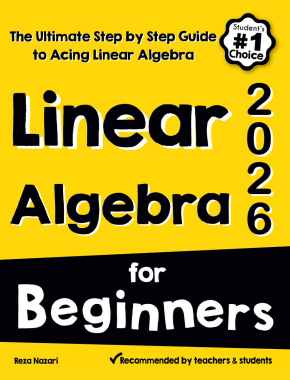
Linear Algebra for Beginners 2026 The Ultimate Step by Step Guide to Acing Linear Algebra
Linear Algebra for Beginners 2026: A clear Linear Algebra guide for students who want vectors, matrices, systems, and notation introduced without the fog.
Use it for class support, homeschool, tutoring, summer review, independent practice, finals, placement tests, or a more confident start in Linear Algebra.
- 257-page printable PDF download
- Step-by-step lessons and worked examples
- Printable skill-building practice
- 2 full-length practice tests
- Answer keys, explanations, and QR/online support

Students also viewed
Related books students often compare before choosing the right next step.
 AP Calculus AB for Beginners 2026: The Ultimate Step by Step Guide...
Original price was: $27.99.$17.99Current price is: $17.99.
AP Calculus AB for Beginners 2026: The Ultimate Step by Step Guide...
Original price was: $27.99.$17.99Current price is: $17.99.
 CLEP Calculus for Beginners 2026: The Ultimate Step by Step Guide to...
Original price was: $27.99.$17.99Current price is: $17.99.
CLEP Calculus for Beginners 2026: The Ultimate Step by Step Guide to...
Original price was: $27.99.$17.99Current price is: $17.99.
 GACE Elementary Education Math (501) for Beginners 2026: The Ultimate Step by...
Original price was: $27.99.$17.99Current price is: $17.99.
GACE Elementary Education Math (501) for Beginners 2026: The Ultimate Step by...
Original price was: $27.99.$17.99Current price is: $17.99.
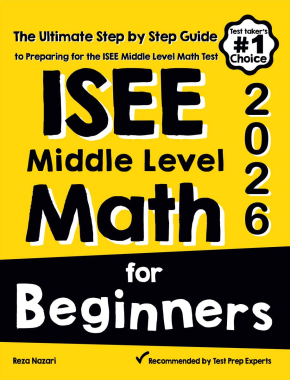 ISEE Middle Level Math for Beginners 2026: The Ultimate Step by Step...
Original price was: $27.99.$17.99Current price is: $17.99.
ISEE Middle Level Math for Beginners 2026: The Ultimate Step by Step...
Original price was: $27.99.$17.99Current price is: $17.99.
Linear Algebra for Beginners 2026 PDF Study Guide
A clear Linear Algebra guide for students who want vectors, matrices, systems, and notation introduced without the fog.
Use it for class support, homeschool, tutoring, summer review, independent practice, finals, placement tests, or a more confident start in Linear Algebra.
Jump into Linear Algebra
What You Get Inside
Give Vectors and Matrices a Clear Starting Point
Linear Algebra can feel unfamiliar because the notation changes quickly. This guide keeps the ideas concrete first, then moves students toward the calculations and reasoning they need.
What You Will Learn in This Linear Algebra Guide
| Unit | Skills Covered |
|---|---|
| Introduction | Gives students a plain-language entry point before Linear Algebra introduces heavier notation or test-style questions. |
| What is Linear Algebra? | Introduces linear algebra as the study of vectors, matrices, and the structure behind linear systems. |
| Applications of Linear Algebra | Shows why linear algebra matters in systems, geometry, data, and applied problem solving. |
| Geometric Interpretation | Keeps the geometry visible so abstract notation still has a shape students can picture. |
| Vectors and Vector Operations | Builds the vector language students need before Linear Algebra moves into matrices and transformations. |
| Introduction to Vectors | Builds the vector language students need before Linear Algebra moves into matrices and transformations. It is meant to make review feel organized instead of scattered. |
| Vector Addition and Subtraction | Practices combining vectors algebraically and visually, so direction and magnitude stay connected. |
| Scalar Multiplication | Shows how scaling changes a vector while preserving or reversing its direction. |
| Properties of Vector Addition and Subtraction | Practices combining vectors algebraically and visually, so direction and magnitude stay connected. That gives students one more way to catch errors before they become habits. |
| Geometric Interpretation of Dot Product | Connects the dot product to angle, projection, and geometric meaning. |
| Geometric Interpretation of the Cross Product | Introduces the cross product as a geometric tool for direction and area. |
| Introduction to Matrices | Introduces matrix notation, entries, and operations as an organized way to handle linear information. |
Why Choose the Instant PDF?
- Start studying immediately after purchase
- Print only the chapters or practice pages you need
- Use it on a tablet, laptop, or phone
- Reprint practice pages for review
- Great for tutors and homeschool parents
- No shipping delay
- Easy to organize by chapter or topic
- Includes answer support from Effortless Math
Is This the Right Book for You?
A good fit if:
- You are starting or reviewing Linear Algebra
- You want step-by-step explanations instead of short answers
- You need printable practice for class, tutoring, homeschool, or independent study
- You want a study guide that helps you correct mistakes and keep moving
May not be the best fit if:
- You already need only advanced Linear Algebra material beyond this guide
- You want a video-only course
- You want a physical book only and do not need instant PDF access
Digital PDF and Paperback Options
Choose the instant PDF if you want printable access right away. Prefer a physical copy? The paperback is available on Amazon when shown below.
Frequently Asked Questions
Is this a digital product?
Yes. This product is an instant downloadable PDF study guide. The page also includes a separate Amazon link when a paperback option is available.
Can I print the PDF?
Yes. The printable format lets you print chapters, practice sets, review pages, or answer sections as needed.
Can this be used for homeschool or tutoring?
Yes. The PDF works well for homeschool lessons, tutoring sessions, classroom reteaching, and independent study.
How should students use this book?
Start with the lesson, study the worked examples, complete a focused practice set, check answers, and review mistakes before moving to the next topic.
Start Your Linear Algebra Review Today
Get the PDF, print the pages you need, and start building confidence one skill at a time.
You must be logged in to post a review.
There are no reviews yet.