Reading RTP and Volatility Without Falling for the Slot Marketing
You’ve probably seen them: “96.1% RTP!” splashed across a slot game page like it’s some kind of achievement. Right next to it, maybe “High Volatility!” in bold letters, as if that’s a selling point. The marketing teams know you’ll see these numbers and think they mean something. Sometimes they do. Mostly they don’t mean what you think they mean.
Here’s the thing about slot RTP and volatility. They’re real mathematical concepts, not marketing inventions. But they’ve been dressed up so much in casino language that most players misunderstand them completely. You see “96% RTP” and wonder: does that mean I’ll get $96 back on every $100 I play? You see “high volatility” and think: is this slot ready to pay out big? Neither of those thoughts is correct, and that gap between what the numbers say and what they’re marketed to imply is exactly where your money goes.
Let’s break down what RTP and slot volatility actually mean, why they’re important, and, maybe more importantly, why a “high RTP slot!” splash banner is closer to a perfume ad than to honest math. This explanation uses probability and expected value. It’s educational only, not a recommendation to gamble. If gambling stops feeling like entertainment or starts becoming hard to control, the National Council on Problem Gambling has real resources that can help.
What RTP Actually Means (And Isn’t)
RTP stands for return to player. In the simplest terms, it’s the percentage of all the money put into a game that the game is designed to pay back over a very large number of spins. We’re talking thousands and thousands of plays, not one session. Not one night. Not one week.
The UK Gambling Commission is clear about this: RTP is an average across significant play, not a promise about what you’ll see on any given day. If a machine shows 85% RTP, the regulator explicitly warns players not to expect 85 pence back for every pound they stake during an afternoon session. It doesn’t work that way. It never does.
Take a slot RTP volatility scenario: if a game displays 96% RTP, the house edge is roughly 4% (100% minus 96%). Over thousands of spins and enormous turnover, the math says the game returns about $96 for every $100 wagered. Which sounds fine. Reasonable. Until you realize that your $100 you just put in doesn’t behave the same way. You might get $50 back. You might get $200 back. You might get nothing. The 96% is true over millions of spins across millions of players. Your next hundred dollars? That’s a different sample entirely.
This is why expected value matters. Effortless Math has a solid guide to expected value that explains how averages work across large datasets. RTP is just expected value dressed in casino clothes.
Volatility: How the Bumpy Ride Works
Volatility is the second number everyone fixates on. And it’s where things get interesting, because two slots can have identical RTP and feel completely, utterly different.

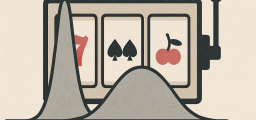
Imagine two games, both at 96% RTP. One pays out lots of small wins frequently. You’ll hit something almost every other spin. A little win, a small payout, consistent steady trickles. The other game? Long dry stretches. Then suddenly a bonus round triggers and you get a huge hit. Same average return. Completely different experience. The first one feels smooth. The second feels punishing until it doesn’t.
Here’s a comparison that makes it click: think of two students who both have an 80% average on their tests. One student scores 78, 81, 79, 82, 80 across five exams. Very consistent. The other scores 40, 100, 60, 100, 100. Same average. Wildly different pattern. That’s volatility. It’s about the spread of the data, not the center point. Slot RTP volatility works the same way.
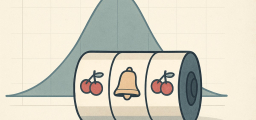
In probability language, volatility relates to variance and distribution shape. Effortless Math’s explanation of theoretical and empirical probability distributions is worth reading because it shows exactly why two datasets can have the same average while being completely different underneath.
RTP and Volatility Aren’t Opposites, And That Confuses Everyone
Here’s the misconception that marketing loves to exploit: that high volatility means high RTP, or that low volatility means low RTP. It’s not true. RTP and volatility answer different questions. They’re independent of each other.
A game can have high RTP and low volatility. A game can have low RTP and high volatility. The two numbers don’t lock together the way slot marketing suggests they should. Think about what each one actually tells you:
| Term | What It Answers | What It Absolutely Does Not Tell You |
|---|---|---|
| RTP | What percentage of money wagered is the game designed to return over the long run? | What you’ll actually get back in one session. |
| Volatility | Are wins typically small and frequent, or large and rare? | Whether the game has positive expected value (it doesn’t, for the player). |
| Hit frequency | How often does any kind of win occur? | Whether those wins are big enough to keep you from losing money overall. |
You can have a low-volatility slot with a low RTP, or a high-volatility slot with a high RTP. You could even theoretically have a high-volatility game with low RTP (harsh and costly) or low-volatility with high RTP (smooth and slightly less costly, though still negative expected value). Without both numbers, you’re missing half the picture. Without stake size, paytable structure, bonus frequency, and session length, you’re missing the other half too.
Why Your Session Won’t Look Like the RTP Number
Here’s where slot marketing really gets confusing: RTP needs volume to actually work. It’s not instant. It’s not even fast.
The UK Gambling Commission has explained that random slot machines can require an enormous number of game cycles before averaging effects kick in and settle. In one of their examples, actual RTP measured over a single month can fall well below the designed RTP. That’s normal. That’s statistics working. And volatility, the high or low spread, affects how wide that tolerance band should be when you’re measuring limited play.
Think about it: if you play 50 spins, you’re not sampling the whole game design. You’re seeing a tiny slice of a massive probability distribution. In a high-volatility game (or even in a normal game), that tiny slice might contain zero meaningful wins. It might contain a rare jackpot. It might contain nothing but small trickles. None of these outcomes tells you anything true about the 96% RTP claim. They’re just noise.
This is why someone can say “I played a 96% RTP slot and lost everything in two hours” and that’s not evidence that RTP is fake. It’s evidence that your two-hour session is a sample, and samples can deviate wildly from their underlying distribution, especially over short timeframes. The game is working exactly as designed. It’s designed to take your money on average. Most sessions look worse than the average. A few sessions (for some lucky players) look better. That’s how it works.
From RTP to House Edge: What It Costs You
Here’s the simple math: house edge is roughly 100% minus RTP. A game with 96% RTP has about a 4% house edge. A game at 94% RTP has about a 6% house edge. Does that seem like a small difference? On a $100 single bet, maybe. On $10,000 in total turnover, it adds up fast.
| Displayed RTP | House Edge (Approx.) | Expected Cost per $1,000 Wagered |
|---|---|---|
| 97% | 3% | $30 |
| 96% | 4% | $40 |
| 94% | 6% | $60 |
| 90% | 10% | $100 |
The word “wagered” is important here. It’s not the money you deposit, it’s the money you turn over playing. Deposit $100 and spin $1 at a time? Your total wagered amount climbs quickly. RTP works against total turnover, not your starting bankroll. That’s a detail marketing doesn’t emphasize.
How Volatility Shapes Your Bankroll Reality
Low-volatility games recycle money through frequent small wins. Your bankroll might last longer. You’ll get that dopamine hit from winning regularly, even if those wins are small. But longer playtime still doesn’t equal profit. It just means the negative expected value takes longer to flatten your account.
High-volatility games concentrate most of the RTP payout in rare events, big bonuses, jackpots, special features. Most sessions end without hitting those events. Then occasionally someone lands one and posts a screenshot on social media, and everyone else chases it. The game’s mathematically correct while feeling brutally stingy most of the time.
From a pure probability standpoint, volatility is a lesson in how distributions work. When a game returns most of its RTP through rare events, most short-term samples fall well below the theoretical average. The game isn’t broken. It’s functioning exactly as designed. The design just concentrates reward in places most players won’t reach.
It’s the same principle you’d see in a classroom example where a distribution has a long right tail: the average gets pulled up by a few huge values, but the typical or most common experience lands far below the average. In slots, that gap can hit hard emotionally. You’re playing a correctly functioning game that’s mathematically designed to give you much less than the average suggests.
Random Doesn’t Mean Fair (Or Equal)
Another common misunderstanding: “random number generator” doesn’t mean every outcome is equally likely. Random just means unpredictable in sequence. A game can randomly select outcomes from a weighted distribution. Some symbols are rare by design. Some bonuses are rare by design. The selection method is random; the odds are weighted.
The UK Gambling Commission clarifies this: random machines use statistical chance to hit target RTP, and crucially, current-game odds aren’t affected by previous results. You can’t be “due” for a win. Each spin is independent. But independence doesn’t equal fairness. You can have a completely random, independent, fair selection method that still systematically returns less money than people put in.
That’s the whole point. The outcomes and their probabilities together define the expected value. Randomness is just the mechanism. It’s not a guarantee of fairness to the player. It’s a guarantee that the house got what it paid for: an unmanipulated, honest path to its edge.
Reading Slot Numbers the Right Way
Reducing any slot to a single percentage is marketing nonsense. Yes, RTP matters. It’s the foundation. But it’s just the starting point, not the whole story.
A real analysis asks: What portion of that RTP comes from regular base-game wins? How much comes from bonus rounds? Does a progressive jackpot pull money from regular spins? How wide is the game’s distribution likely to be? You need this detail because two games with nearly identical RTP can create completely different experiences.
Game A returns most of its RTP through frequent small wins. It feels steady. It still has negative expected value, but it masks that better. Game B returns most of its RTP through rare bonus bonanzas. It feels brutal most of the time, then occasionally spectacular. Same math underneath. Completely different psychology on top.
This is why “best RTP slots” and “high volatility slots” are marketing categories that obscure more than they reveal. Higher RTP reduces the theoretical cost of play. That’s measurable and real. But it doesn’t make a game safe or profitable. High volatility might create larger possible wins and it means a short session will probably miss the rare events that support the advertised average. You’re playing against mathematics. The label doesn’t change the math.
Frequently Asked Questions
Does 96% RTP mean I get $96 back from $100?
No. It’s not even close. RTP is an average stretched across massive amounts of play. Over one session, you could get back much less, much more, or nothing. That’s the opposite of a guarantee. If you want to learn more about averages and how probability works in practice, Effortless Math has probability problems that walk through real examples.
Is high volatility actually better or worse?
Better for what? High volatility offers the possibility of larger rare wins. It also guarantees longer dry spells. Low volatility offers steadier, smaller wins. It also still loses money on average. It just takes longer. Neither is mathematically better. It’s a choice about how you want to lose (if you do lose, and odds are you will).
Can a truly random slot machine still have a house edge?
Absolutely. Randomness determines which outcome happens. The paytable determines whether outcomes collectively return less than people wager. You can have perfect randomness feeding a rigged paytable. That’s not a contradiction. It’s how every slot in every regulated casino works.
Read These Numbers Like a Statistician, Not a Marketer
RTP tells you the long-run average return. Volatility tells you the shape of the ride. Neither one promises what happens next, and that’s the important part. Mixing them up (or letting marketing mix them up for you) leads to bad expectations and worse decisions.
A slot can be random, regulated, transparent about its RTP, and still be a negative-expected-value game designed for the house. The numbers aren’t lying. They’re just being presented in ways that obscure what they mean.
The right way to read these numbers is calmly and clearly: RTP estimates the long-run price you’ll pay. Volatility describes whether that price comes in small increments or big surprises. Neither one changes the fact that the math favors the house. It’s been designed that way, the math works, and the regulators have confirmed it. Understanding RTP and volatility won’t change the math either, but it’ll at least make sure you know what you’re up against.
Sources

Related to This Article
More math articles
- CLEP U.S. History I 056: Roads, Canals, Steamboats, Railroads, and Telegraph
- Misinformation, Media Literacy, and Technological Change
- Comparison and Number Ordering
- How Political Ideology Shapes Public Policy
- Information subsidies and venue shopping
- Power, Authority, Government, and the State
- The Best ASVAB Math Worksheets: FREE & Printable
- What is the Type of Tangents to Circles?
- Majority-minority districts
- Sterilizer Quality Tests







What people say about "Reading RTP and Volatility Without Falling for the Slot Marketing - Effortless Math"?
No one replied yet.