Squeeze, Speed, Mini: The Math Differences Across Baccarat Variants
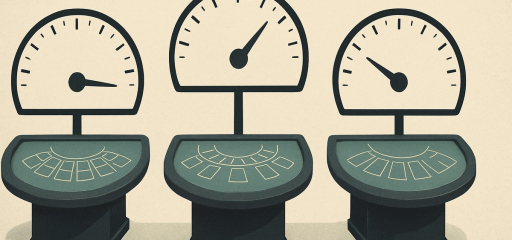
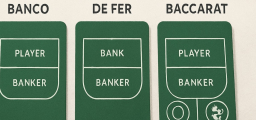
Walk through any modern casino and you will see baccarat played in at least three different rhythms. A high-limit pit room runs slow, almost theatrical, with players bending the corners of the cards. The mass-market floor hums with mini tables where the dealer flips everything face up and the next hand starts before you finish your sip. On your phone, a speed table churns out a result every twenty-seven seconds, and an RNG version goes even faster. The cards and the payouts are the same. What changes is the clock. That clock is the heart of baccarat variants math, because pace, not rules, decides how much money actually leaves your wallet per hour.
The Rules and House Edge Are Identical Across Variants
Before talking about pace, it is worth saying clearly what does not change. Squeeze, mini, speed, and RNG baccarat all use the same drawing rules, the same eight-deck shoe in most cases, and the same payouts: 1 to 1 on Player, 0.95 to 1 on Banker after the 5% commission, and 8 to 1 on Tie. The published house edges are the standard ones you have seen before: roughly 1.06% on Banker, 1.24% on Player, and a brutal 14.36% on Tie. These numbers come from the underlying card distribution, and they do not care which table you sit at.
So if a friend tells you that mini baccarat has a worse edge than the big-table version, gently disagree. The per-hand edge is the same. What is different is how many hands you face per hour, and that is where the real bleed happens.
One more framing point before we go variant by variant. When people argue about whether baccarat is a “good” or “bad” casino game, they almost always compare it to blackjack, roulette, or craps using the per-hand edge. By that measure baccarat looks fine, 1.06% is competitive. But pace flips that ranking in a hurry. A heads-up blackjack table at 200 hands an hour with basic strategy might cost you less per hour than an RNG baccarat session at the same bet. Edge alone is not a complete answer. Hourly cost is.
Squeeze Baccarat: The Ceremonial Slow Game
Squeeze baccarat is the version you see in high-limit rooms and in Macau. The dealer hands the shoe to the player with the largest Banker bet, and that player slowly peels the cards back, looking at the edges, checking the pip count, before flipping them face up. There is shouting, blowing on cards, and a lot of theater.

From a pure math standpoint, every second spent peeking is a second you are not losing money. Squeeze tables typically run around 20 to 30 hands per hour. Call it 25. At $25 a hand on Banker, your expected hourly loss is:
25 hands × $25 × 0.0106 ≈ $6.62 per hour.
That is genuinely small. You can sit at a squeeze table for four hours and, on average, lose less than what people drop at a mini table in 60 minutes. The ceremony is not just tradition; it is a built-in brake on your bankroll.
Mini Baccarat: Smaller Table, Bigger Bleed
Mini baccarat removes the ritual. The dealer handles all the cards, flips them face up immediately, and resolves the hand. The table is smaller, usually seating six or seven players, and the minimums are lower, which is exactly why it sits on the main floor and not in the high-limit room.
Pace climbs hard. A typical mini baccarat table runs 80 to 150 hands per hour depending on how full it is and how chatty the dealer feels. Using 100 as a fair midpoint:
100 hands × $25 × 0.0106 = $26.50 per hour.
Same bet size, same rules, four times the damage. Players often describe mini baccarat as “easier” or “more relaxed” than the big game, and that is true emotionally. But the math is louder there, not quieter.
Speed Baccarat: The Timer Is the Casino’s Best Employee
Speed baccarat is a live dealer online variant where every step is on a countdown. Betting window closes in around 12 seconds. The dealer flips cards face up immediately, no third card drawing decisions for the player to ponder, and the next hand starts. A full round can finish in about 27 seconds, which works out to roughly 150 to 200 hands per hour. Using 175 as the working number:
175 hands × $25 × 0.0106 ≈ $46.38 per hour.
That is seven times the squeeze rate. Same rules, same edge, same payout. The casino has simply removed every pause. There are no chips to color up, no shuffles between shoes that you can step away from, no dealer change. The timer does not care that you want a moment to think.
RNG Online Baccarat: As Fast As You Click
RNG baccarat, the software version with no live dealer, is the fastest of all. There is nothing to wait for. You hit Deal, the screen shows you a result, you hit Deal again. Players who really lean into it can clear 600 hands per hour without much effort. Auto-play features can go faster still.
600 hands × $25 × 0.0106 = $159 per hour.
That is a real number, not a worst case. It is what the published edge predicts on average. People who play RNG baccarat at $25 a hand for a few hours an evening are routinely surprised when their bankroll evaporates by the weekend. The math is doing exactly what the long-run frequencies predict. The variance can hide it for a session or two, but the long-run pull is heavy.
How Pace Becomes the Real House Edge Multiplier
Here is the idea that ties everything together. Per-hand house edge tells you the cost of one decision. Pace tells you how many decisions you make. The product is your hourly loss rate, and that is the number that actually matters when you set a bankroll or a session length.
Think of it this way:
- Squeeze baccarat costs about $6.62 per hour at $25 a hand.
- Mini baccarat costs about $26.50 per hour at the same bet.
- Speed baccarat costs about $46.38 per hour.
- RNG online baccarat costs about $159 per hour.
- Switching variants without changing your bet size can multiply your hourly loss by 4x, 7x, or even 24x.
- If you want the same hourly cost on a speed or RNG table, you need to drop your bet size proportionally.
That last bullet is the practical takeaway. A $25 squeeze player is not the same animal as a $25 RNG player, even though both will tell their friends they “bet twenty-five a hand.” The pace multiplier matters more than most players ever stop to compute. If you want to dig into where these per-hand edges come from, the rules reference at Wizard of Odds is a good place to verify the underlying numbers.
Expected Hourly Loss by Variant
The table below sets bet size constant at $25 on Banker and varies only the pace. Every row uses the same 1.06% Banker edge. Hands per hour are typical midpoints; your specific table may run a little faster or slower.
| Variant | Hands per Hour | Bet Size | Banker Edge | Expected Loss / Hour |
|---|---|---|---|---|
| Squeeze (big table) | 25 | $25 | 1.06% | $6.62 |
| Mini baccarat | 100 | $25 | 1.06% | $26.50 |
| Speed baccarat (live) | 175 | $25 | 1.06% | $46.38 |
| RNG online | 600 | $25 | 1.06% | $159.00 |
Read the right-hand column the way you would read a meter. The rules did not change between rows. The bet did not change. Only the clock did. The clock alone is responsible for a 24x swing in expected hourly loss between the slowest and fastest version of the same game.
Player Psychology and Pace
There is a reason casinos design fast variants and put them everywhere. Pace pulls more money out of the average bankroll without anyone feeling that the rules were changed. A player on a mini table will often describe the action as “no big deal,” because each hand still feels small. The brain anchors on the per-hand size, not on the per-hour rate. Speed tables exploit that anchoring even more aggressively, and RNG software exploits it most of all.
It also affects how losses register emotionally. On a squeeze table, a loss arrives every two or three minutes, with enough downtime to feel each one. On an RNG screen, ten losses can stack up before your coffee gets cold, and the brain just averages them into background noise. Which is why bankroll discipline matters more on fast variants, not less. The same $500 buy-in that lasts you four hours at a squeeze table can evaporate in about three hours on RNG at the identical bet size, even when the cards are behaving exactly as expected. If you want to sharpen the underlying probability and expected-value reasoning that drives all of this, the explainers at Effortless Math walk through the basics in a way that transfers directly to casino-floor decisions.
There is also a session-length trap worth naming. Most players set a time budget (“I’ll play for two hours”) rather than a hand budget (“I’ll play 150 hands”). Casinos love the time-budget mindset, because two hours on a squeeze table and two hours on an RNG screen are completely different financial events. If you instead set a hand budget, say, 200 hands at $25, your expected loss is fixed at about $53 regardless of which variant you choose, and the only question is how long that ride lasts. Switching from a time budget to a hand budget is one of the cheapest mental upgrades available to a casual baccarat player.
FAQ
Q: Is the house edge actually higher on mini baccarat than on the squeeze game?
No. The per-hand edge is the same, about 1.06% on Banker. What is higher is the hands-per-hour count, which multiplies your hourly cost. Same edge, more hands, bigger bleed.
Q: If I play smaller on RNG baccarat, do I cancel out the pace problem?
Mostly yes, if you scale correctly. A $25 squeeze player and a roughly $4 RNG player face similar hourly expected losses, because $4 × 600 × 0.0106 ≈ $25.40, close to the mini-table number. The trick is being honest with yourself about bet size, not the comfort of the screen.
Q: Does the Banker commission change between variants?
Standard variants all use the 5% commission on Banker wins, which is already baked into the 1.06% edge. Some no-commission tables exist, but they adjust the payout on certain Banker wins, which changes the edge slightly. The variants discussed here use the standard rules.
Q: Should I avoid the Tie bet on faster variants?
You should avoid the Tie bet on every variant. Its house edge is around 14.36%, which is more than 13 times worse than Banker. Pace just makes a bad bet drain faster; it does not make it any worse per hand.
Q: How do I pick a variant if I want entertainment for a fixed budget?
Decide your hourly cost first, then pick the variant that lets you stretch your bankroll across the time you actually want to play. If you want three hours of action on $100, squeeze or a slow mini table at small stakes will get you there. RNG at the same bet will not.
Gambling outcomes are uncertain; no strategy guarantees profit.

Related to This Article
More math articles
- Block by Block: How to Complete Decimal Division Equations
- GED Math Test-Taking Strategies
- Mutations and Genetic Evidence
- 10 Most Common TASC Math Questions
- Top 10 Grade 3 Math Books: Inspiring Young Mathematicians to Explore
- Functionalism
- The Best Grade 6 ELA Practice Tests for South Carolina Students
- Cartels face an incentive to cheat
- TSI Math Practice Test Questions
- CLEP U.S. History I 090: Wilmot Proviso and Free-Soil Politics






What people say about "Squeeze, Speed, Mini: The Math Differences Across Baccarat Variants - Effortless Math"?
No one replied yet.