Culture Wars and the AIDS Crisis
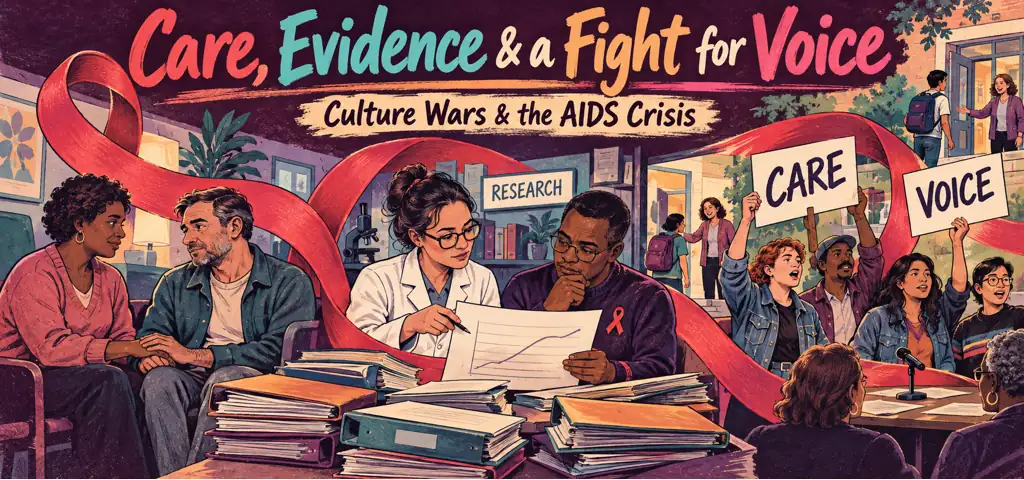
Chapter 15 of the CLEP History of the United States II study guide on Effortless Math covers Culture Wars and the AIDS Crisis: the key terms, the core ideas, and worked examples showing how this topic is tested on the exam.
CLEP History of the United States II, Chapter 15
Culture-war issues organized competing moral narratives
Abortion, school prayer, textbooks, sexuality, feminism, affirmative action, pornography, guns, arts funding, and family policy became symbols of national identity. Conservative activists argued that courts, bureaucracies, universities, and media had displaced community standards. Liberals and movement activists emphasized pluralism, equality, privacy, and speech. The disputes concerned who possessed authority to define public morality, not simply whether Americans had values.
The Miller test separated community judgment from serious value
In Miller v. California (1973), the Court set three requirements for unprotected obscenity. The work, taken as a whole, must appeal to prurient interest under contemporary community standards, depict specifically defined sexual conduct in a patently offensive way, and lack serious literary, artistic, political, or scientific value. Community standards govern the first two inquiries. Later doctrine judges serious value by a reasonable-person standard rather than letting one locality erase a work's value. Offensive political speech does not become obscenity.
Abortion politics changed after Roe
The decision nationalized a conflict that had been unfolding in states. The Hyde Amendment, first enacted in 1976, restricted federal Medicaid funding for abortion with changing exceptions, showing how access could narrow without formally overruling Roe. Antiabortion organizations pursued constitutional amendments, judges, clinic regulation, and protest. Abortion-rights organizations defended privacy and access. Party alignment hardened gradually rather than instantly in 1973.
School prayer separated private expression from state sponsorship
The Supreme Court had prohibited state-composed prayer and official Bible exercises in public schools, not voluntary private prayer by students. Conservative proposals sought constitutional amendments or statutory protections. Disputes often blurred individual religious expression, school endorsement, access by student groups, and ceremonial language. A strong item states who speaks, whether participation is coerced, and what authority the school exercises.
Arts funding created a conflict over subsidy rather than censorship alone
The National Endowment for the Arts supported artists and institutions through grants. Controversies over works associated with Robert Mapplethorpe, Andres Serrano, and performance art led Congress to impose a "decency and respect" consideration and to cut or redirect funding. Refusing a subsidy is not identical to criminally banning art, but viewpoint pressure can still affect expression. Appropriations rose and fell with political conflict rather than disappearing permanently after 1990.
The AIDS epidemic began amid uncertainty and stigma
Doctors reported unusual infections among gay men in 1981, but HIV affected people through sexual contact, blood exposure, shared needles, and perinatal transmission. Early labels encouraged the false belief that identity itself caused disease. Gay men, hemophiliacs, injection-drug users, Haitian immigrants, women, and infants experienced infection and stigma. Public health required accurate transmission information, blood screening, research, prevention, and care.
Government response was slow and fragmented
The Centers for Disease Control investigated cases, while the National Institutes of Health supported research. The Reagan administration was criticized for inadequate leadership, funding delays, and reluctance to address sexuality publicly. Surgeon General C. Everett Koop issued a frank national report in 1986 promoting education and condom use. Federal action increased, but jurisdiction across health agencies, states, hospitals, insurers, and Congress complicated accountability.
Activists changed research and drug regulation
ACT UP, formed in 1987, used demonstrations, expertise, media, and direct action against government agencies, drug companies, churches, and insurers. Activists demanded faster trials, expanded access, attention to women and people of color, lower prices, and meaningful patient participation. The FDA changed procedures and community advisory roles expanded. Activism did not invent biomedical research; it altered whose evidence and urgency shaped its design.
The Ryan White case exposed stigma outside gay communities
Ryan White, an Indiana teenager with hemophilia, acquired HIV through contaminated blood products and faced exclusion from school. His legal struggle and public visibility challenged casual-contact fears. Congress enacted the Ryan White CARE Act in 1990 to fund services for people with HIV/AIDS. The case showed why transmission evidence mattered to civil rights and public policy.
Public-health conflict involved liberty, coercion, and care
Officials debated testing, confidentiality, partner notification, immigration restrictions, bathhouse closure, and criminal penalties. Mandatory measures could drive people away from testing, while purely voluntary systems could leave partners uninformed. Effective policy had to weigh transmission routes, consent, discrimination, and access to treatment. Moral judgment about a population was not a substitute for epidemiological evidence.
Family politics reached law, work, and welfare
Debates over no-fault divorce, working mothers, childcare, sex education, gay rights, and welfare treated "the family" as both a social institution and political symbol. Conservatives described policy as rewarding dependency or weakening parental authority. Feminists and gay-rights activists asked which families received legal recognition and who carried unpaid care. The same word could conceal disputes about income, gender, sexuality, and state power.
Federally funded science and technology complicated antigovernment rhetoric
Defense, health, space, and university research produced knowledge and technologies later used commercially. Biotechnology grew from federal grants, university laboratories, patents, and private investment. Conservatives who criticized domestic bureaucracy still supported defense and biomedical research. The policy question was not government versus technology, but which institutions funded risk, controlled intellectual property, and captured returns.
Bayh-Dole changed ownership incentives in federal research
Before 1980, federal agencies often retained title to inventions produced under their grants and contracts. The Bayh-Dole Act allowed universities, nonprofit institutions, and small businesses to keep patent rights to many federally funded inventions, while the government retained a license and other safeguards. University licensing offices multiplied, especially around biotechnology. The law did not privatize federal laboratories or guarantee that every patented discovery reached the market. It changed who could hold and license intellectual property created with public research money.
separate regulation, subsidy, and prohibition
Congress declines to fund an artwork but does not outlaw private exhibition.
choose evidence that answers the public-health claim
A school excludes a student with HIV because parents fear classroom transmission.
AIDS activism changed the production and distribution of knowledge
Groups such as ACT UP studied clinical trials, challenged exclusionary research rules, demanded faster access to experimental drugs, and forced public agencies to communicate differently. Activists did not simply oppose science; many learned its language and argued about endpoints, representation, risk, and who could wait for conventional timelines. Faster review carried dangers, but delay also imposed costs on people with a fatal disease. The resulting changes show patients becoming participants in research policy rather than passive recipients of expert decisions.
Culture-war disputes moved through institutions with different powers
School boards selected curricula, museums relied on public and private funding, Congress attached conditions to grants, courts interpreted speech and religion, and parties used controversies to mobilize voters. A dispute over a textbook did not give Congress the same authority as a dispute over a federal arts grant. Likewise, public criticism of offensive art differed from legal censorship. Identifying the institution and remedy prevents "culture war" from becoming an explanation by itself. The conflict endured because it joined moral identity to concrete decisions about money, access, curriculum, and law.
The Bork fight made judicial philosophy an open confirmation issue
President Reagan nominated Robert Bork to the Supreme Court in 1987. Bork's criticism of privacy doctrine and narrow reading of some constitutional protections mobilized civil-rights, women's-rights, and liberal groups, while supporters defended originalist restraint. Televised hearings exposed those disagreements to a national audience. The Senate rejected the nomination 58-42. The episode intensified organized conflict over nominees; it was not a judicial ruling on Bork's views.
Watch the history in motion
This short lesson adds voices, images, and chronology to the ideas you just studied.
Video: HIV/AIDS: What Can We Learn From America's Last Epidemic?, PBS Origins .
Try four CLEP-style questions
- What did the Hyde Amendment change?
- It restricted federal Medicaid funding for abortion without formally overruling Roe.
- It amended the Constitution to prohibit abortion in every circumstance.
- It required private insurance plans to cover every reproductive-health service.
- It transferred abortion regulation from states to local school boards.
- It established federal funding for clinics regardless of congressional appropriations.
- Why is denial of an NEA grant not identical to a criminal ban?
- Federal grants create a continuing entitlement that sharply limits Congress's ability to revise award criteria.
- An NEA denial makes the proposed exhibition unlawful wherever federal arts money supports the venue.
- A subsidy decision affects public funding, while a ban imposes legal punishment on private expression.
- Criminal bans concern only public money, while subsidies regulate private ownership.
- The First Amendment excludes art from protection whenever a grant is requested.
- How did ACT UP influence AIDS policy?
- It combined protest and technical expertise to press research, access, pricing, and patient participation.
- It denied that HIV caused AIDS and opposed clinical research into treatment.
- It replaced the FDA with a privately governed organization controlled by drug companies.
- It sought school exclusion for children who had acquired HIV through blood products.
- It argued that moral judgment supplied more reliable evidence than transmission studies.
- What did the Ryan White case demonstrate?
- HIV spread readily through ordinary classroom contact and shared textbooks.
- Fear of casual transmission could produce exclusion unsupported by medical evidence.
- Only adults in large coastal cities experienced stigma related to AIDS.
- Federal law had prohibited schools from educating students with hemophilia before AIDS.
- Blood products were screened perfectly before the first reported American cases.
Check your answers and reasoning
Independent preparation. CLEP is a registered trademark of the College Board, which does not endorse this lesson.

Related to This Article
More math articles
- The Best Algebra 1 Book for New Mexico Students
- How to Protect Children From Lootbox Gambling: A Responsible Gambling Guide for Parents and Educators
- Minnesota MCA-III Grade 7 Math Worksheets: 95 Free Printable Single-Skill PDFs
- Top 10 3rd Grade ACT Aspire Math Practice Questions
- Career Development, Certification, and Continuing Education
- Order of Operations for 5th Grade: PEMDAS Made Easy
- Carbon, Functional Groups, and pH
- Chapter 26: Political Parties
- North Carolina Algebra 1 Free Worksheets: Printable NC Algebra 1 Practice, Answers Included
- 10 Most Common 6th Grade ACT Aspire Math Questions















What people say about "Culture Wars and the AIDS Crisis"?
No one replied yet.