Utah RISE Grade 6 Math Free Worksheets: Printable Grade 6 Math Practice, Answers Included
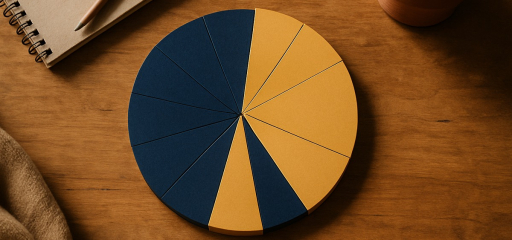
Most of what a sixth grader struggles with is not a hard calculation. It is knowing which calculation the problem is asking for. That is the quiet difficulty of the year. A word problem about three classes sharing twelve laptops is not difficult arithmetic; it is a small puzzle about whether you are looking at a ratio, a rate, or a straight division. Sixth grade is full of these moments, where the thinking happens before the pencil moves.
The year covers a wide stretch of ground: ratios, rates, and percents; dividing fractions by fractions; multi-digit and decimal operations sharpened to fluency; negative numbers and the four-quadrant coordinate plane; algebraic expressions, one-step equations, and inequalities; area, volume, and surface area, including nets; and real statistics, mean, median, the spread of a data set, dot plots, box plots, and an introduction to probability. Each piece connects to the next, and a student who builds them carefully has the footing for everything algebra will ask later.
These worksheets were made for that careful building. Whether your student is in Salt Lake City, West Valley City, Provo, or Orem, they offer one well-defined skill at a time, with enough practice to make it real.
What’s on this page
Seventy-two single-skill PDFs, each aligned to the Utah Mathematics Standards at Grade 6. Every file holds to one skill alone, so a student practicing percent of a number is not also untangling nets, and a student learning to solve inequalities is not pulled into mean absolute deviation.
Each PDF opens with a one-page Quick Review that explains the skill plainly and works one example all the way through. Twenty practice problems come next, ordered from easy to hard so the difficulty rises only after the confidence does, then four word problems that set the skill in a real situation. The closing page is a student-facing answer key, written so a sixth grader can read it alone, short, clear explanations rather than a bare list of answers.
Ratios, Rates, and Percents
- What Is a Ratio?, [6.RP.1] compare two quantities and write the comparison three ways
- Using Ratio Language, [6.RP.1] describe a ratio in words, ‘for every,’ ‘to,’ and ‘per’
- What Is a Rate?, [6.RP.2] a ratio that compares two different units, like miles per hour
- Finding the Unit Rate, [6.RP.2] divide to find the cost or amount for exactly one
- Tables of Equivalent Ratios, [6.RP.3] build a ratio table and fill in the missing values
- Graphing Ratios, [6.RP.3] plot a ratio table and see the straight line it makes
- What Is a Percent?, [6.RP.3] a percent is just a ratio out of 100, and how to read it
- Solving Percent Problems, [6.RP.3] find the part, the percent, or the whole
- Solving Rate and Ratio Word Problems, [6.RP.3] turn a real-world story into a ratio you can solve
- Converting Measurement Units, [6.RP.3] use ratios to switch between units like feet and inches
- Personal Financial Literacy, [6.RP.3] real-money math: prices, tips, and simple percent work
- Proportional vs. Non-Proportional Relationships, [6.RP.2] tell which relationships keep a constant ratio and which don’t
- Financial Literacy: Budgeting and Saving, [6.RP.3] plan a budget, track spending, and set a savings goal
- Ratios with Scale Drawings, [6.RP.3] use a scale to move between a drawing and real life
The Number System
- Dividing Fractions by Fractions, [6.NS.1] multiply by the reciprocal, and understand why it works
- Multi-Digit Division, [6.NS.2] the standard algorithm for dividing large whole numbers
- Decimal Operations, [6.NS.3] add, subtract, multiply, and divide decimals cleanly
- Greatest Common Factor and Least Common Multiple, [6.NS.4] find the GCF and LCM and know when to use each
- The Distributive Property with Common Factors, [6.NS.4] rewrite a sum by pulling out the greatest common factor
- Understanding Positive and Negative Numbers, [6.NS.5] what negative numbers mean in temperature, money, and elevation
- Opposites and Absolute Value, [6.NS.7] opposites flip the sign; absolute value is distance from zero
- Rational Numbers on the Number Line, [6.NS.6] place fractions, decimals, and negatives exactly where they go
- The Coordinate Plane, [6.NS.6] plot points in all four quadrants using ordered pairs
- Comparing and Ordering Rational Numbers, [6.NS.7] use the number line to order positives, negatives, and fractions
- Distance on the Coordinate Plane, [6.NS.8] find the distance between two points that share a line
- Integer Addition and Subtraction, [6.NS.5] add and subtract positives and negatives with confidence
- Integer Multiplication and Division, [6.NS.5] the sign rules for multiplying and dividing integers
- Compute with Integers in Context, [6.NS.5] real situations where negative numbers do the work
Expressions and Equations
- Exponents and Order of Operations, [6.EE.1] evaluate powers and run PEMDAS in the right order
- Translating Words into Expressions, [6.EE.2] turn a phrase into an algebraic expression
- Terms, Factors, and Coefficients, [6.EE.2] name the parts of an expression so you can talk about them
- Evaluating Expressions, [6.EE.2] substitute a value for the variable and compute
- Equivalent Expressions, [6.EE.3] use properties to show two expressions are the same
- Variables in Real-World Problems, [6.EE.6] let a letter stand for an unknown and model a situation
- Solving One-Step Equations, [6.EE.7] undo one operation to isolate the variable
- Writing Inequalities, [6.EE.8] translate ‘at least,’ ‘no more than,’ and ‘fewer than’ into symbols
- Graphing Inequalities on a Number Line, [6.EE.8] open or closed circle, then shade the right direction
- Two Quantities That Change Together, [6.EE.9] independent and dependent variables, tables, and graphs
Geometry
- Area of Triangles, [6.G.1] one-half base times height, for every kind of triangle
- Area of Parallelograms and Trapezoids, [6.G.1] the area formulas for two more four-sided shapes
- Volume of Rectangular Prisms, [6.G.2] volume with fractional edge lengths, using unit cubes
- Polygons on the Coordinate Plane, [6.G.3] draw a polygon from coordinates and find its side lengths
- Finding Area on the Coordinate Plane, [6.G.3] use coordinates to find the area of a plotted figure
- Nets and Surface Area, [6.G.4] unfold a solid into a net and add up every face
- Transformations on the Coordinate Plane, [6.G.3] slide and reflect figures and track the new coordinates
- Area of Circles Introduction, [6.G.1] a first look at radius, diameter, and the area of a circle
Statistics and Probability
- Statistical Questions, [6.SP.1] tell a question that has variability from one that does not
- Describing Data: Center, Spread, and Shape, [6.SP.2] the three things every data set has, and how to name them
- Mean and Median, [6.SP.3] two measures of center and when each one tells the truth
- Measures of Spread, [6.SP.3] range and mean absolute deviation, how spread out the data is
- Dot Plots and Histograms, [6.SP.4] two ways to picture how often each value shows up
- Box Plots, [6.SP.4] the five-number summary and the box it builds
- Summarizing Data and Making Comparisons, [6.SP.5] describe a data set in a sentence and compare two of them
- Introduction to Probability, [6.SP.5] how likely is it, from impossible to certain, as a number
- Stem-and-Leaf Plots, [6.SP.4] organize a data set while keeping every original value
- Circle Graphs, [6.SP.4] read a pie chart and connect each slice to a percent
- Data Displays Extended, [6.SP.4] choose the right graph and read it carefully
Number and Operations Practice
- Writing Ratios in Different Forms, [6.RP.1] the same ratio as a fraction, with a colon, and in words
- Equivalent Ratios, [6.RP.3] scale a ratio up or down and keep it the same
- Comparing Unit Rates, [6.RP.2] find the better buy by comparing rates for one
- Proportions and Cross Multiplication, [6.RP.3] set two ratios equal and solve for the missing value
- Simplifying Fractions, [6.NS.4] divide out the common factor to write a fraction lowest-terms
- Adding Fractions with Unlike Denominators, [6.NS.4] find a common denominator, then add
- Subtracting Fractions with Unlike Denominators, [6.NS.4] find a common denominator, then subtract
- Adding and Subtracting Mixed Numbers, [6.NS.4] work with the whole and fraction parts, including regrouping
- Multiplying Fractions, [6.NS.1] multiply across, and simplify before or after
- Multiplying Mixed Numbers, [6.NS.1] rename as improper fractions, then multiply
- Dividing Fractions, [6.NS.1] keep, change, flip, divide by multiplying the reciprocal
- Dividing Mixed Numbers, [6.NS.1] rename as improper fractions, then divide
- Decimal Place Value, [6.NS.3] name each digit’s value, from tenths to thousandths
- Comparing and Ordering Decimals, [6.NS.7] line up the place values and order decimals correctly
- Area of Rectangles and Squares, [6.G.1] length times width, including fractional and decimal sides
How to use these worksheets at home
The most useful habit is to work skills in related pairs. Sixth-grade topics build on each other, and doing two connected sheets in one week lets the second one stand on the first. Pair “Ratios and Ratio Tables” with “Finding the Unit Rate.” Pair “Dividing Fractions by Fractions” with “Dividing Mixed Numbers.” Pair “Volume with Fractional Edge Lengths” with “Surface Area Using Nets.” The link between them carries some of the load.
Keep each sitting short. Fifteen or twenty minutes, twice a week, will quietly beat a long and reluctant session every time, and a sixth grader is far more willing to start something that ends soon. Have your student work the full page before the answer key comes out, then read through it together. That review is the real lesson; understanding tends to settle in while a student is figuring out why a step works.
Utah evenings have a natural quiet to them, especially in the colder months, and a single worksheet is an easy, low-pressure way to use twenty minutes of one. Print what you need the night before, keep the answer key for afterward, and let the student talk through the thinking. If a worksheet goes poorly, take it as a map, not a verdict. It has pointed straight at the one skill that needs another pass, and working a single named skill again is far less discouraging than re-reviewing a whole chapter. And when a tricky sheet finally lands, say so. Sixth graders keep closer track of their own progress than they admit, and naming a clear win makes the next page easier to begin.
A note about RISE at Grade 6
Utah students take RISE, Readiness Improvement Success Empowerment, in Mathematics each spring. It is built on the Utah Mathematics Standards, so the skills these worksheets practice and the skills RISE measures come from the same set of standards.
The Grade 6 RISE test is not a memorization exercise. It asks students to interpret a ratio or rate in context, reason about positive and negative quantities, build an equation from a described situation, and choose a method that genuinely fits the question. It uses a mix of item types, some asking students to show or explain their reasoning. Because each PDF here lines up with a single standard, the spring window becomes a checklist: identify the soft spots, work just those pages, and leave the solid skills alone.
A short closing
Sixth-grade math comes together one skill at a time, and there is no rush in that. Bookmark this page, print a single PDF tonight, and let your student begin with one small, clear topic. Utah kids do steady work well, and a worksheet waiting on the table turns a big, sprawling year into a single, manageable next step.
Best Bundle to Ace the Utah RISE Grade 6 Math Test
Want the fastest path through Utah RISE Grade 6 math? This bundle pulls it together, four full practice-test books with complete, step-by-step answer keys, instant PDF download.

Related to This Article
More math articles
- Math As The Language Of Chance: An Introduction To Probability
- 8th Grade M-STEP Math Worksheets: FREE & Printable
- How to Find the Volume of Cylinders, Cones, and Spheres? (+FREE Worksheet!)
- Accuplacer Math FREE Sample Practice Questions
- Top 10 Tips to Overcome CLEP College Math Anxiety
- The Hidden Arithmetic That Breaks the Martingale System Every Time
- 7th Grade Common Core Math FREE Sample Practice Questions
- Travel-Friendly Teaching Supplies for A Portable Classroom
- OAR Math Formulas
- Voter identification laws







What people say about "Utah RISE Grade 6 Math: Free Worksheets"?
No one replied yet.