YOUR SAT STUDY COMPANION
The Best SAT Math Book for Students Starting From the Basics
Most SAT math books make the same quiet assumption: that you already remember your algebra and geometry, and just need test strategies and practice. For a lot of students, that assumption is wrong — and it is why so many prep books do not move the needle. If the foundation has cracks, no amount of "tips and tricks" will patch them.
Most SAT math books make the same quiet assumption: that you already remember your algebra and geometry, and just need test strategies and practice. For a lot of students, that assumption is wrong — and it is why so many prep books do not move the needle. If the foundation has cracks, no amount of “tips and tricks” will patch them.
If you are starting from the basics — rusty on algebra, shaky on word problems, unsure where to even begin — you do not need a tricks book. You need a book that rebuilds the math itself and then prepares you for the test. Here is the one we recommend.
Our pick: SAT Math for Beginners
SAT Math for Beginners is the rare SAT book that genuinely starts from zero. It does not assume you remember how to solve a system of equations or factor a quadratic. It teaches every concept the SAT tests, in order, from the ground up — and only then layers on the test-specific strategy.
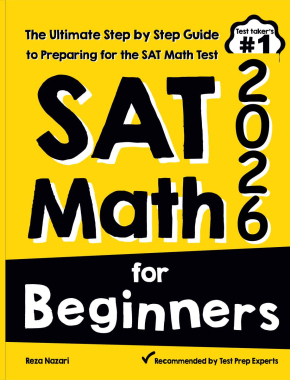
That order — rebuild first, strategize second — is what makes it work for students whose scores have been stuck. You cannot apply a clever strategy to a problem whose underlying math you do not understand. Fix the math, and the strategies finally have something solid to stand on.
What the SAT math section actually tests
The digital SAT’s math section is adaptive and built around four content areas:
- Algebra — linear equations, inequalities, and systems. This is the largest share of the test.
- Advanced math — quadratics, polynomials, exponential functions, and more abstract equations.
- Problem-solving and data analysis — ratios, percentages, proportions, and interpreting graphs and tables.
- Geometry and trigonometry — angles, triangles, circles, area, volume, and basic trig.
Notice that algebra dominates. A student with truly strong algebra has already won most of the SAT math battle — which is exactly why a book that rebuilds algebra properly is the highest-use SAT investment you can make.
Why this book works for students starting from the basics
- It teaches the math, not just the test. Each topic gets a real explanation and worked examples before any practice — so you understand, not just memorize.
- It builds in the right order. Concepts are sequenced so each one rests on the last. No sudden jumps, no assumed knowledge.
- It connects skills to SAT-style questions. Once a topic is solid, you see it the way the SAT will actually ask it.
- It includes full practice tests. Realistic practice builds timing, stamina, and calm before test day.
How to study with it
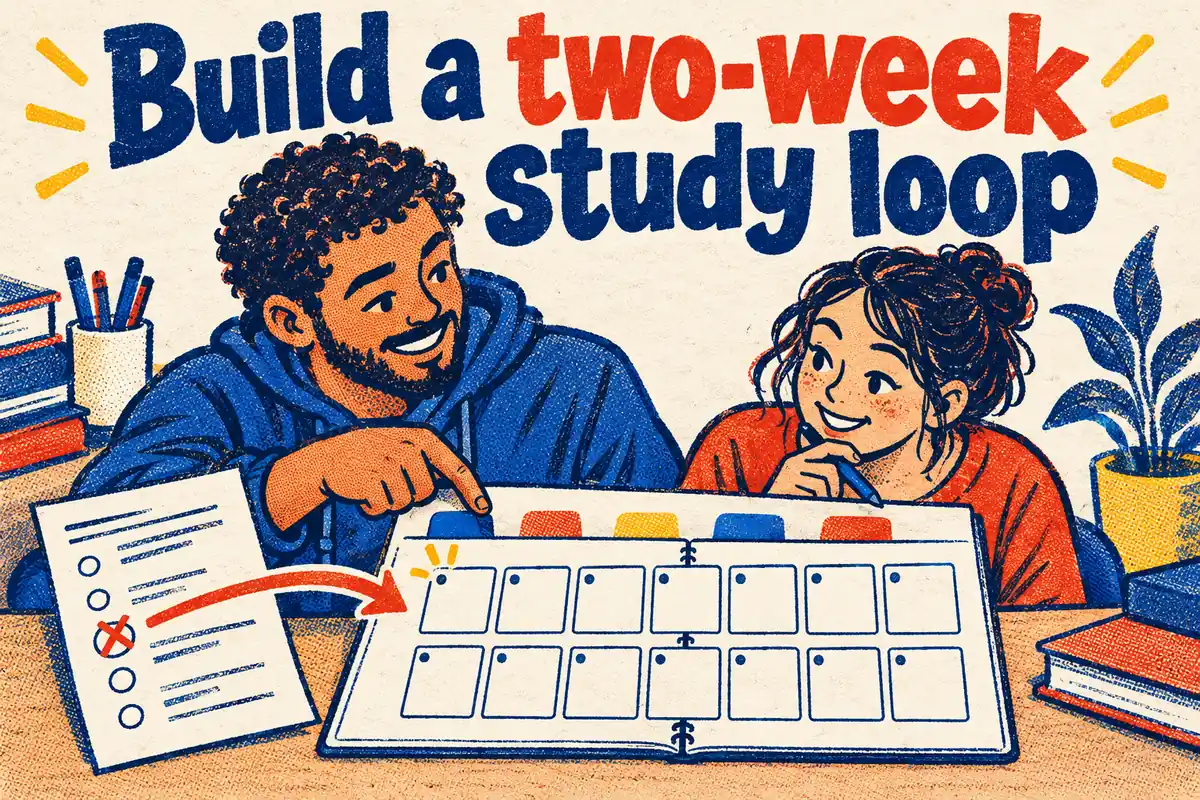
For a student starting early — ideally two to three months before the test — here is a plan that works:
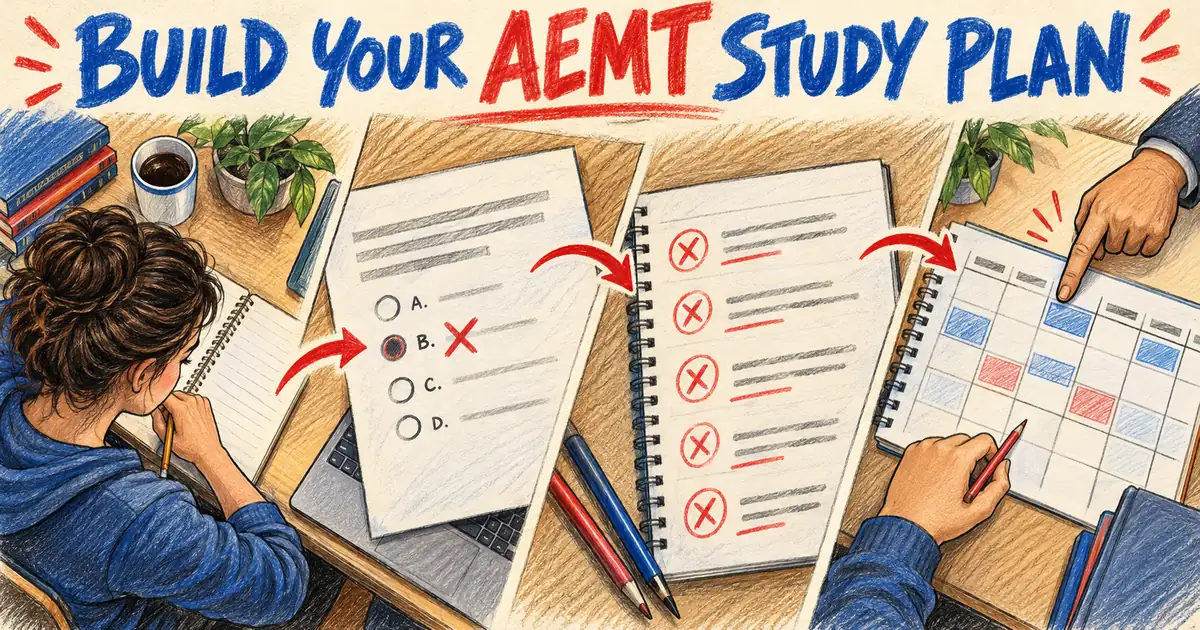
- Week 1: Take a full practice test to get an honest starting score and a map of your weak areas.
- Weeks 2–5: Rebuild algebra — linear equations, systems, inequalities, and functions. This is where the most points live.
- Weeks 6–7: Advanced math — quadratics, polynomials, and exponential functions.
- Week 8: Problem-solving, data analysis, geometry, and trigonometry.
- Weeks 9–10: Full practice tests under real timing, then targeted review of whatever still slips.
Two habits multiply your results. First, review every wrong answer until you understand exactly why it was wrong — your mistakes are a personalized study guide. Second, practice with the real test’s timing, so pace becomes automatic and never costs you points.
If your algebra needs deeper work than a few weeks allows, it is worth slowing down and rebuilding it properly — our guide to the best Algebra 1 book will get that foundation solid.
Who this book is for
- Students starting SAT prep from the basics — rusty, anxious, or unsure where to begin
- Students whose scores are stuck despite using strategy-only prep books
- Sophomores and juniors who want to start early and build steadily
- Self-studiers who need a book that can teach without a tutor
Common SAT math mistakes
- Skipping straight to practice tests. Tests reveal weaknesses; they do not fix them. Learn first, then test.
- Buying a strategy-only book when the math foundation is weak. Strategies cannot rescue a problem you do not understand.
- Practicing untimed forever. The SAT is a timed test. Train the way you will play.
- Not reviewing wrong answers. An unreviewed mistake is a point you have agreed to lose again.
Frequently asked questions
What is the best SAT math book for beginners?
If your algebra and geometry are rusty, choose a book that reteaches the math from the ground up before adding test strategy, such as SAT Math for Beginners. It should cover all four digital SAT math areas: algebra, advanced math, problem solving and data analysis, and geometry and trigonometry, with worked examples and practice answers. Once the basics feel solid, move on to full-length practice tests.
What is the best way to prep for SAT math?
Start with a diagnostic practice test to find your weak areas, then rebuild those topics one at a time. Beginners usually gain the most from linear equations, systems, percents and ratios, and basic quadratics. Study a little most days, keep an error log, and take a timed practice test every couple of weeks. The digital SAT math section has 44 questions in 70 minutes, split into two modules.
What is the best SAT math practice test?
The official full-length practice tests in the College Board’s Bluebook app are the closest match to the real digital SAT, because they use the same adaptive format and built-in tools, including the Desmos graphing calculator. Take them under timed conditions, then review every miss and trace it back to the topic you need to relearn. Save a few for the final weeks before test day.
Is there an SAT math question bank?
Yes. The College Board offers a free SAT Suite Question Bank where you can filter math questions by content area, skill and difficulty. It works well after you finish a chapter in a beginner book: pick that skill, start with easier questions, and work up to harder ones. Using it for targeted practice keeps the full-length Bluebook tests fresh for checking your overall progress.
What are the best SAT math resources?
A good beginner plan combines three things: a book that teaches the math step by step, the College Board’s free question bank for targeted practice, and official Bluebook practice tests for timed rehearsal. Practice with the Desmos calculator too, since it is built into the test and can speed up graphing and solving. A short daily routine with these tools beats occasional cramming.
The bottom line
The best SAT math book for a student starting from the basics is not a book of shortcuts — it is a book that rebuilds the math and then teaches the test. SAT Math for Beginners does exactly that, in the right order, at a pace a beginner can actually follow.
Start early, rebuild your foundation, finish with realistic practice, and review every mistake. A strong SAT math score is not reserved for “math people.” It is reserved for prepared people — and preparation is entirely within your control.

Related to This Article
More math articles
- Geometry Puzzle – Critical Thinking 18
- 5th Grade PSSA Math Practice Test Questions
- Top 10 3rd Grade ACT Aspire Math Practice Questions
- The Best Grade 3 Math Book for West Virginia Students
- Read a cost table in a fixed order
- Praxis Core Math Practice Test PDF with Answers (5733)
- How to Do Division Using Repeated Subtraction
- How to Solve Word Problems Involving the One-Step Equation
- Top 5 PERT Math Study Guides
- Convert Units of Measurement













What people say about "The Best SAT Math Book for Beginners"?
No one replied yet.