Sweepstakes Casinos Decoded: Gold Coins, Sweeps Coins, and Real Probability
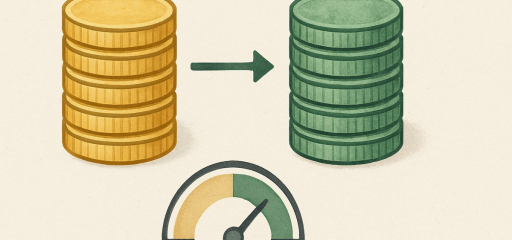
Sweepstakes casinos are the strangest legal product in the gambling-adjacent world right now. They look like online casinos, sound like online casinos, the slot reels spin the same way, but the operators will swear, sometimes in bold capital letters across the footer, that they’re not casinos at all. They’re “promotional sweepstakes.” Whether you find that convincing or laughable depends on how closely you read the fine print and how much you trust the math underneath it.
I’ve spent enough time poking at these sites to have an opinion, and I’ll share it as we go. The goal isn’t to praise or condemn. It’s to decode what’s actually going on with Gold Coins and Sweeps Coins, where the probability lives, and what something marketed as “free” really costs.
The Dual-Currency Trick That Makes the Whole Thing Legal
Every sweepstakes casino runs on two parallel currencies, and you can’t understand the model without holding both in your head at the same time.
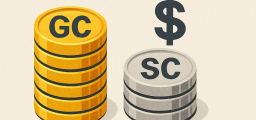
The first is Gold Coins (sometimes called Gold Chips, Play Coins, or whatever brand-specific name the operator invented). Gold Coins have no monetary value. You can buy them, win them, or blow through millions on a single bonus round, but you can’t redeem them for cash, prizes, gift cards, or anything else of real-world worth. Functionally identical to chips in a mobile freemium game.
The second currency is Sweeps Coins (or Sweepstakes Coins, SC, Promo Coins). These are the ones that matter, Sweeps Coins can be redeemed for actual prizes or cash, subject to a minimum threshold and the operator’s terms. They’re the reason anyone bothers playing for real.
Here’s where it gets clever. Operators don’t sell Sweeps Coins. Selling them would almost certainly cross the line into illegal online gambling in most U.S. Jurisdictions. What they do is sell Gold Coin packages and include Sweeps Coins as a free promotional bonus. You bought the Gold Coins, the marketing pitch says. The Sweeps Coins were a gift.
And because U.S. Sweepstakes law, rooted in older mail-in promotions like McDonald’s Monopoly, requires that any prize-eligible entry be available through a no-purchase-necessary path, every legitimate sweepstakes casino also has to offer a free Alternative Method of Entry, the AMOE. Usually it’s a mailed postcard, sometimes a daily login bonus. It has to exist, it has to actually work, and the prize-redemption odds for someone using the AMOE have to match those of a paying player. (For the legal scaffolding, the Cornell Legal Information Institute’s sweepstakes overview is the cleanest plain-English summary I know of.)
Where Sweepstakes Casinos Operate, and Where They Don’t
State availability is the part of this industry most likely to be wrong by the time you read it. Laws shift, attorneys general issue opinions, operators withdraw quietly. So I’ll refuse to give you a fixed list, and I’d encourage you to be suspicious of any blog that does.
What I can tell you is the general shape. A handful of states have either explicitly banned dual-currency sweepstakes models or pressured operators to leave, Washington and Idaho have historically been hostile, Michigan has tightened rules, and New York has been wobbly for years. Other states are gray zones; most of the country is currently permissive, though “currently” is doing heavy lifting in that sentence. If you’re going to play, check your state’s gaming commission or attorney general site. Don’t take a casino’s own “available in your state” splash screen as legal advice. It isn’t, and they have an obvious incentive.
How “Free” Sweeps Coins Actually Get Priced
This is the part that needs real math, because the marketing language is built to make you skip past it.
A typical Gold Coin package looks something like: pay $9.99, get 50,000 Gold Coins, plus 50 free Sweeps Coins. The Gold Coins are the headline. The Sweeps Coins are the “bonus.” But functionally, and let’s be honest with ourselves, almost nobody is paying $9.99 to play with imaginary tokens that can’t be cashed out. They’re paying for the Sweeps Coins. The Gold Coins are the legal wrapper.
So what’s the effective cost per Sweeps Coin? Divide the price by the Sweeps Coins received: $9.99 ÷ 50 = about $0.20 per SC. One Sweeps Coin typically redeems at $1 face value when you cash out (subject to minimums, usually $50 or $100). So you’re paying $0.20 to acquire $1 of redemption value, a 5-to-1 ratio.
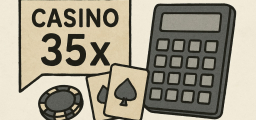
That ratio sounds incredible until you remember two things. First, you have to actually play those Sweeps Coins through a game with a house edge before you can redeem them, and many sites require you to wager each SC at least once (sometimes more) before it becomes redeemable. Second, the SC you wager will be subject to the same RTP as the underlying slot or table game.
Let’s run the numbers. Say you bought that package and got 50 SC. The slot you’re playing has an RTP of 96%, house edge 4%. If you wager each coin exactly once, your expected return on the SC pile is 50 × 0.96 = 48 SC, worth $48 at redemption. You paid $9.99. Expected profit: roughly $38. That looks great. That’s why people play.
But here’s where the asterisks pile up. Wagering requirements often demand you cycle the SC multiple times, many games have lower RTP than 96%, some operators reserve the right to deny redemptions for terms-of-service violations, and the variance on a single 50-SC session is enormous, the expected value is positive, but a sizable fraction of sessions end at zero.
Comparing the Effective Cost to a Real-Money Casino
The cleanest way to see what you’re actually paying for is to compare action-for-action against a regulated real-money online casino.
| Mechanic | Gold Coin Play | Sweeps Coin Play | Real-Money Casino |
|---|---|---|---|
| Real cost to spin | Effectively $0 (free fun) | ~$0.20 per SC wagered, paid up front via bundle | $1 per $1 wagered |
| Redeemable value | None | $1 per SC at threshold | $1 per $1 in account |
| Game RTP | Same engine as SC (often) | Same engine as Gold (often) | Same math, regulated disclosure |
| Legal classification | Promotional play | Sweepstakes entry | Licensed gambling |
| Free entry path | N/A | Required AMOE (postcard, login bonus) | None, purchase required |
| Withdrawal friction | N/A | Minimum threshold, KYC, wagering rules | Standard cashout |
| State availability | Wide | Restricted, shifting | Limited to licensed states |
The honest read: SC play, when you can buy in cheaply and the wagering requirement is mild, can produce a positive expected value relative to the up-front cost. That’s structurally unusual for casino-style games. It’s why the model exists in a legal gray zone in the first place. The state regulators who object aren’t being prudish; they’re noticing that something marketed as “promotional” is generating real player losses that look an awful lot like gambling losses.
The Probability Engine Doesn’t Care About the Wrapper
One thing I want to be precise about, because it gets fudged in marketing copy constantly: the RNG behind a sweepstakes slot is the same RNG that runs that slot in any other context. The reels don’t know whether you’re spending Gold Coins or Sweeps Coins. The house edge built into the paytable applies identically.
If a slot has a 95.5% RTP, over a huge number of spins both your Gold Coin balance and your Sweeps Coin balance will erode at roughly 4.5% per spin in expectation. The legal wrapper changes who can collect on a win and under what terms. It doesn’t change the probability distribution by a basis point.
This matters because some players seem to believe the “free” framing implies softer math. That the games are more generous because nobody’s officially gambling. They’re not. A bad slot is a bad slot whether the chips on top say “Gold” or “Sweeps.”
The Real Risks Beyond the Math
Even when the up-front numbers look favorable, a handful of things have bitten players I’ve talked to. None are deal-breakers on their own, but they belong on your radar.
- KYC delays. Identity verification before your first redemption can take days or, in messy cases, weeks. Your SC balance is real value sitting in an account that isn’t quite yours yet.
- Promo expiration. Bonus Sweeps Coins often expire if unused within a window. Buying a big pile and saving them for a “lucky night” can quietly cost you the bonus portion.
- Game-weighting in wagering. Some operators count blackjack wagering at 10 to 20% toward clearing your SC, meaning the favorable RTP of the game is offset by needing to wager many times more than face value.
- Geolocation hiccups. If you travel to a restricted state mid-session, your account may freeze and unfreezing requires support tickets and documentation.
- Withdrawal minimums. A $50 redemption floor means small wins accumulate but stay inaccessible until you cross the threshold, and the urge to keep playing toward that line is, predictably, where bankrolls die.
You’ll notice that last item is more about psychology than legality. The minimum threshold is a behavioral design choice as much as a financial one.
Where I Land On All This
I’m not anti-sweepstakes. The dual-currency model is a legitimately clever piece of legal engineering, and for players in states without licensed online casinos it can offer a measured way to play casino-style games with real redemption upside. The math, on a cheap entry bundle, can pencil out better than walking onto a brick-and-mortar floor with the same money.
I’m also not pro-sweepstakes. The model leans hard on language that obscures what’s happening, and the “you got these for free” framing is exactly the kind of thing that nudges players toward thinking of losses as not really losses. The regulators currently squinting at this industry are squinting for reasons that aren’t crazy.
If you want to develop the probability instincts to evaluate offers like these on your own, wagering requirements, expected-value calculations, variance, the works, the foundations live in basic probability and expected value, and there are accessible primers over at Effortless Math that don’t require any prior gambling vocabulary to follow. The arithmetic isn’t hard. The marketing is designed to keep you from doing it.
A Quick Word on Responsible Play
Sweepstakes casinos are designed to feel like they’re outside the gambling category, but the player experience, variance, near-misses, chasing losses, is identical to regulated online casino play. If you find yourself spending more than you planned, redeeming less than you deposited over the long run, or playing to feel something other than entertained, that’s worth listening to. The National Council on Problem Gambling maintains free, confidential help lines and treatment resources that apply just as much to dual-currency play as to traditional online casinos.
FAQ
Are sweepstakes casinos legal in my state? Maybe. The list shifts. Check your state attorney general or gaming commission directly rather than trusting an operator’s eligibility screen.
Are Sweeps Coins actually free? Technically yes. You receive them as a bonus with a Gold Coin purchase, and you can also obtain them through the no-purchase AMOE. Functionally, most paying players are buying Gold Coins as a pretext to acquire SC, and the effective cost per SC is the relevant number.
Is the RTP different from a real-money casino? The probability math is the same, the wrapper doesn’t change the engine. What changes is the cost of entry, the redemption friction, and the legal classification.
Can I make money playing sweepstakes casinos? Expected value on a first-time low-cost bundle is sometimes mildly positive on paper. Variance is large, wagering requirements eat into it, and over many bundles the operators are profitable for a reason. Treat it as entertainment with a redemption feature, not as income.
What’s an AMOE and do I have to use it? Alternative Method of Entry, a mailed postcard or daily free bonus that grants Sweeps Coins without purchase. You don’t have to use it, but its existence keeps the model on the sweepstakes side of the law.
What happens to unused Sweeps Coins? Operator-dependent. Many bonus SC expire; redeemable SC usually don’t, but accounts can be closed for inactivity. Read the terms before you let a balance sit.
The dual-currency casino is one of the more interesting legal-mathematical hybrids I’ve come across. If you walk in knowing what your Sweeps Coins actually cost, what the underlying probability looks like, and where the friction lives between a “win” on screen and a deposit in your bank account, you’ll make better decisions than most players around you. That alone is worth running the numbers.

Related to This Article
More math articles
- How to Use Measures of Center and Spread to Compare Populations
- Ratio, Proportion and Percentages Puzzle – Critical Thinking 7
- Crowds, Publics, and Masses
- The Best Algebra 1 Book for Texas Students
- Presidential management styles
- The Best Grade 4 Math Book for Illinois Students
- Top 10 Tips You MUST Know to Retake the SAT Math
- Free Grade 4 English Worksheets for Nevada Students
- How to Help Your 3rd Grade Student Prepare for the Texas STAAR Math Test
- How To Get A Perfect Score Of 36 On The ACT® Math Test?







What people say about "Sweepstakes Casinos Decoded: Gold Coins, Sweeps Coins, and Real Probability - Effortless Math"?
No one replied yet.