Grade 2 Math Practice for Hawaii Second Graders
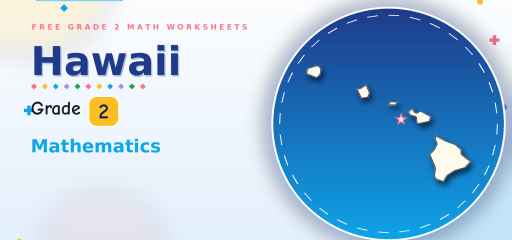
TL;DR: Free printable Grade 2 math worksheets for Hawaii families and teachers – place value, two- and three-digit addition and subtraction, time, money, measurement, and word problems aligned with the Hawaii Common Core math standards.
Key takeaways:
- Hawaii’s Smarter Balanced math test starts in grade 3, so grade 2 is the foundation year.
- Worksheets cover place value, addition and subtraction within 1000, time, money, measurement, and word problems.
- Every page is a free PDF – print as many copies as you need.
- Aligned with the Common Core State Standards for Mathematics, which Hawaii has adopted.
- Short, daily sessions build the number sense that grade-3 Smarter Balanced expects.
Free printable worksheets that make place value, time, and measurement click, one friendly page at a time.
Some of the best math practice in second grade doesn’t happen at a desk at all. It happens when a child counts the steps down to the beach, measures a piece of driftwood against their arm, or sorts a pocketful of coins after a trip to the store. Second graders are natural mathematicians. They just don’t always know it yet.
The job of second grade math is to take all that everyday curiosity and give it structure. Kids learn to read and write numbers to 1,000, add and subtract fluently, solve word problems, measure length, tell time, count money, and make sense of graphs. It’s a full plate, and a bit of regular practice at home helps every bite go down easier.
This free collection of Grade 2 math worksheets was made for Hawaii families who want that practice ready to go. Every worksheet is a printable PDF with an answer key. No signup, no email, no cost, just pick a page and print it.
The worksheets follow the Grade 2 math standards Hawaii has adopted, so what your child practices at home matches what their teacher is covering in class, whether you’re on Oahu, Maui, the Big Island, or Kauai.
What the Collection Covers
Inside you’ll find 34 worksheets, sorted into eight chapters. Each chapter handles one major part of second grade math, and they don’t depend on each other, so feel free to work in order or jump to whatever your child needs most right now.
Every worksheet uses the same calm, clear layout. There’s a “Key Ideas” box that explains the skill simply, a couple of worked examples to show the way, a set of practice problems, and an answer key on the last page. Kids settle into the format quickly, which means more doing math and less figuring out instructions.
Here’s the full collection.
Place Value and Number Sense
- Understanding Place Value, How a digit’s spot decides what it’s really worth.
- Reading and Writing Numbers to 1,000, Moving between number words and digits with ease.
- Expanded Form, Showing a number as the sum of its place values.
- Skip Counting, Counting by 5s, 10s, and 100s until it feels easy.
- Comparing and Ordering 3-Digit Numbers, Greater than, less than, and ordering numbers.
Addition and Subtraction
- Addition Facts Within 20, Steady practice toward quick recall of basic sums.
- Subtraction Facts Within 20, The matching fluency for take-away facts.
- Adding Within 100, Two-digit addition, regrouping and all.
- Subtracting Within 100, Two-digit subtraction with clear, step-by-step borrowing.
- Adding Within 1,000, Stretching addition to three-digit numbers.
- Subtracting Within 1,000, Three-digit subtraction that pays off neat work.
- Mentally Adding and Subtracting 10 and 100, Quick mental hops by tens and hundreds.
Word Problems and Equations
- One-Step Word Problems, Reading a story and writing one math sentence.
- Two-Step Word Problems, Problems with two parts to work through in order.
- Finding the Unknown Number, Solving for the missing piece of an equation.
Odd, Even, and Arrays
- Odd and Even Numbers, Sorting numbers that pair up evenly from those that don’t.
- Even Numbers as Equal Addends, Writing an even number as two equal groups.
- Rectangular Arrays, Rows and columns that hint at multiplication ahead.
- Repeated Addition with Arrays, Adding equal rows to find a total.
Measurement and Length
- Measuring Length with Tools, Using a ruler and tape measure properly.
- Estimating Lengths, Making a thoughtful guess before measuring.
- Comparing Lengths, Finding which is longer and by what amount.
- Adding and Subtracting Lengths, Combining measurements in word problems.
- Length on a Number Line, Showing length and distance on a number line.
Time and Money
- Telling Time to the Nearest Five Minutes, Reading analog clocks to the five-minute mark.
- A.M. And P.M., Knowing the difference between morning and evening hours.
- Counting Coins, Adding up mixed coins to a total.
- Money Word Problems, Buying, spending, and working out change.
Data and Graphs
- Line Plots, Plotting measurement data above a number line.
- Picture Graphs, Reading graphs where pictures stand for amounts.
- Bar Graphs, Comparing categories with bars and answering questions.
Geometry
- Recognizing and Drawing Shapes, Naming and sketching shapes by sides and corners.
- Partitioning Rectangles into Rows and Columns, Dividing a rectangle into a grid of equal squares.
- Equal Shares: Halves, Thirds, and Fourths, Fair sharing, the doorway to fractions.
Using the Worksheets Well
A worksheet is only as good as the way it’s used. A few simple habits turn these pages into real progress.
Print one at a time. A single sheet has a visible end, and reaching it gives your child a small, honest win. A whole stack just feels like work.
Read the Key Ideas box before starting. Those few lines are the lesson in shorthand. Reading them together first means fewer puzzled looks later.
Talk through the examples. Ask your child to explain the worked example back to you in their own words. If they can teach it, they understand it.
Use the answer key together. A missed problem isn’t a failure. It’s a signpost. Ask “walk me through how you solved it” and you’ll find the exact spot to revisit.
Come back to weak spots. If a skill felt shaky, set the page aside and print a new copy a week later. The return trip is where confidence is built.
About the Smarter Balanced Assessment
Hawaii uses the Smarter Balanced assessment, and parents often want to know when it begins. Good news: Smarter Balanced math testing starts in third grade. Second graders don’t take a statewide math test at all.
That makes second grade the foundation year, and it’s a real opportunity. Your child has a whole year to grow comfortable with three-digit numbers, addition and subtraction, word problems, measurement, and graphs, without a test hanging overhead. Every worksheet in this collection builds the skills Smarter Balanced will eventually check in later grades.
The best plan is the simplest one: focus on understanding, not testing. A second grader who truly gets this year’s math walks into third grade steady and prepared, no scramble needed.
Frequently Asked Questions
Are the worksheets free, with no catch? Yes. They’re free printable PDFs. No account, no email, no fee.
Do they come with answer keys? Every worksheet has an answer key on the last page, so checking work is quick and easy.
Can we use these alongside what’s taught in school? That’s exactly what they’re for. Match the chapter to the current classroom topic and you’ve got reinforcement that fits.
What’s a good amount of practice per week? A couple of short sessions, ten or fifteen minutes each, works better than one long stretch. Steady wins.
My second grader loves hands-on math. Will these still help? Yes. Pair a worksheet with real objects, coins, blocks, a ruler, and the page becomes part of the hands-on fun.
To Wrap Up
Second grade is when math starts to feel like something a child owns rather than something that happens to them. With these free worksheets and a little time together, your Hawaii second grader will keep that confidence growing. Pick a chapter, print a page, and enjoy the small daily wins. They add up to something big.
Ready for Grade 3 Math? The Hawaii Grade 3 Math Bundle
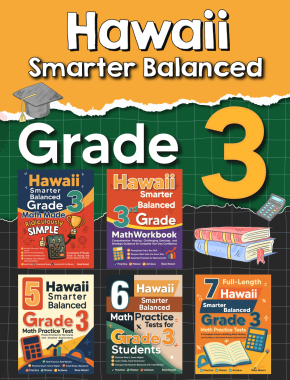
Second grade is the build-up year, and when your child is ready for what comes next, this bundle makes the jump to Grade 3 math feel easy. It packs full practice-test books, complete answer keys, and step-by-step explanations for the Grade 3 math skills just ahead.
Getting Ready for Grade 3 English, Too? The Hawaii Grade 3 English Bundle
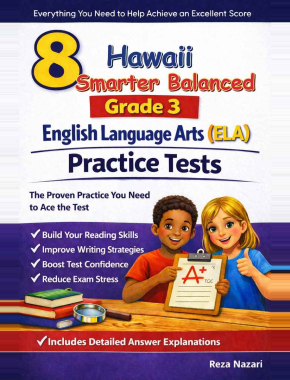
Reading and writing grow right alongside math. If your second grader could use a head start in English as well, this Hawaii Grade 3 English bundle covers it — practice tests, answer keys, and friendly explanations in one download.
Recommended EffortlessMath Books
For a workbook that pairs neatly with these printable practice pages, Mastering Grade 2 Math walks your child through every second-grade topic with clear examples and lots of try-it-yourself problems. For extra word-problem practice (the part many second graders find hardest), see Mastering Grade 2 Math Word Problems.
Related EffortlessMath Lessons
If a topic on this page feels rusty, these short lessons go deeper:
- How to add and subtract two-digit numbers
- Place value to the hundreds
- How to tell time to the nearest five minutes
- How to count coins and dollar bills
- How to solve word problems

Related to This Article
More math articles
- Geometry Puzzle – Challenge 62
- The Best Grade 3 Math Book for Alabama Students
- Surface Area and Volume Formulas: Complete Reference for 2026
- Government responsiveness
- Alabama ACAP Grade 8 Math Free Worksheets: 72 Printable PDFs with Step-by-Step Answer Keys
- Chapter 15: The Federal Courts
- The Best Grade 8 ELA Practice Tests for New York Students
- Gender
- Spaulding Classification and Disinfectant Selection
- CPA FAR Cash Flows: Direct vs Indirect Method (2027 Prep)







What people say about "Grade 2 Math Worksheets for Hawaii"?
No one replied yet.