CLEP U.S. History I 017: The Transatlantic Slave Trade and Middle Passage
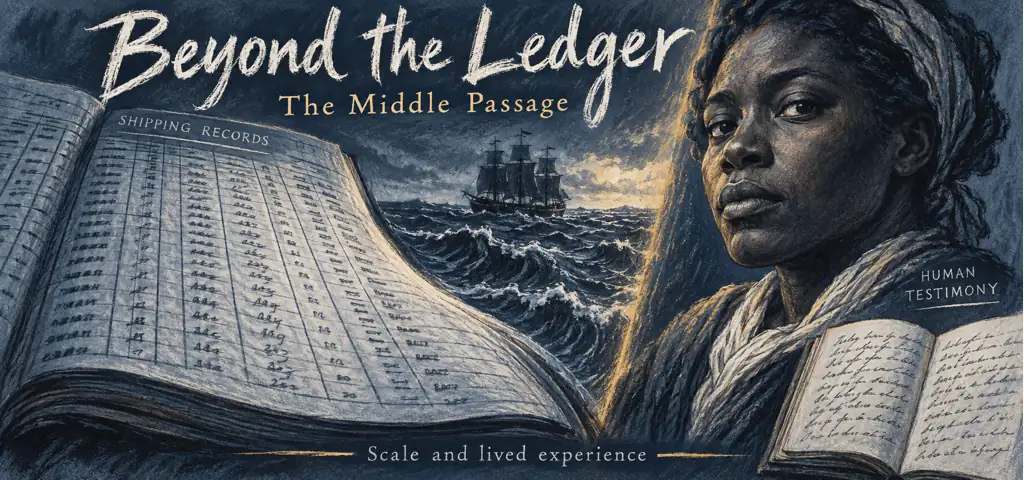
Lesson 4.2 of Chapter 4 of the U.S. History to 1877 study guide on Effortless Math covers CLEP U.S. History I 017: The Transatlantic Slave Trade and Middle Passage: the key terms, the core ideas, and worked examples showing how this topic is tested on the exam.
U.S. History to 1877 | Chapter 4 | Lesson 4.2
The SlaveVoyages estimates for 1501-1866 indicate that about 12.5 million captive Africans were forced aboard Atlantic slave ships and about 10.7 million disembarked, mostly in the Americas. “Embarked” and “arrived” are not interchangeable: the gap includes deaths during the Middle Passage, and neither figure counts every person seized before reaching the coast. Most survivors landed in Brazil and the Caribbean rather than Britain’s mainland colonies. European merchants purchased captives at African ports, but capture itself arose through African wars, raids, kidnapping, judicial enslavement, and commercial networks altered by Atlantic demand. African rulers and merchants participated under unequal and changing conditions. That fact does not transfer responsibility away from European empires and American buyers who created enormous demand and profited from racial slavery.
The Middle Passage was the ocean crossing endured by captives. Traders packed people below decks, separated families and language groups, restricted movement, and exposed them to disease, thirst, violence, and terror. Mortality was high, though it varied by voyage and period. Captives resisted through refusal to eat, communication, sabotage, uprising, and, in desperate cases, suicide. Crew violence tried to turn persons into saleable property, but never erased their humanity.
On arrival, merchants sold survivors and attempted to conceal origins and kin ties. The trade’s demographic effects differed by region. Caribbean sugar colonies often imported continuously because brutal work and disease produced high mortality. Mainland populations eventually grew more through birth, even as legal domestic trading later separated families. Ports such as Charleston and Newport were linked to the business, while British financiers, insurers, manufacturers, and consumers shared in its returns.
Historians use shipping databases, merchants’ records, and survivor testimony to reconstruct the trade. Ledgers can count bodies and prices but reproduce the trader’s view. Personal narratives illuminate fear, confusion, and resistance, though no single experience represents millions. Responsible analysis uses both quantitative scale and human evidence.
A focused video lesson
Khan Academy offers a visual route through this topic. As you watch, compare its explanation with the source limits in the written lesson.
Video: The Atlantic slave trade, Khan Academy.
Check your understanding
- Most captives carried across the Atlantic went to
- Europe rather than plantation regions
- mainland New England and the middle colonies
- French Canada and Newfoundland
- mainland British North America as a whole
- Brazil and the Caribbean
- The Middle Passage refers to
- forced marches from the interior to African ports
- captives’ Atlantic crossing
- the sale and seasoning process after arrival
- the return voyage carrying plantation commodities
- migration between mainland plantations
- Select all that apply. Captives resisted aboard ships through
- uprisings
- sabotage
- communication
- refusal to eat
- control of shipping companies
- Explain why historians need both shipping statistics and personal testimony.
Write a brief response using a named fact from the lesson.
Open the answers and reasoning
Independent preparation. CLEP is a registered trademark of the College Board, which does not endorse this lesson.

Related to This Article
More math articles
- Free Grade 5 English Worksheets for Florida Students
- How to Measure Angles with a Protractor
- Fifteen Reds in a Row: When Roulette Streaks Are Math, Not Magic
- ISEE Upper-Level Math FREE Sample Practice Questions
- The Ultimate 7th Grade MEA Math Course (+FREE Worksheets)
- The Best Grade 8 Math Book for Tennessee Students
- The Best Grade 8 Math Book for Connecticut Students
- How Much Does a Tesla Cost?
- The Best Grade 3 Math Book for Michigan Students
- Sheet-Metal and Electrical Hand Tools




















What people say about "The Transatlantic Slave Trade and Middle Passage"?
No one replied yet.