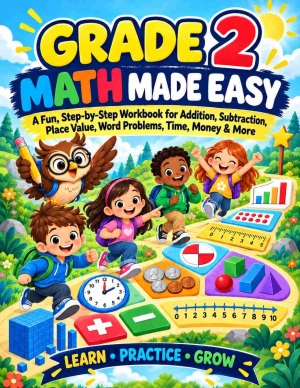
New York Grade 2 Math Worksheets — Free Printable PDFs

New York Grade 2 Math Worksheets, Free Printable PDFs: a free, printable set you can download and use right away, with answer keys, organized by topic so students can practice one skill at a time and teachers can assign exactly what a lesson needs.
Hands-on practice pages with answer keys to help your second grader feel sure of every skill, and it’s all free.
It usually happens around a Tuesday afternoon. Your second grader is staring at a word problem, “There were 14 apples on the table and 6 were eaten”, and you watch the gears turn. Then they look up: “So I take away the 6, right?” Yes. Right. That little spark of figuring-it-out is the whole point of second-grade math.
Grade 2 is a turning-point year. Numbers grow all the way to 1,000. Addition and subtraction become quicker and more flexible. Children measure objects with rulers, read clocks to the nearest five minutes, count handfuls of coins, and start interpreting picture and bar graphs. From an apartment in Brooklyn to a house in Buffalo, families everywhere are helping their kids through these same milestones, and a little regular practice goes a long way.
We made this collection of free Grade 2 math worksheets for New York families. Each one is a printable PDF that comes with a full answer key. No signup, no email address, no fee. Print one page or print a whole chapter. It’s up to you.
Maybe your child loves measuring but stumbles over regrouping. Maybe arrays come easily and clocks don’t. Wherever the strengths and gaps are, there’s targeted practice here to match.
Quick answer: New York’s 2nd grade math follows the Next Generation Mathematics Learning Standards. Children count and skip-count within 1,000, know sums within 20 from memory, add and subtract fluently within 100, tell time in five-minute steps, count coins up to one dollar, and draw picture and bar graphs. Example: 3 quarters and 2 dimes make 95¢.
What’s in the Collection
These worksheets are sorted into eight chapters that follow the Grade 2 math standards New York has adopted. Move through them in order if you like a clear plan, or hop straight to the topic your child is working on in class.
Every worksheet uses the same comfortable structure: a brief “Key Ideas” box that explains the skill simply, a couple of worked examples to show the thinking, then a round of practice problems. The answer key is at the end so reviewing is quick and painless.
Here’s the complete list.
Place Value and Number Sense
- Understanding Place Value, Take numbers apart into hundreds, tens, and ones so they stop feeling overwhelming.
- Reading and Writing Numbers to 1,000, Switch easily between number words and digits.
- Expanded Form, Stretch a number like 284 into 200 + 80 + 4 and see each digit’s value.
- Skip Counting, Count by 2s, 5s, 10s, and 100s, the rhythm under faster math.
- Comparing and Ordering 3-Digit Numbers, Decide which number is greater and put a set in order.
Addition and Subtraction
- Addition Facts Within 20, Make the everyday sums quick and automatic.
- Subtraction Facts Within 20, Practice take-away until counting on fingers fades away.
- Adding Within 100, Two-digit addition, with and without regrouping.
- Subtracting Within 100, Two-digit subtraction, including borrowing across a place.
- Adding Within 1,000, Three-digit addition rooted in place value.
- Subtracting Within 1,000, Three-digit subtraction, broken into manageable steps.
- Mentally Adding and Subtracting 10 and 100, Spot the patterns and do it all in your head.
Word Problems and Equations
- One-Step Word Problems, Turn a short story into one equation and solve it.
- Two-Step Word Problems, Tackle problems that take two connected steps.
- Finding the Unknown Number, Find the missing piece in an equation, early algebra in disguise.
Odd, Even, and Arrays
- Odd and Even Numbers, Sort numbers by whether they pair up evenly.
- Even Numbers as Equal Addends, See why every even number is two equal parts.
- Rectangular Arrays, Arrange objects in neat rows and columns, multiplication’s first cousin.
- Repeated Addition with Arrays, Add equal rows to reach a total.
Measurement and Length
- Measuring Length with Tools, Use rulers and tape measures on real objects.
- Estimating Lengths, Make a smart guess first, then measure to see how close.
- Comparing Lengths, Work out how much longer or shorter one object is.
- Adding and Subtracting Lengths, Combine and compare measurements within word problems.
- Length on a Number Line, Use a number line to measure distance.
Time and Money
- Telling Time to the Nearest Five Minutes, Read analog clocks five minutes at a time.
- A.M. And P.M., Tie times to morning, afternoon, and night.
- Counting Coins, Add pennies, nickels, dimes, and quarters into a total.
- Money Word Problems, Solve real-world spending and change problems.
Data and Graphs
- Line Plots, Plot measurement data and interpret it.
- Picture Graphs, Use symbols to display and compare amounts.
- Bar Graphs, Read bar graphs and answer questions from the data.
Geometry
- Recognizing and Drawing Shapes, Name and draw shapes by sides and angles.
- Partitioning Rectangles into Rows and Columns, Divide a rectangle into equal squares and count them.
- Equal Shares: Halves, Thirds, and Fourths, Split shapes into fair, equal parts, fractions, getting started.
What New York’s Next Generation Standards Expect in Grade 2
New York schools teach math using the New York State Next Generation Mathematics Learning Standards. The grade 2 standards look a lot like other states’ at first glance, but a few details are specific to New York. This table pulls out the ones parents ask about most.
| Standard | What it asks | Worksheet chapter |
|---|---|---|
| NY-2.OA.2 | Add and subtract within 20 using mental strategies, and know from memory all sums of two one-digit numbers | Addition and Subtraction |
| NY-2.OA.3 | Tell whether a group of up to 20 objects is odd or even, and write an even number as two equal addends | Odd, Even, and Arrays |
| NY-2.NBT.2 | Count within 1,000 and skip-count by 5s, 10s and 100s | Place Value and Number Sense |
| NY-2.NBT.5 | Add and subtract fluently within 100 | Addition and Subtraction |
| NY-2.MD.7 | Tell time in five-minute steps on analog and digital clocks, using a.m. and p.m. | Time and Money |
| NY-2.MD.8 | Count mixed coins up to one dollar and solve problems within one dollar using quarters, dimes, nickels and pennies | Time and Money |
| NY-2.MD.10 | Draw picture graphs and bar graphs with up to four categories | Data and Graphs |
| NY-2.G.1 | Sort flat shapes into polygons and non-polygons | Geometry |
Two things stand out. Money in New York’s grade 2 standards stays with coins and amounts up to one dollar, so you can skip bigger bill problems for now. And the standards say fact fluency within 20 takes much of the year for many children, so steady practice matters more than speed in the fall.
Making These Worksheets Work for Your Child
The worksheet is the tool; the routine around it is what builds the skill. A few habits make practice land.
Do one page at a time. Second graders think their best in short bursts, a focused ten to fifteen minutes beats a long, drifting session.
Read the Key Ideas box together before anything else. Those few lines set up the page, and reading them out loud catches a misunderstanding before it spreads.
Work through the examples together. Have your child put each step into their own words and explain it back. That retelling is where the skill takes hold.
Check answers as a team. A missed problem isn’t a setback. It’s a hint. Ask “where did this start to slip?” and redo just that one.
Loop back to weaker skills about a week later. The second visit, after a short pause, is when practice really sticks. If two-step word problems felt rocky on Monday, try them again the next week and notice the difference.
About the New York State Math Test
If you’ve been wondering whether your second grader should be preparing for the New York State Math Test, here’s the honest, comforting answer: that test doesn’t begin until third grade.
That makes Grade 2 the foundation year, and there’s freedom in that. There’s nothing to cram for and no testing pressure to manage. The real job right now is building solid, comfortable understanding: facts your child knows without counting, a true grasp of place value, the confidence to read a word problem and make a plan.
A second grader who ends the year feeling capable with numbers is the same child who walks into third grade, and eventually the state test, feeling steady. These worksheets exist to help build that everyday confidence, a short session at a time.
Common Grade 2 Mistakes and Quick Fixes
When you check a worksheet against the answer key, the same few slips show up again and again in second grade. Here is what to look for and a simple way to fix each one.
- Subtracting the smaller digit from the bigger one. In 52 – 27, a child may write 35 by doing 7 – 2 in the ones place. Fix: ask ‘Can I take 7 from 2?’ and show trading one ten for ten ones, so the problem becomes 12 – 7 = 5 ones and 4 – 2 = 2 tens, giving 25.
- Reading the clock’s hands backwards. A child sees the long hand on the 2 and says 2 o’clock. Fix: name the hands out loud every time: the short hand tells the hour, the long hand tells the minutes, and each number on the clock is worth 5 minutes.
- Counting coins instead of their value. Five coins become ‘5 cents’. Fix: sort the coins from largest to smallest value first, then count on: 25, 35, 45, 50, 51.
- Forgetting the zero in place value. Four hundred six becomes 46. Fix: draw three boxes for hundreds, tens and ones, and fill every box, even with a 0.
- Calling a circle a polygon. Fix: a polygon is a closed shape made only of straight sides. Run a finger around the edge: if it curves, it is not a polygon.
When a mistake repeats, print the matching worksheet again a week later and see whether the fix stuck.
Practice Quiz: 10 Questions
Answer each question and press Submit to see your result right away.
Answer each question and press Submit to see your result right away.
Frequently Asked Questions
Do I have to pay or sign up for anything? No. Every worksheet is completely free to download and print. There’s no account, no email, and no paywall, just choose what you need and print.
My child gets frustrated with math. How do I keep practice positive? Keep sessions short, celebrate effort over speed, and tackle one page at a time. When something’s hard, work an example together first so your child starts from a small win rather than a blank page.
Where should a child who’s behind begin? Start with addition and subtraction facts within 20. Those facts support nearly everything else in second grade, so getting them solid first makes the rest go more smoothly.
Are the answer keys included? Yes, every worksheet has an answer key built in, so you can check work together and clear up confusion right away.
Can teachers and tutors use these? Of course. They’re well suited to classroom warm-ups, math centers, homework, and one-on-one tutoring across New York.
What math standards does New York use for 2nd grade? New York uses the New York State Next Generation Mathematics Learning Standards. In grade 2 they cover operations and algebraic thinking, number and operations in base ten, measurement and data, and geometry. Each standard has a code like NY-2.NBT.5, which you may see on report cards or homework notes from your child’s teacher.
Do New York 2nd graders need to memorize addition facts? Yes. New York’s grade 2 standard asks children to know from memory all sums of two one-digit numbers, such as 8 + 7 = 15, by the end of the year. They should also add and subtract within 20 using mental strategies. Five minutes of quick fact practice most days works better than one long session a week.
When do New York students take their first state math test? The first New York State Mathematics Test is in grade 3, given in the spring (April or May). For grade 3 it is two sessions over two days, and students in grades 3 to 5 may not use calculators. A ruler is used during both sessions, so measuring practice in grade 2 pays off.
What money skills do New York 2nd graders learn? They count a mixed set of quarters, dimes, nickels and pennies up to one dollar, and solve word problems within one dollar. For example, a pencil costs 45¢ and you pay with 2 quarters, so you get 5¢ back. Larger amounts with dollar bills come in later grades in New York.
You Can Do This Together
Second grade math is made of small, real moments, a word problem that finally makes sense, a tower of base-ten blocks, a clock read correctly on the first look. You don’t need to be a math whiz to help your child shine. You need a few printed pages and a little time side by side.
Choose a worksheet that fits where your second grader is today, print it out, and dig in together. The confidence grows, and it stays.
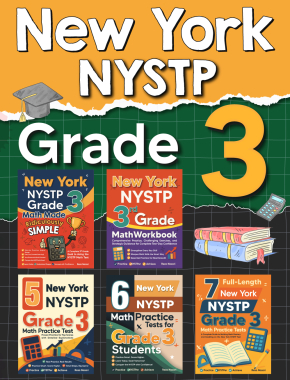
Ready for Grade 3 Math? The New York Grade 3 Math Bundle
Second grade is the build-up year, and when your child is ready for what comes next, this bundle makes the jump to Grade 3 math feel easy. It packs full practice-test books, complete answer keys, and step-by-step explanations for the Grade 3 math skills just ahead.
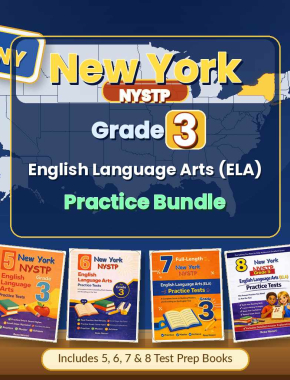
Getting Ready for Grade 3 English, Too? The New York Grade 3 English Bundle
Reading and writing grow right alongside math. If your second grader could use a head start in English as well, this New York Grade 3 English bundle covers it — practice tests, answer keys, and friendly explanations in one download.

Related to This Article
More math articles
- Death penalty
- Equivalent Rates
- Prepare for the SAT Math: The Right Combination of Hard Work and Time Management
- Free Grade 8 English Worksheets for Oregon Students
- Modern Environmentalism and the EPA: Laws, Tools and Limits
- The Best Grade 3 Math Book for Florida Students
- Unlocking the Secrets of Triangle Angle Sum
- 8th Grade OST Math Practice Test Questions
- Joint committees
- Marx, Durkheim, and Weber







What people say about "2nd Grade Math New York: Free Worksheets With Answers"?
No one replied yet.