The Best Grade 2 Math Worksheets for New Mexico Students
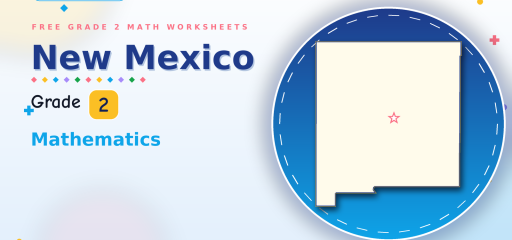
The Best Grade 2 Math Worksheets for New Mexico Students: a free, printable set you can download and use right away, with answer keys, organized by topic so students can practice one skill at a time and teachers can assign exactly what a lesson needs.
A free, printable practice library, with answer keys, to carry your second grader through a big math year.
The first time a second grader builds the number 365 out of base-ten blocks, three flat hundreds, six tens, five little ones, something clicks. Up to that point, a big number is just a long word. Suddenly it’s a thing they can hold, count, and rearrange. That moment, from a kitchen in Albuquerque to a classroom in Las Cruces, is what Grade 2 math is really about.
Second grade is the year the pieces start fitting together. Place value reaches 1,000. Addition and subtraction get quicker and more flexible. Kids measure with rulers, read clocks, count coins, and start pulling information out of graphs. It’s a full, busy year, and a steady stream of short practice at home makes all the difference.
We built this collection of free Grade 2 math worksheets with New Mexico families in mind. Each one is a printable PDF with a complete answer key. There’s no signup, no email, no cost. Print a single page tonight or the whole set for the months ahead.
Some children will breeze through addition facts and slow down at word problems. Others will love measuring and find time-telling tricky. That’s normal, and this collection gives you something for every one of those spots.
What You’ll Find in This Collection
The worksheets are grouped into eight chapters that line up with the Grade 2 math standards New Mexico has adopted. You can work straight through them or skip to whatever your child is tackling in class right now.
Every page follows the same dependable shape: a short “Key Ideas” box explaining the skill in everyday words, a few worked examples to model the thinking, then practice problems. The answer key sits at the back, making it quick to review together.
Here’s everything in the set.
Place Value and Number Sense
- Understanding Place Value, Break numbers into hundreds, tens, and ones until big numbers make sense.
- Reading and Writing Numbers to 1,000, Move smoothly between digits and number words.
- Expanded Form, Write 365 as 300 + 60 + 5 and see the worth of each digit.
- Skip Counting, Count by 2s, 5s, 10s, and 100s, the groundwork for multiplication.
- Comparing and Ordering 3-Digit Numbers, Tell which number is bigger and arrange them in order.
Addition and Subtraction
- Addition Facts Within 20, Lock in the sums kids reach for constantly.
- Subtraction Facts Within 20, Practice take-away until it becomes automatic.
- Adding Within 100, Two-digit addition, with and without regrouping.
- Subtracting Within 100, Two-digit subtraction, including borrowing.
- Adding Within 1,000, Three-digit sums built on place value.
- Subtracting Within 1,000, Three-digit subtraction, one clear step at a time.
- Mentally Adding and Subtracting 10 and 100, Use number patterns to add and subtract in your head.
Word Problems and Equations
- One-Step Word Problems, Read a short story and translate it into one equation.
- Two-Step Word Problems, Solve problems that take two connected steps.
- Finding the Unknown Number, Hunt for the missing value in an equation.
Odd, Even, and Arrays
- Odd and Even Numbers, Sort numbers by whether they pair up with nothing left over.
- Even Numbers as Equal Addends, Show how an even number splits into two equal parts.
- Rectangular Arrays, Set objects in rows and columns, a first look at multiplication.
- Repeated Addition with Arrays, Add up equal rows to find a total.
Measurement and Length
- Measuring Length with Tools, Measure real objects with rulers and tape measures.
- Estimating Lengths, Make a thoughtful guess, then measure to check.
- Comparing Lengths, Find out how much longer or shorter one thing is than another.
- Adding and Subtracting Lengths, Combine and compare measurements in word problems.
- Length on a Number Line, Treat a number line as a ruler for distance.
Time and Money
- Telling Time to the Nearest Five Minutes, Read an analog clock five minutes at a time.
- A.M. And P.M., Match times to morning, afternoon, and evening.
- Counting Coins, Add pennies, nickels, dimes, and quarters to a total.
- Money Word Problems, Work out everyday buying and change problems.
Data and Graphs
- Line Plots, Plot measurements on a line and read them back.
- Picture Graphs, Use pictures to show and compare quantities.
- Bar Graphs, Read bar graphs and answer questions about them.
Geometry
- Recognizing and Drawing Shapes, Identify and draw shapes by counting sides and corners.
- Partitioning Rectangles into Rows and Columns, Cut a rectangle into equal squares and count them.
- Equal Shares: Halves, Thirds, and Fourths, Split shapes into fair, equal pieces, fractions, beginning gently.
Getting the Most Out of Each Worksheet
How you use a worksheet matters as much as the worksheet itself. A handful of simple routines go a long way.
Work one page at a time. Second graders concentrate best in short stretches, so a focused ten or fifteen minutes beats a drawn-out session.
Read the Key Ideas box together first. Those couple of sentences frame the whole skill, and saying them aloud surfaces any confusion before the pencil moves.
Go through the worked examples shoulder to shoulder. Ask your child to retell each step in their own words, explaining it is how they really learn it.
Use the answer key together once the page is finished. A wrong answer is just information. Ask “where did this turn go wrong?” and rework that one problem.
Revisit tricky skills about a week later. The second try, after a short rest, is when things settle. If telling time to five minutes felt shaky this week, pull that worksheet out again next week, the progress will surprise you both.
A Word About the MSSA
You may have heard of the MSSA, the Measures of Student Success and Achievement, and wondered if your second grader needs to start getting ready for it. Good news: the MSSA math assessment doesn’t begin until third grade.
That makes Grade 2 the foundation year, and that’s a genuinely freeing way to think about it. There’s no test to cram for. The work right now is simply to build solid, comfortable understanding, fluent facts, a real grip on place value, the ability to make sense of a word problem, the habit of checking work.
A second grader who finishes the year feeling capable with numbers is exactly the child who walks into third grade, and eventually the MSSA, calm and prepared. These worksheets are here to help build that quiet confidence, one short practice at a time.
Frequently Asked Questions
Is there any cost to use these worksheets?
None at all. Every worksheet is free to download and print, with no account, no email, and no subscription. Take one page or all of them.
Which chapter should we start with?
If you’re not sure, start with whatever your child is doing in class this week so home practice reinforces school. If you want a fresh starting point, the Place Value chapter is the natural opening for the year.
My child knows the answers but works slowly. Is that a problem?
Not at all in second grade. Speed comes with repetition. Keep practice light and regular, and fluency builds on its own. There’s no need to rush.
Are answer keys included?
Yes. Every worksheet comes with its own answer key, so you can review work together and fix small misunderstandings on the spot.
Can I use these for summer practice?
Definitely. A worksheet or two a week over the summer keeps skills sharp and makes the jump to third grade much smoother.
A Final Encouragement
Second grade math grows out of ordinary moments, blocks stacked into a hundred, coins counted into a dollar, a clock finally read on the first try. You don’t need special training to help your child through it. You need a few printed pages and a willingness to sit down beside them.
Pick a worksheet that matches where your second grader is right now, print it, and start. The confidence builds steadily, and it lasts.
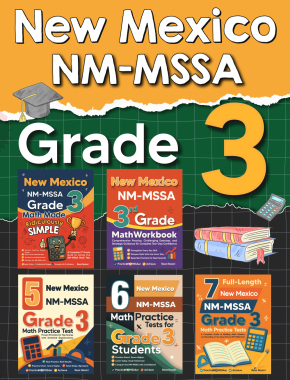
Ready for Grade 3 Math? The New Mexico Grade 3 Math Bundle
Second grade is the build-up year, and when your child is ready for what comes next, this bundle makes the jump to Grade 3 math feel easy. It packs full practice-test books, complete answer keys, and step-by-step explanations for the Grade 3 math skills just ahead.
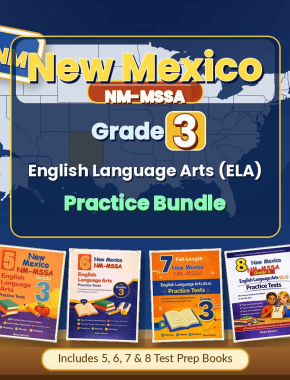
Getting Ready for Grade 3 English, Too? The New Mexico Grade 3 English Bundle
Reading and writing grow right alongside math. If your second grader could use a head start in English as well, this New Mexico Grade 3 English bundle covers it — practice tests, answer keys, and friendly explanations in one download.

Related to This Article
More math articles
- Domestic policy
- 10 Most Common 8th Grade Georgia Milestones Assessment System Math Questions
- Vietnam from French Colonial Rule to the Gulf of Tonkin
- Voter turnout
- Regulations, Standards, Guidelines, and IFUs
- How to Add and Subtract Integers: Word Problems
- The Court Fight and the Constitutional Revolution of 1937
- A 4-Week Grade 7 ELA Study Plan: Reading, Writing, Vocabulary, and Review That Actually Fits Real Life
- TASC Math – Test Day Tips
- 7th Grade PEAKS Math Worksheets: FREE & Printable







What people say about "New Mexico Grade 2 Math Worksheets: Free PDFs"?
No one replied yet.