Free New Jersey Grade 2 Math Worksheets
Free New Jersey Grade 2 Math Worksheets: a free, printable set you can download and use right away, with answer keys, organized by topic so students can practice one skill at a time and teachers can assign exactly what a lesson needs.
Printable PDF practice with answer keys to help your second grader build a strong math foundation, no signup required.
Picture a Saturday morning at the kitchen table in Trenton or Toms River. There’s a pile of pennies, nickels, and dimes spread across the placemat, and your second grader is sorting them into little stacks, lips moving as they count: “five, ten, fifteen…” That quiet, focused moment is exactly what second-grade math is made of, small, hands-on wins that add up to real confidence.
Grade 2 is the year math starts to feel like a system instead of a string of separate facts. Numbers stretch all the way to 1,000. Addition and subtraction get faster and more flexible. Kids start measuring real objects with rulers, reading clocks, and pulling answers out of picture graphs. It’s a big year, and a lot of it happens at home, one short practice session at a time.
That’s why we put together this set of free Grade 2 math worksheets for New Jersey families. Every page is a printable PDF with a clear answer key, and there’s no account to create and nothing to pay. Print what you need, when you need it.
Whether your child races through addition facts or needs a few extra tries with three-digit numbers, you’ll find practice here that meets them where they are.
What’s Inside This Collection
The worksheets are organized into eight chapters that follow the Grade 2 math standards New Jersey has adopted. You can move through them in order, or jump straight to whatever your child is working on in class this week.
Each worksheet keeps the same friendly layout: a short “Key Ideas” box that explains the skill in plain language, a couple of worked examples, then a set of practice problems. The answer key lives at the end, so checking work together takes just a minute.
Here’s the full lineup.
Place Value and Number Sense
- Understanding Place Value, Pull numbers apart into hundreds, tens, and ones so big numbers stop feeling so big.
- Reading and Writing Numbers to 1,000, Practice going back and forth between number words and digits.
- Expanded Form, Stretch a number like 472 into 400 + 70 + 2 and see what each digit is worth.
- Skip Counting, Count by 2s, 5s, 10s, and 100s, the rhythm behind faster math later.
- Comparing and Ordering 3-Digit Numbers, Decide which number is greater and line them up smallest to largest.
Addition and Subtraction
- Addition Facts Within 20, Build quick recall of the sums kids lean on every day.
- Subtraction Facts Within 20, Take-away practice that turns counting on fingers into knowing.
- Adding Within 100, Two-digit addition, with and without regrouping.
- Subtracting Within 100, Two-digit subtraction, including borrowing across a place.
- Adding Within 1,000, Step up to three-digit sums using place value.
- Subtracting Within 1,000, Three-digit subtraction, broken into clear steps.
- Mentally Adding and Subtracting 10 and 100, Spot patterns so kids can add or subtract 10 and 100 in their heads.
Word Problems and Equations
- One-Step Word Problems, Turn short stories into a single equation and solve.
- Two-Step Word Problems, Two related steps that build planning and patience.
- Finding the Unknown Number, Figure out the missing piece in an equation, early algebra thinking.
Odd, Even, and Arrays
- Odd and Even Numbers, Sort numbers by whether they pair up evenly.
- Even Numbers as Equal Addends, See why every even number splits into two equal parts.
- Rectangular Arrays, Arrange objects in rows and columns, the seed of multiplication.
- Repeated Addition with Arrays, Add equal rows to find a total.
Measurement and Length
- Measuring Length with Tools, Use rulers and tapes to measure real objects accurately.
- Estimating Lengths, Make a smart guess before measuring, then check.
- Comparing Lengths, Find how much longer or shorter one object is than another.
- Adding and Subtracting Lengths, Combine and compare measurements in word problems.
- Length on a Number Line, Use a number line as a measuring tool for distance.
Time and Money
- Telling Time to the Nearest Five Minutes, Read analog clocks confidently, five minutes at a time.
- A.M. And P.M., Connect times to morning, afternoon, and night.
- Counting Coins, Add up pennies, nickels, dimes, and quarters to find a total.
- Money Word Problems, Solve everyday spending and change questions.
Data and Graphs
- Line Plots, Plot measurement data and read it back.
- Picture Graphs, Use symbols to show and compare amounts.
- Bar Graphs, Read bars and answer questions about the data.
Geometry
- Recognizing and Drawing Shapes, Name and sketch shapes by their sides and angles.
- Partitioning Rectangles into Rows and Columns, Split a rectangle into equal squares and count them.
- Equal Shares: Halves, Thirds, and Fourths, Divide shapes into fair, equal parts, the start of fractions.
How to Get the Most Out of These Worksheets
A worksheet is only as helpful as the way you use it. A few small habits make a real difference.
Start with one page at a time. Second graders do their best thinking in short bursts, ten or fifteen focused minutes beats a long, tired half hour.
Read the Key Ideas box together before your child picks up a pencil. Those few sentences set up the whole page, and reading them out loud catches confusion early.
Walk through the worked examples side by side. Let your child explain each step back to you in their own words. If they can teach it, they’ve got it.
Check the answer key together when the page is done. Treat a wrong answer as a clue, not a failure, ask “where did this start to go sideways?” and try that one again.
Come back to shaky skills about a week later. A second pass after a short break is where practice really sticks. If counting coins felt wobbly on Monday, revisit it the following week and watch how much smoother it feels.
A Note About the NJSLA
If you’ve heard about the NJSLA, the New Jersey Student Learning Assessment, and wondered whether your second grader should be preparing for it, here’s the reassuring truth: the NJSLA math test doesn’t begin until third grade.
That makes second grade the foundation year. Everything your child practices now, knowing addition and subtraction facts cold, understanding what each digit in a number means, reading a clock, making sense of a word problem, becomes the ground they stand on when testing does begin.
So there’s no pressure to drill for a test. The goal in Grade 2 is steady, comfortable understanding. A child who finishes this year feeling capable and curious about math walks into third grade ready for whatever it brings. These worksheets are simply a way to build that comfort, one short session at a time.
Frequently Asked Questions
Are these worksheets really free?
Yes, every page is free to download and print. There’s no account to set up, no email to hand over, and no paywall. Print one worksheet or the whole collection.
My child finds three-digit numbers confusing. Where should we start?
Begin with Understanding Place Value, then Expanded Form. Once your child sees that 538 is really 5 hundreds, 3 tens, and 8 ones, comparing and adding three-digit numbers gets much easier.
How often should we practice?
A few short sessions a week works better than one long one. Fifteen minutes, three or four times a week, keeps skills warm without burning anyone out.
Do the worksheets include answers?
They do. Each PDF has an answer key at the end, so you can check work together and clear up mix-ups right away.
Can a teacher use these in the classroom?
Absolutely. Teachers across New Jersey are welcome to print these for warm-ups, centers, homework, or extra practice for students who need another look at a skill.
You’ve Got This
Second grade math is built from small, everyday moments, a stack of counted coins, a clock read correctly, a word problem that finally clicks. You don’t need to be a math expert to help. You just need a few printed pages and a little time at the table.
Pick a worksheet that fits where your child is today, print it, and sit down together. The confidence builds faster than you’d expect.
Ready for Grade 3 Math? The New Jersey Grade 3 Math Bundle
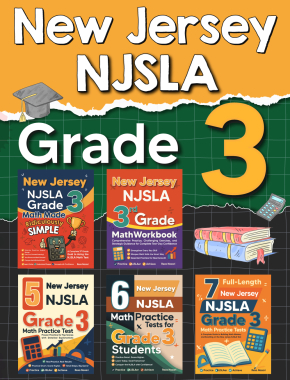
Second grade is the build-up year, and when your child is ready for what comes next, this bundle makes the jump to Grade 3 math feel easy. It packs full practice-test books, complete answer keys, and step-by-step explanations for the Grade 3 math skills just ahead.
Getting Ready for Grade 3 English, Too? The New Jersey Grade 3 English Bundle
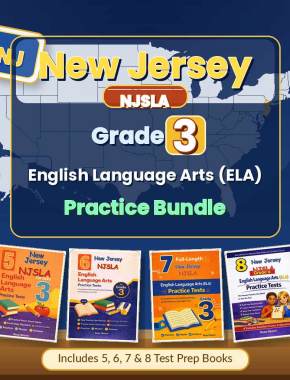
Reading and writing grow right alongside math. If your second grader could use a head start in English as well, this New Jersey Grade 3 English bundle covers it — practice tests, answer keys, and friendly explanations in one download.

Related to This Article
More math articles
- The Best Grade 8 Math Book for Utah Students
- 2nd Grade Math Guide for Parents: What Your Child Should Master by 2026
- How to Divide Polynomials?
- The Best Algebra 1 Book for Delaware Students
- Top 10 7th Grade PARCC Math Practice Questions
- The Best Grade 3 ELA Practice Tests for Illinois Students
- The Best Grade 5 Math Book for Maryland Students
- How is the TASC Test Scored?
- 3rd Grade MAAP Math Worksheets: FREE & Printable
- The Best Grade 4 ELA Practice Tests for Maine Students







What people say about "New Jersey Grade 2 Math Worksheets"?
No one replied yet.