Free Michigan Grade 2 Math Worksheets for Second Graders

TL;DR: Free printable Grade 2 math worksheets for Michigan families and teachers – place value, two- and three-digit addition and subtraction, time, money, measurement, and word problems aligned with the Michigan K-12 math standards.
Key takeaways:
- Michigan’s M-STEP math test starts in grade 3, so grade 2 is your foundation year.
- Worksheets cover place value to \(1{,}000\), addition and subtraction within 1000, time, money, measurement, and word problems.
- Every page is a free PDF – print one or a class set, no signup.
- Aligned with the Michigan K-12 Standards for Mathematics (Common Core-based) at grade 2.
- Short daily practice (about 10-15 minutes) builds the fluency M-STEP expects in grade 3.
Printable practice pages that make the second-grade math year feel calm and doable.
Hand a second grader a fistful of pennies, nickels, and dimes and ask how much is there. For the first stretch of the year, it’s a slow, careful business, lots of recounting, a few false starts. Then one day they sort the coins into piles, count the dimes by tens, the nickels by fives, add the pennies last, and land on the right total like it was nothing. That jump, from careful counting to easy counting, is what a good second-grade math year delivers.
This page was put together for Michigan families and teachers who want to help that jump along. Whether you’re in Detroit, in Grand Rapids, or somewhere up north where the school bus ride is long, these worksheets are ready to print.
They’re all built around the Grade 2 math standards Michigan has adopted, and they’re completely free. No account to create, no email to enter, no surprise paywall. You print the page, your child gets to work.
Each worksheet also comes with an answer key. That keeps the checking quick and frees you up for the part that really helps, sitting alongside your child and talking the math through.
A Tour of the Collection
The worksheets are grouped into eight chapters that follow the shape of a second-grade math year, starting with place value and finishing with the first ideas about fractions. You can move through them in order, or open the chapter that matches what your child is studying this week. Both are perfectly good plans.
Here’s the full collection.
Place Value and Number Sense
- Understanding Place Value, A clear breakdown of what hundreds, tens, and ones each mean.
- Reading and Writing Numbers to 1,000, Switching between number words and digits, up to a thousand.
- Expanded Form, Stretching a number into the value of each digit.
- Skip Counting, Counting by 5s, 10s, and 100s until it becomes second nature.
- Comparing and Ordering 3-Digit Numbers, Comparing three-digit numbers and putting them in order.
Addition and Subtraction
- Addition Facts Within 20, The basic sums a second grader should recall right away.
- Subtraction Facts Within 20, The take-away partners to those sums, practiced for speed.
- Adding Within 100, Two-digit addition with regrouping introduced step by step.
- Subtracting Within 100, Two-digit subtraction, including borrowing across a ten.
- Adding Within 1,000, Three-digit addition built on familiar methods.
- Subtracting Within 1,000, Larger subtraction problems with room to show the work.
- Mentally Adding and Subtracting 10 and 100, Adding and taking away 10s and 100s in your head.
Word Problems and Equations
- One-Step Word Problems, Short story problems that come down to one operation.
- Two-Step Word Problems, Problems that take two moves, with one answer leading to the next.
- Finding the Unknown Number, Solving for the missing number in an equation.
Odd, Even, and Arrays
- Odd and Even Numbers, Checking which numbers split into two equal groups.
- Even Numbers as Equal Addends, Writing an even number as two equal parts added together.
- Rectangular Arrays, Rows and columns that quietly set up multiplication.
- Repeated Addition with Arrays, Adding equal rows to reach a total.
Measurement and Length
- Measuring Length with Tools, Using a ruler and tape measure the right way.
- Estimating Lengths, Making a good guess before measuring.
- Comparing Lengths, Working out how much longer or shorter one object is.
- Adding and Subtracting Lengths, Combining measurement with addition and subtraction.
- Length on a Number Line, Showing distance as jumps along a number line.
Time and Money
- Telling Time to the Nearest Five Minutes, Reading an analog clock to the five-minute mark.
- A.M. And P.M., Telling morning apart from evening and night.
- Counting Coins, Adding up coins into a total value.
- Money Word Problems, Real spending and change problems built around coins.
Data and Graphs
- Line Plots, Plotting measurements above a number line and reading them back.
- Picture Graphs, Counting and comparing groups with picture symbols.
- Bar Graphs, Building and reading bars to answer data questions.
Geometry
- Recognizing and Drawing Shapes, Identifying shapes by their features, then drawing them.
- Partitioning Rectangles into Rows and Columns, Dividing a rectangle into a grid and counting the squares.
- Equal Shares: Halves, Thirds, and Fourths, Splitting shapes into fair pieces, the first step toward fractions.
How to Use the Worksheets
The worksheets do their best work when a few simple routines surround them.
Use one page at a time. A second grader who finishes a single worksheet feeling capable is in a far better place than one buried under a stack.
Read the Key Ideas box together before starting. It’s a short, plain reminder of the skill, and reading it out loud gets everyone ready.
Work through the examples before the practice begins. Ask your child to explain each example back to you. If they can teach the steps, they truly understand them.
Check the answer key together once the page is done. Don’t just tally right and wrong, when an answer is off, find the exact spot the thinking slipped and rework that problem.
Revisit shaky skills about a week later. A short return, after a little time has passed, locks a skill in far better than repeating it many times in one afternoon.
A Quick Note on the M-STEP
Michigan uses the M-STEP, the Michigan Student Test of Educational Progress, to measure how students are doing in math. Here’s the honest part: the M-STEP doesn’t begin in second grade. It starts in third grade, so your second grader won’t sit a statewide test this year.
That’s reassuring, and it points to what second grade is really about. This year isn’t a test year. It’s the foundation year, the one where place value, fluent addition and subtraction, careful word-problem reading, and comfort with time and money all become reliable. Those are exactly the skills the M-STEP goes on to assess, just dressed in harder problems.
So skip the test stress entirely. A calm, steady second-grade year where the basics turn solid is the best preparation your child could have. When the M-STEP arrives in third grade, it’ll feel like a step up rather than a wall.
Frequently Asked Questions
Are these worksheets free? Yes, all of them. Print as many as you like for your child or your classroom. No fees, no account, no email.
Do they come with answers? Every worksheet includes an answer key, so you can check work quickly and turn a wrong answer into a short, useful lesson.
My second grader struggles to tell time on an analog clock. Where do we start? Head to the time and money chapter and begin with telling time to the nearest five minutes. Practicing alongside a real clock at home, asking the time at meals and bedtime, helps the skill stick.
How much practice does a second grader need? Short, regular sessions work best, ten to fifteen focused minutes a few times a week beats one long, tiring stretch.
Can teachers use these in the classroom? Definitely. They work well as warm-ups, homework, small-group activities, and extra practice for students who could use another round.
Last Word
A confident second grader in math is simply one who’s gathered up a long string of small wins, a fact learned, a clock read, a graph that finally makes sense. These free worksheets give your Michigan second grader plenty of those wins to collect. Print a page, sit down together, and enjoy the steady, quiet progress.
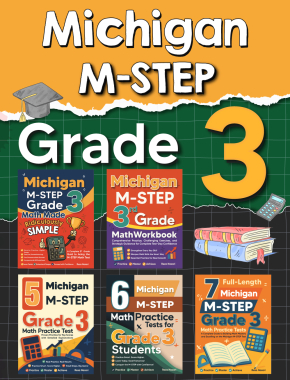
Ready for Grade 3 Math? The Michigan Grade 3 Math Bundle
Second grade is the build-up year, and when your child is ready for what comes next, this bundle makes the jump to Grade 3 math feel easy. It packs full practice-test books, complete answer keys, and step-by-step explanations for the Grade 3 math skills just ahead.
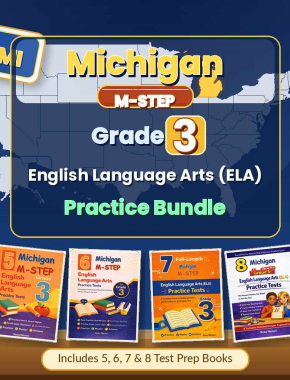
Getting Ready for Grade 3 English, Too? The Michigan Grade 3 English Bundle
Reading and writing grow right alongside math. If your second grader could use a head start in English as well, this Michigan Grade 3 English bundle covers it — practice tests, answer keys, and friendly explanations in one download.
Recommended EffortlessMath Books
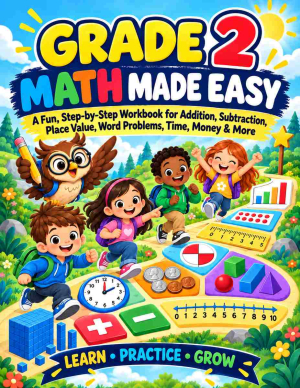
For a workbook that pairs neatly with these printable practice pages, Mastering Grade 2 Math walks your child through every second-grade topic with clear examples and lots of try-it-yourself problems. For extra word-problem practice (the part many second graders find hardest), see Mastering Grade 2 Math Word Problems.
Related EffortlessMath Lessons
If a topic on this page feels rusty, these short lessons go deeper:
- How to add and subtract two-digit numbers
- Place value to the hundreds
- How to tell time to the nearest five minutes
- How to count coins and dollar bills
- How to solve word problems

Related to This Article
More math articles
- A Comprehensive Collection of Free CHSPE Math Practice Tests
- How to Plan and Save for College? (+FREE Worksheet!)
- The Art of Partitioning a Line Segment!
- Exploring the Alternating Series Test: Convergence and Divergence
- 6th Grade RICAS Math Worksheets: FREE & Printable
- Free Grade 5 English Worksheets for Idaho Students
- Rulemaking
- ParaPro Math FREE Sample Practice Questions
- How to Find the Solutions: “Pre-Algebra for Beginners” Detailed Answer Manual
- How to Motivate your Child to Learn Math?







What people say about "Grade 2 Math Worksheets for Michigan"?
No one replied yet.