U.S. History

Search in U.S. History articles.

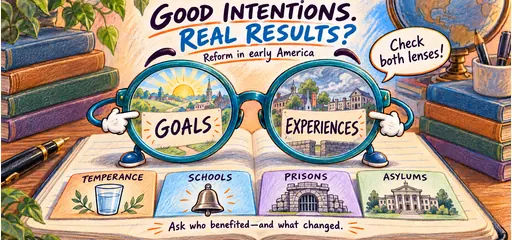
Comic reading glasses compare reform goals with lived experiences across temperance, schools, prisons, and asylums.

Temperance, Schools, Prisons and Asylums: Reform and Institutional Power

Compare temperance, schools, prisons and asylums through reformers’ aims, institutional evidence and CLEP U.S. History I source practice.
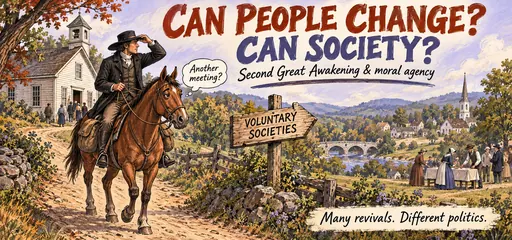
Handwritten history comic shows an itinerant preacher on horseback heading toward voluntary societies, linking moral agency and reform.

Second Great Awakening and Moral Agency: Revival, Reform and Religious Choice

Explain the Second Great Awakening and moral agency through revival methods, voluntary reform and disestablishment, with CLEP U.S. History I practice.
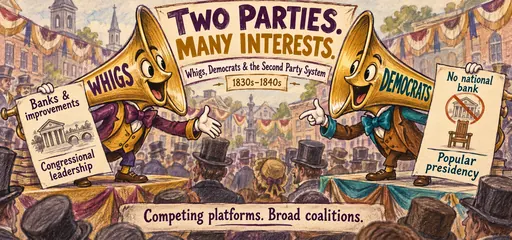
Handwritten comic campaign trumpets compare Whig banks, improvements and congressional leadership with Democratic national-bank opposition and a popular presidency.

Whigs, Democrats and the Second Party System: Campaigns and Governing

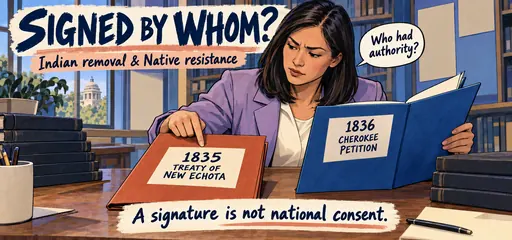
Illustrated historian compares the 1835 Treaty of New Echota with an 1836 Cherokee petition, questioning representative authority and national consent.

Indian Removal and Native Resistance: Cherokee Sovereignty and Consent

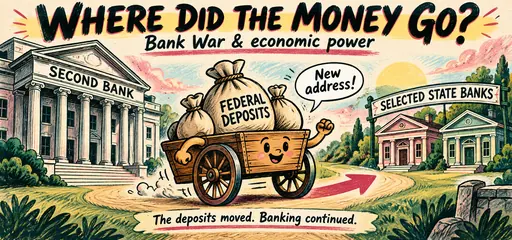
Handwritten comic cart moves federal deposits from the Second Bank toward selected state banks, showing that banking continued.

Bank War and Economic Power: Jackson’s Veto, Deposits and Senate Censure

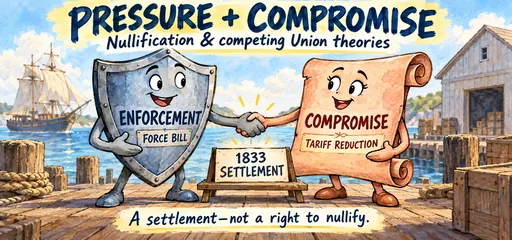
Hand-drawn shield and tariff scroll shake hands over the 1833 settlement, showing enforcement and compromise during the nullification crisis.

Nullification and Competing Union Theories: Tariffs, Force and Compromise

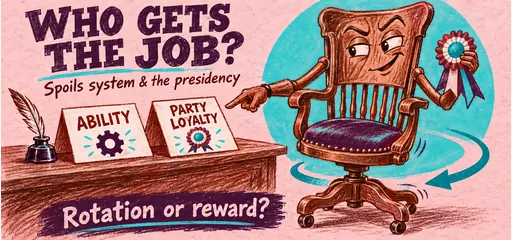
Hand-drawn swivel chair considers ability and party loyalty, illustrating the debate over rotation in office and patronage in Jackson’s presidency.

Spoils System and the Presidency: Rotation, Patronage and Executive Power

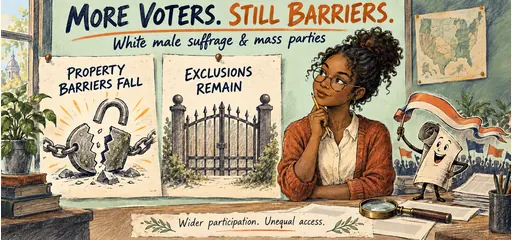
Hand-drawn history student compares falling property barriers with remaining voting exclusions, beside a campaign megaphone illustrating mass-party mobilization.

Expanded White Male Suffrage and Mass Parties: Voting Rules and Exclusion

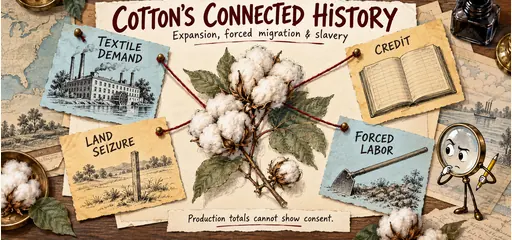
Hand-drawn cotton evidence board connects textile demand, credit, land seizure and forced labor, with a magnifying-glass character examining the relationships.

Cotton Expansion, Forced Migration and Slavery: Labor, Land and Evidence

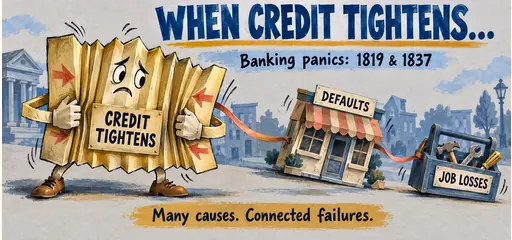
Hand-drawn credit accordion compresses beside a tilted storefront and toolbox, illustrating how contracting credit can amplify defaults and job losses.

Panics of 1819 and 1837: Banking, Credit and Specie Policy

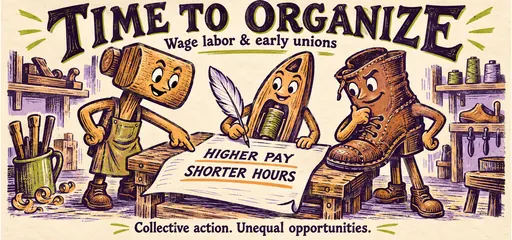
Hand-drawn mallet, weaving shuttle and cobbler’s boot gather around a petition for higher pay and shorter hours, representing wage workers’ collective organization.

Wage Labor, Class and Early Unions: Hunt, Lowell and Collective Action

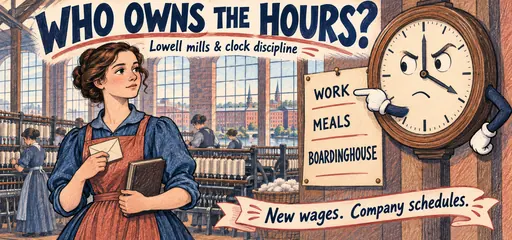
Hand-drawn Lowell mill worker holds a wage envelope and book beside a clock pointing to work, meals and boardinghouse rules, contrasting opportunity with company control.

Factories, Lowell and Clock Discipline: Wages, Rules and Worker Voices