Chemistry Final Review: Fix Mistakes and Plan Practice
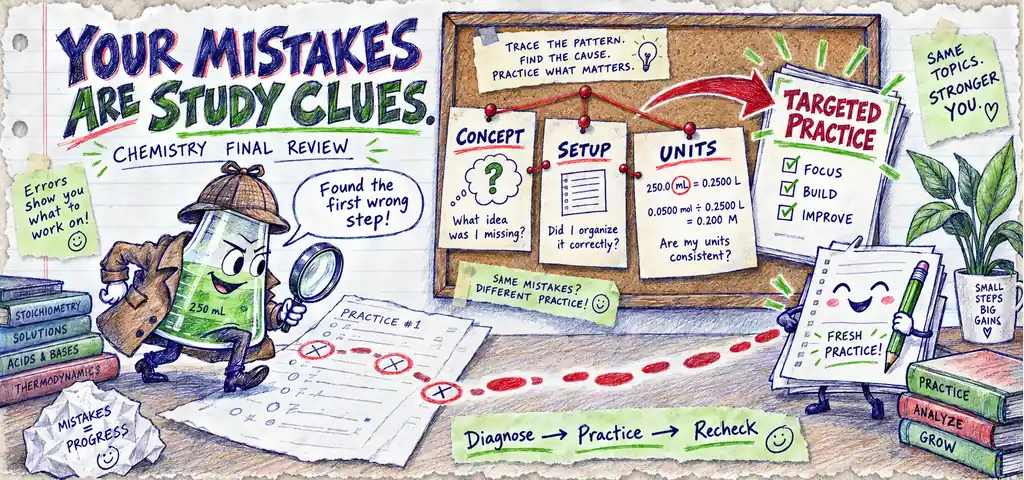
Start your chemistry final review by finding the first wrong step in each missed problem. A marked practice test becomes a useful study plan when you examine the work behind each answer. A missed unit conversion calls for different practice from an incorrect molecular shape. Record the cause of the error before choosing what to do next.
An effective chemistry review checks recall, reasoning, calculations, and evidence interpretation across topics. Error analysis identifies the step that failed and selects practice that targets it. A corrected answer is followed by a fresh problem and a later check without notes, so progress reflects usable understanding rather than recognition of a familiar solution.
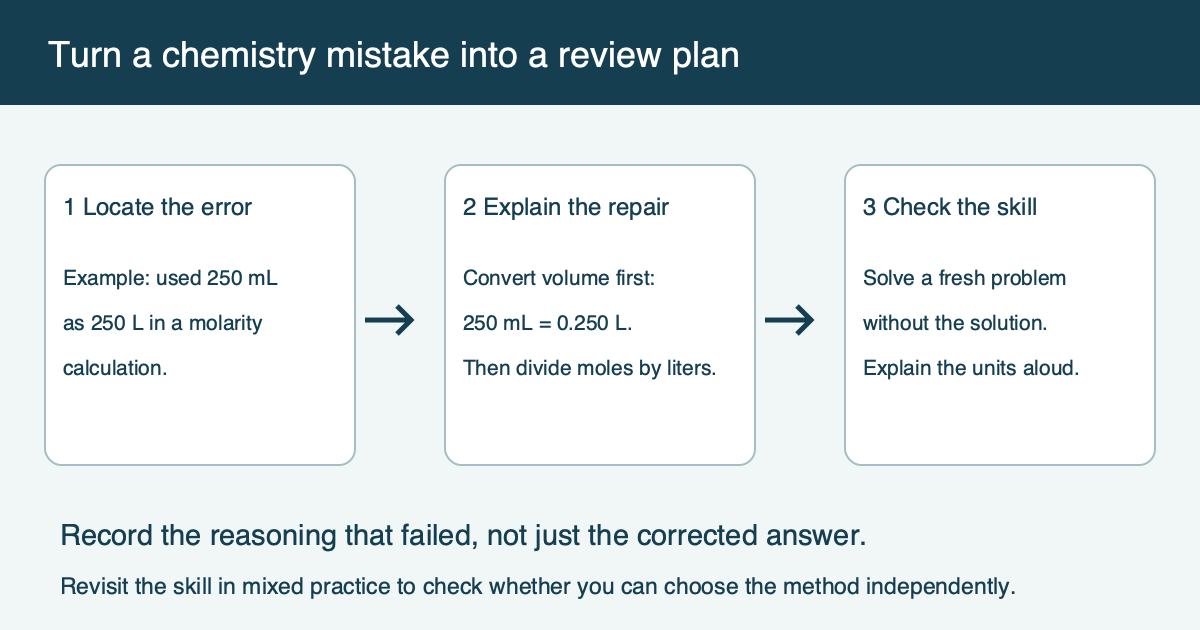
How should you sort your mistakes?
| Error | Useful next action |
|---|---|
| Concept | Explain the relationship and compare two contrasting examples. |
| Setup | Write knowns, unknowns, and the governing equation before calculating. |
| Units or arithmetic | Show conversion factors and check scale with an estimate. |
| Evidence reading | Annotate graph axes, conditions, and what the data actually support. |
Record the specific error. ‘Need to study chemistry’ is too broad to guide a useful next session.
Worked example: diagnose a molarity error
A student calculates the concentration of 0.0500 mol in 250.0 mL and reports \(0.000200\,\mathrm{M}\). The division used 250.0 as if it were liters. Convert first:
\[ 250.0\,\mathrm{mL}=0.2500\,\mathrm{L},\qquad M=\frac{0.0500}{0.2500}=0.200\,\mathrm{M}. \]
The error log should say “used milliliters in a liters-based formula.” Next, solve a different molarity problem with a volume in milliliters, then a dilution problem that requires recognizing which units can cancel directly.
Which connections should you be able to explain?
Connect proton count with element identity, electron arrangement with bonding, and molecular shape with polarity. Link balanced equations to mole ratios, then connect those ratios with mass, concentration, or gas volume.
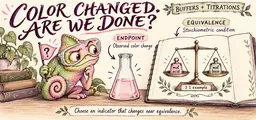
Also distinguish paired ideas that are easy to confuse: accuracy and precision, strength and concentration, rate and equilibrium, endpoint and equivalence. For each pair, give one example in which the distinction changes the answer.
How can you use a review session well?
- Try a short mixed set without notes.
- Check every answer, including guesses that happened to be correct.
- Identify the first incorrect step in each missed problem.
- Review the relevant lesson and solve a new problem.
- Return later for a brief check without the worked solution visible.
Choose topics from your course outline, assigned work and instructor’s exam guidance; one mixed set cannot establish complete course coverage.
Use timed practice after the methods are becoming reliable. During untimed practice, explain the reasoning and show units. A practice raw score helps identify review needs, and it is not an official scaled score or a prediction of a course grade.
Can you apply the idea?
-
A correct guessed answer appears on your practice test. Should it be reviewed?
Check your answer
Yes. Reconstruct the reasoning to see whether you can solve a fresh version.
-
What is a useful error-log entry for confusing milliliters with liters?
Check your answer
Name the unit mismatch and record the required conversion before using molarity.
-
What is the next step after studying a corrected solution?
Check your answer
Attempt a different problem that uses the same underlying skill without copying the solution.
-
Does a fast reaction necessarily have a product-favored equilibrium?
Check your answer
No. Rate and equilibrium composition are separate properties.
-
Why mix topics during a review check?
Check your answer
It tests whether you can choose the appropriate method without being told the problem type.
-
What should a practice raw score be used for?
Check your answer
To identify strengths and review needs, with attention to the underlying errors and the coverage of that practice set.
Watch the idea explained
General Chemistry 1 Review Study Guide – IB, AP, & College Chem Final Exam, The Organic Chemistry Tutor.
Where does this fit?
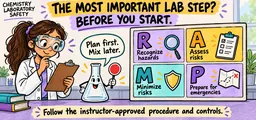
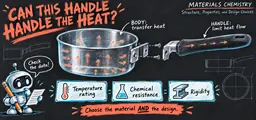
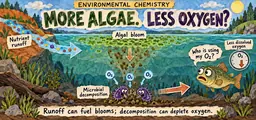
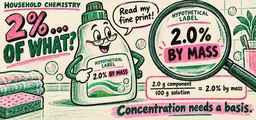
Use the chemistry learning hub to choose a lesson or practice test. Connect this topic with multistep chemistry problems, chemistry laboratory safety, materials chemistry, environmental chemistry.
Check the Concentration Method
For another explanation of moles per liter and dilution, see OpenStax Chemistry 2e on molarity. In this article’s example, 250.0 mL is 0.2500 L, so 0.0500 mol divided by 0.2500 L gives 0.200 M.
Continue with a chemistry study guide

Related to This Article
More math articles
- Hirschi’s Social Bond Theory
- Free Grade 4 English Worksheets for Illinois Students
- CLEP U.S. History I 075: Transcendentalism and Individual Conscience
- Decimals in Action: How to Master Multiplication and Division
- Transitions and Conjunctive Adverbs
- Perimeter for 4th Grade
- Short-Run and Long-Run Aggregate Supply
- 4th Grade RICAS Math Worksheets: FREE & Printable
- 10 Tips for Advanced Studying Mathematics
- 5th Grade PSSA Math Practice Test Questions


What people say about "Chemistry Final Review: Fix Mistakes and Plan Practice"?
No one replied yet.