Grade 2 Math Practice for Wyoming Second Graders
TL;DR: Free printable Grade 2 math worksheets for Wyoming families and teachers – place value, two- and three-digit addition and subtraction, time, money, measurement, and word problems aligned with the Wyoming Content and Performance Standards for math.
Key takeaways:
- Wyoming’s WY-TOPP math test starts in grade 3, so grade 2 is the foundation year.
- Worksheets cover place value to \(1{,}000\), addition and subtraction within 1000, time, money, measurement, and word problems.
- All pages are free PDFs – print at home or for the whole classroom.
- Aligned with the Wyoming Content and Performance Standards for Mathematics at grade 2.
- Short daily practice (10-15 minutes) builds the fluency the grade-3 WY-TOPP expects.
Free printable worksheets that turn a few quiet minutes into steady second grade progress.
A Wyoming second grader is at the table on a quiet weeknight, working a skip-counting worksheet. Five, ten, fifteen, twenty, the pencil keeps pace with the counting, and somewhere around forty it stops being a chore and starts being a rhythm. That little shift, where a skill goes from effortful to easy, is what second grade math is really about.
Second grade asks a lot of young learners in a single year. Kids learn to read and write numbers up to 1,000, add and subtract with regrouping, solve word problems, tell time, count money, measure length, and read graphs. Each of those is a real skill, and together they make the foundation that third, fourth, and fifth grade math will be built on.
We put together this free collection of Grade 2 math worksheets so Wyoming families have a simple, steady way to practice at home. Every worksheet is a printable PDF, and every one comes with an answer key. There’s no signup, no email, and no fee. You pick a page, you print it, you’re set.
The collection is organized around the Grade 2 math standards Wyoming has adopted, so what your child practices at home matches what’s happening in their Wyoming classroom. Same methods, same words, no crossed wires between school and home.
What’s Inside the Collection
You’ll find 34 worksheets here, sorted into eight chapters that cover a full second grade math year. Treat it like a menu, not a march. Move through it in order if you like the structure, or skip straight to the skill your child needs help with this week.
Every worksheet uses the same calm, predictable shape. A short “Key Ideas” box explains the skill in plain words. A couple of worked examples show it in action. Then comes a set of practice problems, with the answer key on the final page. Kids settle into that rhythm fast, so you spend less time explaining and more time practicing together.
Here’s everything, chapter by chapter.
Place Value and Number Sense
- Understanding Place Value, Why the 4 in 471 means four hundred, not four.
- Reading and Writing Numbers to 1,000, Moving easily between number words and digits.
- Expanded Form, Pulling a number apart into hundreds, tens, and ones.
- Skip Counting, Counting by 5s, 10s, and 100s until it runs on its own.
- Comparing and Ordering 3-Digit Numbers, Working out which number is bigger and ordering sets.
Addition and Subtraction
- Addition Facts Within 20, Building quick, sure recall of the basic sums.
- Subtraction Facts Within 20, The same fluency goal, now for take-away facts.
- Adding Within 100, Two-digit addition, regrouping into the tens included.
- Subtracting Within 100, Two-digit subtraction with borrowing taken step by step.
- Adding Within 1,000, Carrying those same habits into three-digit numbers.
- Subtracting Within 1,000, Three-digit subtraction that rewards careful columns.
- Mentally Adding and Subtracting 10 and 100, Hopping by tens and hundreds with no pencil.
Word Problems and Equations
- One-Step Word Problems, Turning a short story into a single math sentence.
- Two-Step Word Problems, Problems that take two moves before they’re done.
- Finding the Unknown Number, Tracking down the missing value in an equation.
Odd, Even, and Arrays
- Odd and Even Numbers, Checking whether a number splits into equal pairs.
- Even Numbers as Equal Addends, Writing an even number as two matching parts.
- Rectangular Arrays, Rows and columns that quietly preview multiplication.
- Repeated Addition with Arrays, Adding equal rows to find the total.
Measurement and Length
- Measuring Length with Tools, Lining up a ruler or tape measure the right way.
- Estimating Lengths, Making a thoughtful guess, then checking it.
- Comparing Lengths, Finding which object is longer, and by how much.
- Adding and Subtracting Lengths, Combining measurements inside word problems.
- Length on a Number Line, Showing length and distance on a number line.
Time and Money
- Telling Time to the Nearest Five Minutes, Reading an analog clock to the five-minute mark.
- A.M. And P.M., Telling morning hours apart from evening ones.
- Counting Coins, Adding up mixed handfuls of coins.
- Money Word Problems, Buying, spending, and working out the change.
Data and Graphs
- Line Plots, Marking measurement data above a number line.
- Picture Graphs, Reading graphs that count with pictures.
- Bar Graphs, Comparing categories with bars and answering questions.
Geometry
- Recognizing and Drawing Shapes, Naming and sketching shapes by their sides and corners.
- Partitioning Rectangles into Rows and Columns, Slicing a rectangle into a tidy grid of squares.
- Equal Shares: Halves, Thirds, and Fourths, Sharing shapes fairly, the doorway into fractions.
How to Get the Most From the Worksheets
These pages work best with a relaxed, gentle approach. A few habits make a real difference for second graders.
Stick to one page at a time. A single sheet gives a child a finish line they can see. A stack of them just feels like too much before the pencil even moves.
Read the Key Ideas box first, together. It’s short on purpose, the whole skill folded into a few clear sentences. Two minutes there saves ten later.
Talk through the worked examples. Ask your child to explain one back to you in their own words. That out-loud explanation is where understanding takes root.
Treat the answer key as a conversation, not a verdict. When something’s wrong, have your child retrace their thinking with you. That walk-through almost always reveals the one step to fix.
Revisit weak skills. If something came out shaky, print that same page again about a week later. The second pass is what turns wobbly into steady.
A Word About WY-TOPP
Wyoming’s statewide test is WY-TOPP, and parents naturally wonder when math testing kicks in. Here’s the calm, honest answer: the WY-TOPP math assessment begins in third grade. Second graders don’t take a statewide math test.
That makes second grade the foundation year, and honestly, that’s a good thing. Your child gets a full year to build number sense, lock in addition and subtraction facts, and grow dependable work habits with no test on the calendar. Every skill in this collection, three-digit place value, regrouping, two-step word problems, reading a bar graph, is exactly the groundwork WY-TOPP will draw on once third grade arrives.
So in second grade the job is simple and unhurried: build a real, confident understanding of the math. A child who genuinely gets the Grade 2 content won’t be scrambling later. They’ll already be standing on solid ground when WY-TOPP comes around.
Frequently Asked Questions
Do these worksheets match what Wyoming teaches? Yes. The collection follows the Grade 2 math standards Wyoming has adopted, so the content lines up with your child’s classroom.
Is anything hidden behind a signup or a fee? No. Every worksheet is a free printable PDF, no account, no email, no payment.
We live far from town. Can we use these fully offline? Yes. Download and print the PDFs whenever you have a connection, and your child can work through them anytime, no internet needed.
My second grader finishes a page and wants more. Is that okay? Absolutely. If they’re keen, let them keep going. Just watch for fatigue, ending while they still feel good keeps math a positive thing.
How can I tell if a skill has really stuck? Wait a week, then reprint the same page. If your child works it smoothly without much help, it’s solid. If not, a little more practice will get it there.
One Last Thing
Second grade math doesn’t have to come with stress, not for your child, and not for you. With steady practice and an encouraging voice nearby, those three-digit numbers and clock faces slowly stop being intimidating and start feeling ordinary. Print a page, pull up a chair, and spend a few minutes together. Your Wyoming second grader is building something real, one worksheet at a time.
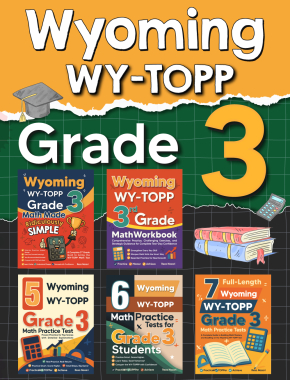
Ready for Grade 3 Math? The Wyoming Grade 3 Math Bundle
Second grade is the build-up year, and when your child is ready for what comes next, this bundle makes the jump to Grade 3 math feel easy. It packs full practice-test books, complete answer keys, and step-by-step explanations for the Grade 3 math skills just ahead.
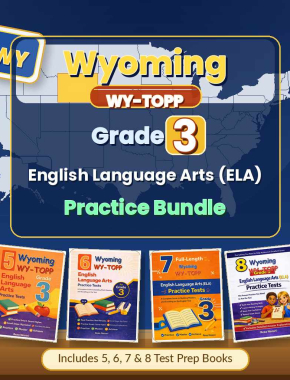
Getting Ready for Grade 3 English, Too? The Wyoming Grade 3 English Bundle
Reading and writing grow right alongside math. If your second grader could use a head start in English as well, this Wyoming Grade 3 English bundle covers it — practice tests, answer keys, and friendly explanations in one download.
Recommended EffortlessMath Books
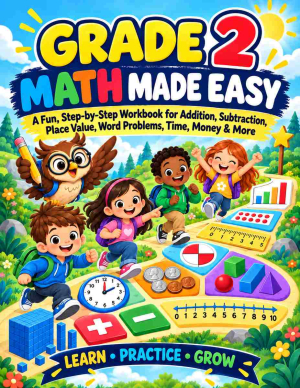
For a workbook that pairs neatly with these printable practice pages, Mastering Grade 2 Math walks your child through every second-grade topic with clear examples and lots of try-it-yourself problems. For extra word-problem practice (the part many second graders find hardest), see Mastering Grade 2 Math Word Problems.
Related EffortlessMath Lessons
If a topic on this page feels rusty, these short lessons go deeper:
- How to add and subtract two-digit numbers
- Place value to the hundreds
- How to tell time to the nearest five minutes
- How to count coins and dollar bills
- How to solve word problems

Related to This Article
More math articles
- The Ultimate 7th Grade Scantron Math Course (+FREE Worksheets)
- Lenses and Optical Instruments
- The Ultimate 6th Grade MEA Math Course (+FREE Worksheets)
- Using Diagrams to Model and Solve Equations
- How to Create a Praxis Core Math Study Plan?
- Pennsylvania Keystone Algebra 1 Free Worksheets: Free Printable Keystone-Ready Algebra 1 PDFs
- Domain and Range Calculator (Free, with Graph)
- Number Properties Puzzle – Challenge 11
- How to Work with the Intermediate Value Theorem?
- Cancer and Cell-Cycle Control








What people say about "Grade 2 Math Worksheets for Wyoming"?
No one replied yet.