Voisins, Tiers, Orphelins: A Math Tour of Roulette Call Bets
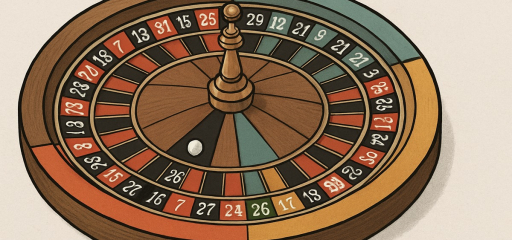
Walk up to a European roulette table in Monte Carlo, Baden-Baden, or any decent French-style room in Macau, and at some point you will hear a player announce, in a calm voice, “Voisins, par cinq.” The croupier nods, slides nine chips across the layout in a specific pattern, and the bet is locked in before the ball even slows. That short exchange is the world of roulette call bets, a tradition that turns the wheel itself, rather than the felt grid, into the betting map. The math underneath is pure single-zero European roulette, but the geography is different, and the rituals around these bets are part of why high-limit pits still keep them alive.
What roulette call bets actually are
On a standard American layout, you place chips on numbers and ranges directly. Call bets, also known as announced bets, work differently. The player names a section of the wheel, the croupier assembles a packet of chips covering those numbers in a fixed pattern, and that packet acts as a single wager. The numbers covered are not random; they are physical neighborhoods on the European wheel, in wheel order, starting from zero and running clockwise through 26, 3, 35, 12, 28, 7, and around.
There are four classic French call bets: Voisins du Zero, Tiers du Cylindre, Orphelins, and Jeu Zero. Together, the first three carve up the entire wheel into wheel-based regions, with Jeu Zero acting as a tighter slice of Voisins. The bets are most common in European casinos, where the single-zero wheel is the standard and the layout often shows a small “racetrack” diagram for placing them.
Voisins du Zero: 17 numbers, 9 chips
Voisins du Zero translates as “neighbors of zero.” It covers the 17 numbers from 22 to 25 along the wheel, going through zero: 22, 18, 29, 7, 28, 12, 35, 3, 26, 0, 32, 15, 19, 4, 21, 2, 25. That is nearly half the wheel.
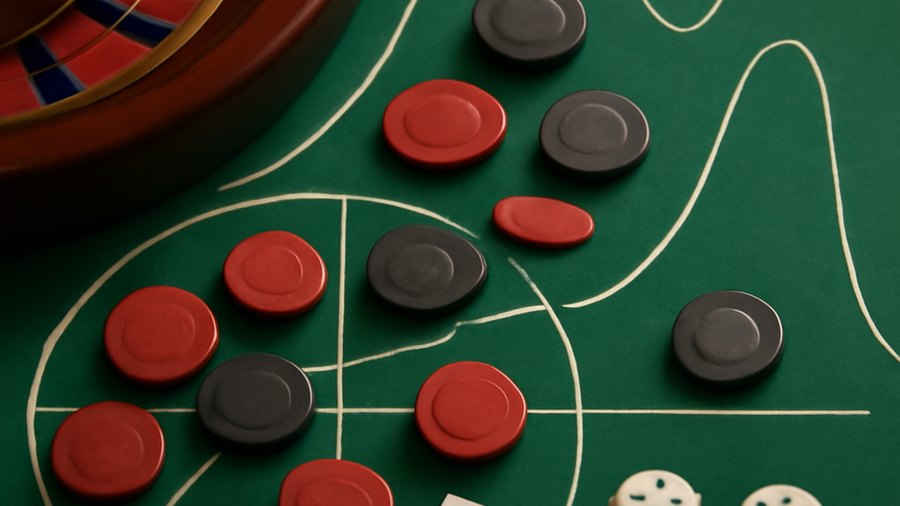
The standard packet costs 9 chips:
- 2 chips on the 0-2-3 trio.
- 1 chip on the 4-7 split.
- 1 chip on the 12-15 split.
- 1 chip on the 18-21 split.
- 1 chip on the 19-22 split.
- 2 chips on the 25-26-28-29 corner.
- 1 chip on the 32-35 split.
Probability that one of the 17 numbers wins on a spin: 17/37, or about 45.9%. Just under a coin flip. The reason it does not feel like a coin flip is the payout. Because different numbers in the packet sit on splits, trios, and a corner, the net result depends on which number lands. Hitting 25, 26, 28, or 29 pays the most because those four sit inside a 2-chip corner. The other numbers return less, and some only break even after subtracting the unused chips.
Tiers du Cylindre: 12 numbers across the wheel from zero
Tiers du Cylindre means “third of the wheel.” It covers the 12 numbers sitting roughly opposite zero: 27, 13, 36, 11, 30, 8, 23, 10, 5, 24, 16, 33. On the wheel they form a continuous arc from 27 around to 33.
The bet uses 6 chips, all placed on splits:
- 5-8 split.
- 10-11 split.
- 13-16 split.
- 23-24 split.
- 27-30 split.
- 33-36 split.
Probability of any one of the 12 numbers hitting: 12/37, about 32.4%. Every winning number pays the same way, because the bet is six identical splits. A split pays 17 to 1, so when you win, one of your six chips returns 18 chips total (the 17-to-1 payout plus the chip itself), the other five are lost, and you net 12 chips on a 6-chip stake. Net profit per hit: 12 chips. That uniformity is part of the appeal; players who hate explaining different outcomes for different numbers like the clean structure here.
Orphelins: the 8 leftover numbers
Voisins covers 17 numbers, Tiers covers 12. That leaves 8 numbers on the wheel that belong to neither group. They are called Orphelins, “the orphans,” and they sit in two small clusters on opposite sides of the wheel: 17, 34, 6 on one side, and 1, 20, 14, 31, 9 on the other.
The standard Orphelins bet costs 5 chips:
- 1 chip straight up on number 1.
- 1 chip on the 6-9 split.
- 1 chip on the 14-17 split.
- 1 chip on the 17-20 split.
- 1 chip on the 31-34 split.
Probability of any orphan hitting: 8/37, about 21.6%. Number 17 is interesting because it is covered twice, once on the 14-17 split and once on the 17-20 split, so it pays more if it lands. Number 1 is the only straight-up bet in the packet, paying 35 to 1 on its single chip. Orphelins is the smallest of the three main call bets but it is the one with the highest variance per chip, because so much of the action hangs on a few thin splits and one straight number.
Jeu Zero: the small Voisins
Jeu Zero, “zero game,” is a tighter cousin of Voisins. It covers only the 7 numbers closest to zero on the wheel: 12, 35, 3, 26, 0, 32, 15. The standard chip layout uses 4 chips:
- 1 chip on the 0-3 split.
- 1 chip on the 12-15 split.
- 1 chip on the 26 straight up.
- 1 chip on the 32-35 split.
Probability of a hit: 7/37, about 18.9%. The straight-up chip on 26 gives this bet a small jackpot feel. Players who like Voisins but want to spend less per spin often default to Jeu Zero, especially late in a session.
The math: every call bet still pays 2.70% to the house
This is the part that surprises new players. The packets look exotic, the chip placements look strategic, but the expected loss is identical to any other bet on a single-zero wheel. The house edge on European roulette is 1/37, about 2.70%. That number comes from the fact that a fair payout for any straight number would be 36 to 1, but the casino pays 35 to 1. The same logic flows through every split, trio, and corner. Combining them into Voisins, Tiers, Orphelins, or Jeu Zero just averages a bunch of 2.70% edges together, and an average of 2.70% edges is still 2.70%.
If the table uses the La Partage rule, where even-money bets return half the stake when zero hits, the edge on those even-money bets drops to about 1.35%. La Partage does not normally apply to call bets, so the 2.70% number is what you should plan around. The famous Wizard of Odds reference page at wizardofodds.com/games/roulette/ lays out the edge calculation in full if you want the underlying arithmetic.
Call bets at a glance
| Call bet | Chip cost | Numbers covered | P(win) | Typical net result on a hit |
|---|---|---|---|---|
| Voisins du Zero | 9 chips | 17 numbers around 0 | 17/37 ≈ 45.9% | Varies; corner 25-26-28-29 pays the most |
| Tiers du Cylindre | 6 chips | 12 numbers opposite 0 | 12/37 ≈ 32.4% | +12 chips on every winning split |
| Orphelins | 5 chips | 8 orphan numbers | 8/37 ≈ 21.6% | +19 to +31 chips depending on which orphan hits |
| Jeu Zero | 4 chips | 7 numbers nearest 0 | 7/37 ≈ 18.9% | +12 to +32 chips, with 26 paying the most |
Chip placement details and dealer rituals
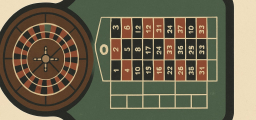
French tables usually have a small oval diagram of the wheel printed at one end of the layout, called the racetrack. Players who want to place a call bet either announce it or drop their chips on the corresponding racetrack section, and the croupier translates that onto the main grid. The packet patterns described above are not negotiable; every European casino uses the same chip placements for the same call bet.
That uniformity is part of what makes the bets feel ritualistic. You do not have to explain anything. You say “Tiers, par cinq,” meaning Tiers at 5-unit chips, and the dealer puts down 6 stacks of 5 chips each on the six splits. The bet is set, the wheel spins, and the chip art on the layout is identical to what you would see across the room, across the country, across the continent.
For players who want to brush up on the underlying probability tools before they head to the racetrack, Effortless Math has clean walkthroughs of basic probability that line up with this kind of bet construction.
Why call bets stay popular at high-limit tables
Two reasons. First, speed. A high-limit roulette player who wants meaningful coverage does not want to lay out 17 individual chips for Voisins; nine chips in a known pattern is faster, and at €500 a chip the difference between 9 and 17 placements matters. Second, tradition. The French call bet is part of the room’s identity in Europe. Croupiers train on it. Regulars expect it. Removing call bets from a European pit would be like a steakhouse refusing to serve steak frites; technically allowed, socially impossible.
There is also a small psychological piece. A call bet feels like a strategic statement. The player is saying, “I am betting on this region of the wheel, not those random pockets you see on TV.” The math says the wheel is still memoryless and every region still hands 2.70% to the house, but the feeling of betting on geography rather than digits is hard to replicate with straight chips on a grid.
FAQ
Q: Are roulette call bets only available on European wheels?
A: Practically, yes. The packets are built around the single-zero wheel order. American wheels have a different sequence and an extra 00 pocket, so the call bets do not map cleanly. Most American casinos do not offer them.
Q: Do call bets change the house edge compared to regular inside bets?
A: No. Every chip in a call bet is a normal straight, split, trio, or corner bet under the hood, and each of those carries a 2.70% house edge on a single-zero wheel. Averaging them together still gives 2.70%.
Q: What does La Partage mean for these bets?
A: La Partage refunds half of an even-money bet (red/black, odd/even, high/low) when zero hits, lowering the edge on those bets to about 1.35%. Call bets are made of inside positions, so La Partage normally does not touch them. The edge stays at 2.70%.
Q: Why is Voisins du Zero a 9-chip bet instead of, say, 10 or 17?
A: The packet is built so that the 17 covered numbers are reached using a specific mix of one trio, several splits, and one corner. Nine chips is the minimum count that covers all 17 numbers with this packet pattern. Any other count would require breaking up splits and corners.
Q: Can I lower variance by betting all three of Voisins, Tiers, and Orphelins at once?
A: You cover 37 out of 37 numbers (everything except, well, nothing on a single-zero wheel; the three groups cover all 37 numbers including 0), but your total stake is 20 chips, and the weighted payouts still average to a 2.70% loss. You will hit every spin and still lose money over time. It is a comfort blanket, not an edge.
Gambling outcomes are uncertain; no strategy guarantees profit.

Related to This Article
More math articles
- Free Grade 8 English Worksheets for Wisconsin Students
- Virginia Plan
- How to Write Best Fit Line Equations
- Chapter 8: Congressional Organization
- How to Solve Non-Right Triangles Problems
- The Best Grade 7 ELA Practice Tests for Wisconsin Students
- The Best Grade 4 ELA Practice Tests for Michigan Students
- Conflicts between national and state authority
- 3rd Grade PARCC Math FREE Sample Practice Questions
- Movement Stages and Outcomes



What people say about "Voisins, Tiers, Orphelins: A Math Tour of Roulette Call Bets - Effortless Math"?
No one replied yet.