Roulette Wheel Bias: When the Casino’s Hardware Actually Tilts
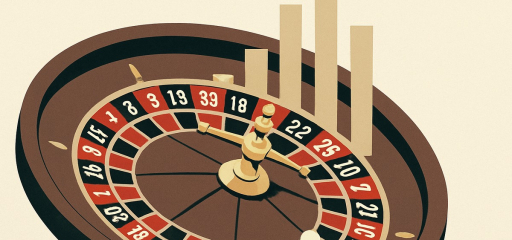
Every roulette wheel is a piece of machined hardware, and no piece of hardware is perfect. Pockets wear unevenly, frets loosen, ball deflectors get nicked, and the spindle can sit a hair off level after a few years on a casino floor. When those flaws push certain numbers above their expected 1-in-37 share of hits, you get what gamblers have chased for 150 years: a biased wheel. The math behind spotting one is plain chi-squared statistics, but the practical reality in 2026 is harder than the legends suggest.
What “wheel bias” actually means
A European roulette wheel has 37 pockets, so on a fair wheel each number should land about 2.70% of the time. Bias is any persistent deviation from that, caused by the physical wheel rather than chance. The usual suspects:
- Manufacturing tolerance. Pockets are milled to within thousandths of an inch, but “within tolerance” is not “identical.” A pocket a fraction deeper than its neighbors catches the ball slightly more often.
- Pocket wear. Wood and plastic pockets compress over thousands of ball impacts. A worn pocket absorbs energy instead of bouncing the ball back out.
- Loose or damaged frets. The metal dividers between pockets can loosen, deaden, or chip. A dead fret lets the ball settle instead of ricocheting.
- Ball deflectors and rotor tilt. The diamond-shaped deflectors above the pockets steer the ball. If the rotor sits even a millimeter off level, the ball favors the low side.
Any one of these can nudge a number from 2.70% up to 3.0% or 3.5%. That sounds tiny, and on any given spin it is invisible. Across thousands of spins, it is the difference between a house edge and a player edge.
The bias hunters who got rich
Joseph Jagger is the founding ghost of this story. In 1873 he hired six clerks to log every spin at Monte Carlo’s Beaux-Arts casino. After a week of hand-tabulated data, he flagged nine numbers that hit more often than the rest and bet them. He reportedly walked off with around £60,000, an enormous sum at the time, before the casino rotated its wheels and broke his edge.
A century later, Gonzalo Garcia-Pelayo did the same thing with a family team and a laptop. Through the 1990s he ran spin logs at the Casino de Madrid and other Spanish rooms, identified biased wheels, and bet the favored numbers. Press accounts put his lifetime take at roughly $1.5 million. The Madrid casino sued him; Spain’s Supreme Court ruled in his favor, on the grounds that observing public spins and betting smarter is not cheating. The casinos lost in court and then quietly replaced their old wheels.
Both stories share a pattern. The edge was real, the math was simple, and the casinos’ fix was to upgrade the hardware rather than out-argue the players.
The chi-squared test, in plain terms
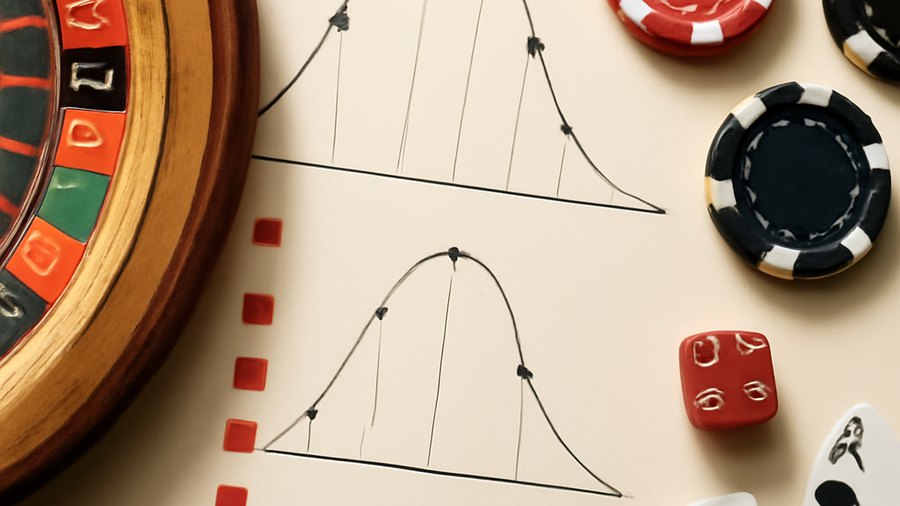
To decide whether a wheel is biased, you do not stare at hot numbers and trust your gut. You run a chi-squared goodness-of-fit test. The formula is exactly what you remember from a stats class:
chi-squared = sum over all 37 pockets of (observed hits minus expected hits) squared, divided by expected hits.
Expected hits for each pocket is total spins divided by 37. You compute the sum and compare it to a critical value with 36 degrees of freedom. At the 95% confidence level, the critical value is about 51. If your statistic clears that, the “wheel is fair” hypothesis is rejected and you have evidence of bias somewhere.
The test tells you the wheel is not uniform. It does not tell you which numbers are the biased ones. For that you look at which pockets contribute the largest individual terms to the sum, and you confirm the pattern is geographic on the wheel, not just a scatter of random hot numbers.
How many spins you actually need
This is where most amateur bias hunters die. To detect a small edge with confidence, you need a large sample. A 1% bias on a single number, hitting 3.70% instead of 2.70%, requires roughly 5,000 logged spins at one wheel to clear the 95% threshold. A casual hour at the table is 60 spins. The arithmetic is brutal.
| True bias on target number | Hit rate (vs. 2.70% fair) | Spins for 95% confidence | Realistic logging time |
|---|---|---|---|
| 0.3% | 3.00% | ~55,000 | Several weeks, multiple shifts |
| 0.5% | 3.20% | ~20,000 | About two weeks of full days |
| 1.0% | 3.70% | ~5,000 | Three to four full days |
| 1.5% | 4.20% | ~2,200 | Two long sessions |
| 2.0% | 4.70% | ~1,300 | One marathon day |
Numbers like these are why bias hunting was a team sport. Jagger had six clerks. Garcia-Pelayo had his kids. One person logging alone, with bathroom breaks and shift changes, cannot keep up with a 40-spin-per-hour wheel long enough to get clean data on multiple tables.
Modern wheel maintenance has closed most of the door
Casino operators are not stupid, and they read the same statistics textbooks. Today’s roulette wheels are built and serviced very differently from the ones Jagger profiled.
- Wheels from Cammegh, John Huxley, and TCSJOHNHUXLEY are machined to tighter tolerances than anything available in the 1990s.
- Pockets are increasingly low-profile or scalloped designs that produce more chaotic ball bounce, which scrambles any small bias.
- Most large casinos rotate wheel heads on a schedule, swap rotors between tables, and re-level the base regularly.
- Pit bosses watch automated spin trackers that flag any wheel whose number frequencies drift past a threshold. The casino sees the bias before you do, and pulls the wheel for service.
- Laser-aligned leveling at install, and routine fret-tightening, removes most of the slow-developing mechanical drift that used to feed bias hunters.
A modern wheel can still go biased; metal and wood still wear. But the window between “exploitable bias appears” and “casino notices and fixes it” has shrunk from years to weeks.
Online RNG roulette has no hardware to tilt
Everything in this article goes out the window the moment you load an online roulette table that uses a random number generator. There is no wheel, no fret, no pocket. The result is drawn from a cryptographically seeded RNG that is independently audited by labs like GLI or eCOGRA. Each spin is independent and uniform by construction, not by mechanical luck.

You cannot bias-hunt an RNG game. The “wheel” exists only as an animation layered on top of a number the server already picked. Live-dealer roulette streamed from a studio uses a real wheel, but those wheels are new, monitored in real time, and rotated aggressively for exactly the reasons above. The bias-hunting era does not extend to the internet.
Is bias hunting legal?
In most jurisdictions, yes. You are watching public events and using arithmetic. Courts in Spain, the UK, and several US states have repeatedly ruled that observing spin outcomes and betting on patterns is not cheating. Cheating requires altering the game; bias hunting only reads it.
That legal protection does not stop casinos from acting. Private gaming venues have wide latitude to refuse service, ban suspected advantage players, or simply close the table when a logger sits down. In Nevada and most of Europe, casinos can ask you to leave and back it up with trespass law if you return. You will not go to jail for charting a wheel, but you may find yourself escorted out and not invited back. For an overview of the wheel itself and its history, the Britannica entry on roulette covers the basics, and the Wizard of Odds roulette pages dig into the probability side.
Why bias hunting is mostly dead in 2026
The honest assessment, even from people who still try, is that the golden age is over. Three things killed it:
- Better hardware. The wheels themselves are simply more uniform than they were in 1990, let alone 1873.
- Better monitoring. Casinos run their own chi-squared tests in software on every spin. They are running the same math you are, with more data and less coffee.
- Less floor time. Online play has cut live roulette volume, and the live wheels that remain get more attention per spin than the sleepy provincial casinos Garcia-Pelayo worked.
You can still find a wobbly wheel in a small cruise-ship casino or a regional room that has not replaced its rotors in a decade. You will need thousands of spins to confirm it, and a team to log them. The math has not changed. The opportunity has. If you want the underlying probability tools that make chi-squared testing intuitive, the worked-example libraries at Effortless Math are a good place to drill the basics.
FAQ
Can I bias-hunt by watching a wheel for an hour?
No. An hour gets you maybe 60 spins. That is not enough data to distinguish a real bias from random clustering, even for a 2% effect. You would log a lot of false positives and lose money chasing them.
Do casinos ever miss a biased wheel?
It happens, especially in smaller rooms without automated spin tracking, but the window of opportunity is short. Large operators flag drifting frequencies within days. The wheel you find today may be back in service tomorrow.
Is recording spins on my phone allowed?
Most casinos prohibit electronic devices at the roulette table. Some allow pen-and-paper logging, some do not. Read the house rules and expect to be asked to put the phone away.
Does the chi-squared test work on RNG roulette?
You can run the same test on RNG output, but a certified RNG will pass uniformity tests by design and is re-tested by the lab. Any failure on a licensed site is almost certainly a sample-size artifact, not real bias.
What edge does a real biased wheel give?
A confirmed 1% bias on a small set of numbers can flip a 2.7% house edge into a player edge in the low single digits. That is meaningful, but only if you can keep betting before the bias is corrected.
A worked sanity check on the numbers
It helps to feel how thin these effects are. Say you log 1,000 spins on a single wheel. The expected hit count for any given number is 1000 divided by 37, or about 27. The standard deviation under a fair wheel is the square root of 1000 times (1/37) times (36/37), which is roughly 5.1. So a number that lands 33 times in 1000 spins is barely more than one standard deviation above expectation; it looks “hot,” but it is not statistically interesting. A number landing 45 times in 1000 spins is more than three standard deviations out and worth flagging, though you still need to confirm it on the next thousand spins before betting real money. A second, larger sample is what separates a real bias from a streak that randomness was always going to produce somewhere in a 37-pocket layout.
The other quiet variable is opportunity cost. Even a real edge of two or three percent is small compared to the variance of single-number bets, where most spins lose. You can have the math exactly right and still need a five-figure bankroll and weeks of betting to realize the edge with high probability. That is the part the legend versions of the Jagger and Garcia-Pelayo stories tend to skip.
Gambling outcomes are uncertain; no strategy guarantees profit.

Related to This Article
More math articles
- New Mexico MSSA Grade 7 Math Worksheets: 95 Free Printable PDFs with Step-by-Step Keys
- The Best Grade 3 ELA Practice Tests for Oregon Students
- How to Solve Angle Measurements Word Problems
- Chief diplomat
- How to Choose the Best Backup Software Solution for School Districts?
- 4th Grade MEAP Math Worksheets: FREE & Printable
- The Slope of The Slope: Second Derivatives
- Mead’s Role Taking and Social Self
- Free Grade 4 English Worksheets for Iowa Students
- Math Mastery: Effortless Math Learning









What people say about "Roulette Wheel Bias: When the Casino’s Hardware Actually Tilts - Effortless Math"?
No one replied yet.