The Best Grade 2 Math Worksheets for Pennsylvania Students
TL;DR: Free printable Grade 2 math worksheets for Pennsylvania families and teachers – place value, two- and three-digit addition and subtraction, time, money, measurement, and word problems aligned with the Pennsylvania Core Math Standards.
Key takeaways:
- Pennsylvania’s PSSA math test starts in grade 3, so grade 2 is the build-up year.
- Worksheets cover place value to \(1{,}000\), addition and subtraction within 1000, time, money, measurement, and word problems.
- All worksheets are free PDFs – print one or a hundred, no signup.
- Aligned with the Pennsylvania Core Standards for Mathematics at grade 2.
- Short daily practice (10-15 minutes) builds the fluency PSSA expects in grade 3.
A complete set of free printable practice pages, built to grow steady second-grade math skills.
There’s a particular look a second grader gets when a number finally makes sense. Maybe they’ve been stacking base-ten blocks, ten little cubes snapped into a long rod, ten rods into a flat square, and suddenly they see that 100 isn’t just a word, it’s a real, countable thing. That moment of “oh, I get it” is what good math practice is chasing.
If you’re a parent or teacher in Pennsylvania looking to give your second grader more of those moments, you’re in the right place. We’ve gathered a complete library of free, printable Grade 2 math worksheets you can use at home, in the classroom, or anywhere a kitchen table and a pencil happen to be.
Every worksheet is a tidy PDF. Every set comes with a full answer key. And there’s nothing standing between you and the download, no signup form, no email, no subscription. Click, print, and you’re ready.
The worksheets follow the Grade 2 math standards Pennsylvania has adopted, so the practice your child does here matches what their teacher is covering at school. That makes these pages handy for catching up, keeping up, or simply staying sharp during a break.
What You’ll Find in This Collection
We’ve organized everything into eight chapters. Each one tackles a major area of second-grade math, and within each chapter the worksheets move from simpler ideas to slightly harder ones.
The eight chapters are:
- Place Value and Number Sense
- Addition and Subtraction
- Word Problems and Equations
- Odd, Even, and Arrays
- Measurement and Length
- Time and Money
- Data and Graphs
- Geometry
You’re free to jump around. If your child is working on telling time this week, head straight to that chapter. If subtraction with regrouping is the sticking point, start there. Each worksheet has a brief Key Ideas box up top, a worked example, practice problems, and an answer key tucked at the end.
The Worksheets
Place Value and Number Sense
- Understanding Place Value, Building the idea that a digit’s spot decides its value.
- Reading and Writing Numbers to 1,000, Switching smoothly between “four hundred twelve” and 412.
- Expanded Form, Stretching a number out into hundreds, tens, and ones.
- Skip Counting, Counting in steps of 2, 5, 10, and 100 until it feels automatic.
- Comparing and Ordering 3-Digit Numbers, Using greater-than and less-than to rank numbers.
Addition and Subtraction
- Addition Facts Within 20, Practice that turns small sums into quick, reliable recall.
- Subtraction Facts Within 20, Fast take-away practice that pairs perfectly with the addition facts.
- Adding Within 100, Two-digit sums, including the regrouping kids need to master.
- Subtracting Within 100, Two-digit subtraction with borrowing, explained step by step.
- Adding Within 1,000, Carrying addition skills up into three-digit territory.
- Subtracting Within 1,000, Bigger subtraction problems that reward careful work.
- Mentally Adding and Subtracting 10 and 100, Adjusting numbers by tens and hundreds without writing anything down.
Word Problems and Equations
- One-Step Word Problems, Story problems solved with a single, well-chosen operation.
- Two-Step Word Problems, Two-part problems that teach kids to slow down and plan.
- Finding the Unknown Number, Solving for the missing value, an early step toward algebra.
Odd, Even, and Arrays
- Odd and Even Numbers, Pairing up objects to test whether a number is odd or even.
- Even Numbers as Equal Addends, Seeing that every even number splits into two matching groups.
- Rectangular Arrays, Lining objects up in rows and columns to count them faster.
- Repeated Addition with Arrays, Adding equal rows to find a total, the seed of multiplication.
Measurement and Length
- Measuring Length with Tools, Using rulers and measuring tapes accurately and confidently.
- Estimating Lengths, Guessing a length first, then measuring to see how close it was.
- Comparing Lengths, Working out how much longer or shorter one object is.
- Adding and Subtracting Lengths, Combining measurements to solve real length problems.
- Length on a Number Line, Representing length and distance with a number line.
Time and Money
- Telling Time to the Nearest Five Minutes, Reading an analog clock down to each five-minute step.
- A.M. And P.M., Telling morning hours from evening ones.
- Counting Coins, Totaling a mix of pennies, nickels, dimes, and quarters.
- Money Word Problems, Buying, paying, and figuring out change in everyday situations.
Data and Graphs
- Line Plots, Plotting measurements on a number line to see patterns.
- Picture Graphs, Reading graphs that use small pictures to stand for amounts.
- Bar Graphs, Comparing data by drawing and reading bars.
Geometry
- Recognizing and Drawing Shapes, Identifying shapes by their sides and corners, then drawing them.
- Partitioning Rectangles into Rows and Columns, Cutting a rectangle into equal squares and counting them.
- Equal Shares: Halves, Thirds, and Fourths, Splitting shapes into fair, equal pieces, the door to fractions.
How to Use These Worksheets Well
Worksheets are a tool, and like any tool they work best with a little technique. Here’s a simple approach that fits how seven- and eight-year-olds learn:
- Do one page at a time. Resist the urge to print a thick packet. A single page, done with care, teaches more than a stack done in a hurry.
- Start with the Key Ideas box. Read it aloud together. It frames the skill so the practice problems feel familiar instead of surprising.
- Walk through the worked example. Talk it out. Let your child hear the reasoning, then ask them to explain it back in their own words.
- Check answers as a team. When something’s wrong, don’t just fix it, find out why. A misread digit and a misunderstood concept need very different help.
- Loop back to shaky skills. Wait about a week, then print the same worksheet again. That spacing is what moves a skill from “sort of” to “solid.”
A Few Honest Words About the PSSA
Pennsylvania’s big state assessment is the PSSA, the Pennsylvania System of School Assessment. If you have a second grader, here’s something worth knowing: the PSSA math test doesn’t start until third grade. Your second grader won’t take it this year.
That’s actually good news. It means second grade can be about real understanding rather than test prep. The skills on these worksheets, place value, fluent computation, measuring, telling time, reading graphs, are precisely the building blocks the third-grade PSSA expects students to already have.
So think of this year as foundation-laying. A second grader who’s comfortable comparing three-digit numbers and solving two-step word problems is in a great spot when the PSSA finally rolls around. No pressure, no cramming, just steady, confident practice now.
Frequently Asked Questions
Is there any cost to use these worksheets? None at all. Every page is free to download and print, and there’s no account or email required.
Are answer keys included? Yes. Each worksheet set comes with answers so you can check work and see exactly where your child needs another pass.
Can teachers use these in the classroom? Definitely. Print class sets, use them for centers, or send them home for extra practice. They’re free to use however helps.
What if my child finds a worksheet too hard? Step back to an earlier worksheet in the same chapter, or to a related skill. The chapters build gradually, so there’s usually a gentler starting point nearby.
Do these match what’s taught in Pennsylvania schools? Yes. They follow the Grade 2 math standards Pennsylvania has adopted, so they line up well with classroom learning.
Wrapping Up
Second grade math is full of small breakthroughs, counting coins into an exact total, finally telling time without help, seeing why an array makes counting faster. These free worksheets give your Pennsylvania second grader plenty of room for those breakthroughs. Pick a chapter, print a page, and enjoy the math together. Steady practice now pays off for years.
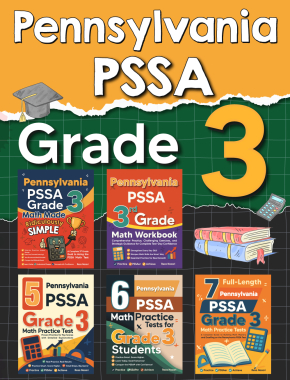
Ready for Grade 3 Math? The Pennsylvania Grade 3 Math Bundle
Second grade is the build-up year, and when your child is ready for what comes next, this bundle makes the jump to Grade 3 math feel easy. It packs full practice-test books, complete answer keys, and step-by-step explanations for the Grade 3 math skills just ahead.
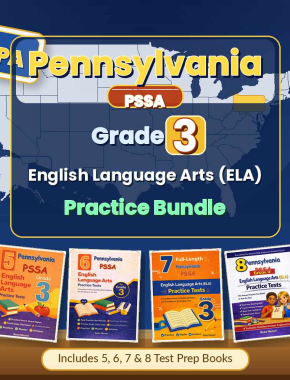
Getting Ready for Grade 3 English, Too? The Pennsylvania Grade 3 English Bundle
Reading and writing grow right alongside math. If your second grader could use a head start in English as well, this Pennsylvania Grade 3 English bundle covers it — practice tests, answer keys, and friendly explanations in one download.
Recommended EffortlessMath Books
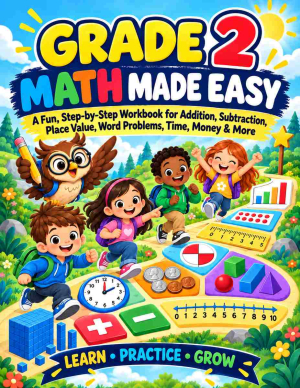
For a workbook that pairs neatly with these printable practice pages, Mastering Grade 2 Math walks your child through every second-grade topic with clear examples and lots of try-it-yourself problems. For extra word-problem practice (the part many second graders find hardest), see Mastering Grade 2 Math Word Problems.
Related EffortlessMath Lessons
If a topic on this page feels rusty, these short lessons go deeper:
- How to add and subtract two-digit numbers
- Place value to the hundreds
- How to tell time to the nearest five minutes
- How to count coins and dollar bills
- How to solve word problems

Related to This Article
More math articles
- Collective Behavior and Routine Organization
- Society, Social Structure, and Everyday Interaction
- Free Grade 5 English Worksheets for Georgia Students
- Overview of the SAT Mathematics Test
- GRE Math Flashcards (Free Online: Formulas, Terms & Concepts)
- The Best ASVAB Math Worksheets: FREE & Printable
- Chapter 19: Freedom of Religion
- Temperature, Humidity, and Airflow
- Build a Word, Then Check It Against the Whole Word
- ALEKS Math Study Plan: 14 Flexible Review Sessions







What people say about "Grade 2 Math Worksheets for Pennsylvania"?
No one replied yet.