NCLEX-PN Recognize vs. Analyze Cues: A Two-Pass Practice Worksheet (2027 Prep)
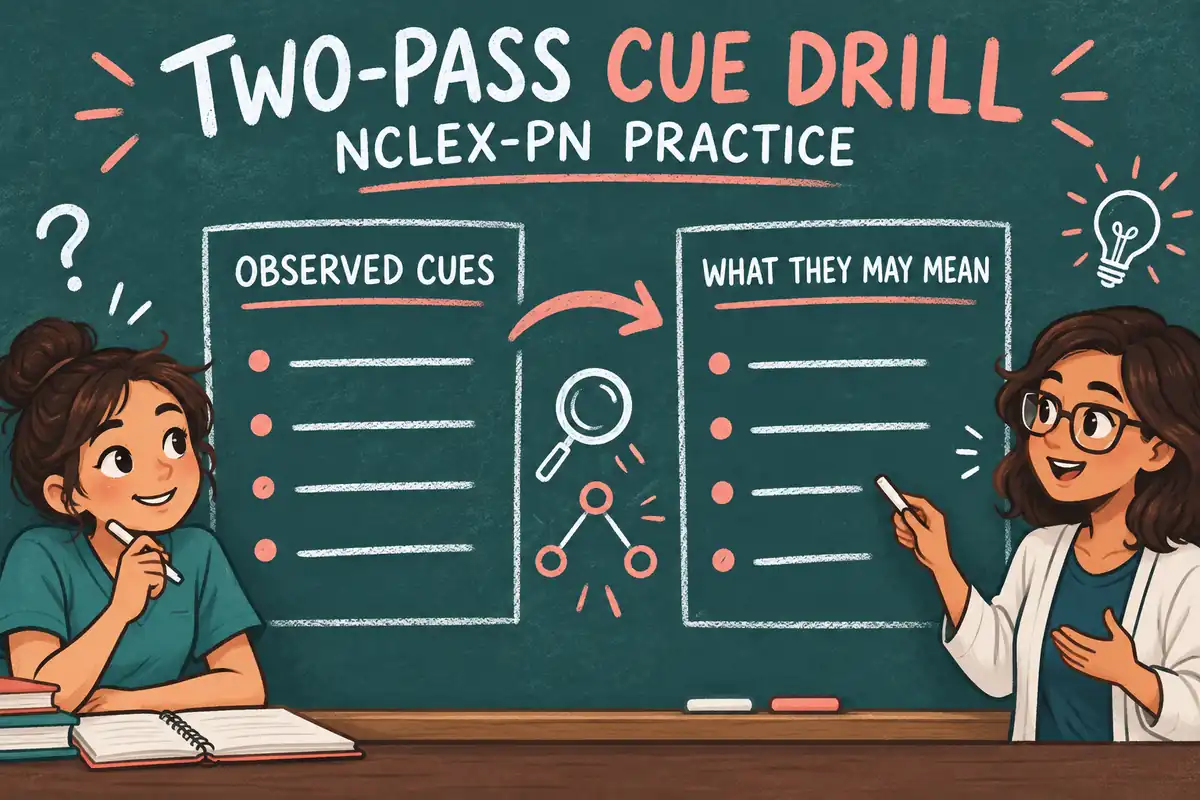
If you can spot details in a practice case but get stuck explaining what they mean together, separate the job into two passes. First select the relevant information. Then connect those details to the situation. Stick to the record.
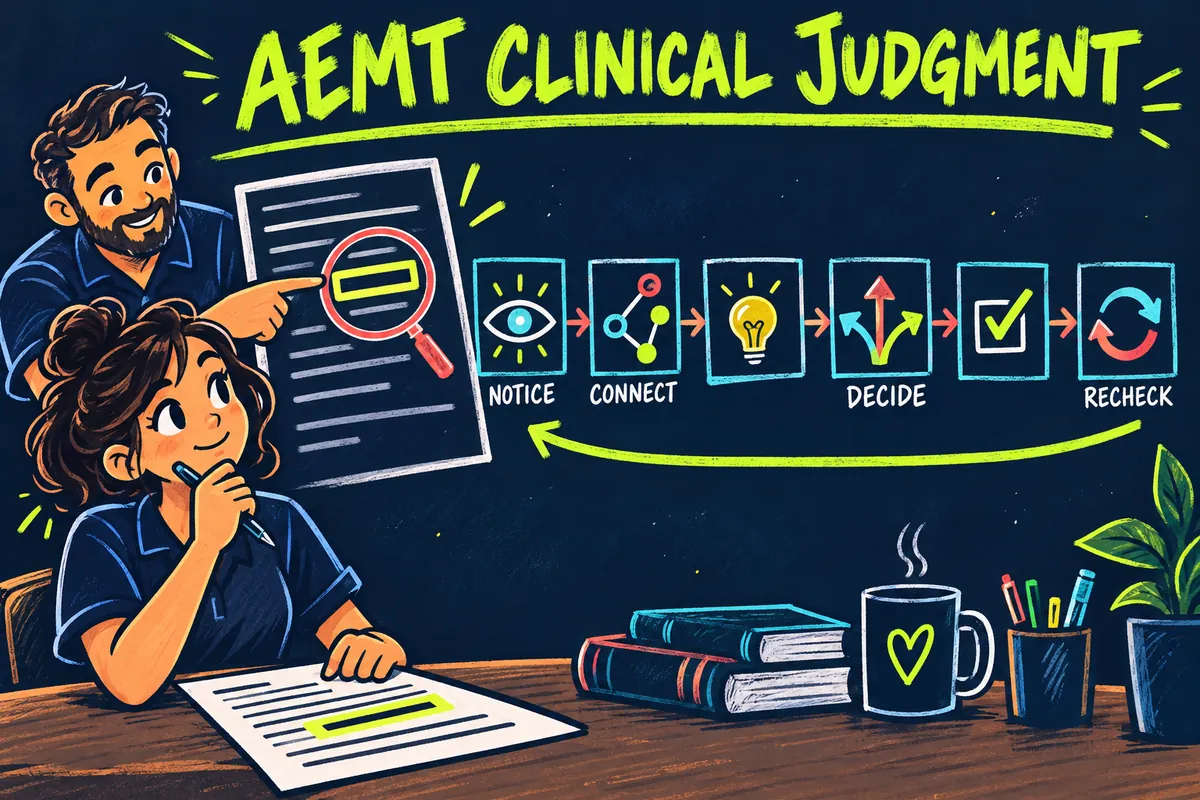
The 2026 NCLEX-PN Test Plan places cue work at the start of a six-part clinical-judgment process. For practice, ask two different questions: Which details in this case help answer the prompt? After selecting them, what picture do they form when you consider them together? The first question is about choosing evidence; the second is about explaining a pattern without claiming more than the case shows. NCSBN’s Clinical Judgment Measurement Model page describes the framework’s role in developing and measuring clinical judgment on the exam.
Use the two-pass worksheet
- Pass 1: record and select. Copy the stated fact in plain language. Note when it happened. Add what the record says about usual status. Mark why that fact matters to the question. Do not turn it into a diagnosis.
- Pass 2: connect and limit. Write one sentence that connects the selected facts. Then name one thing the case does not establish. This keeps a reasonable interpretation from turning into certainty the evidence cannot support.
| What the case states | Time or baseline context | Pass 1: why this fact matters | Pass 2: what the selected facts may suggest |
|---|---|---|---|
| Copy one observation or report | When? Usual or new? | Relevant to which part of the prompt? | Connect facts; note what remains unknown |
| ____________________________ | ________________ | ________________________ | _____________________________________ |
| ____________________________ | ________________ | ________________________ | _____________________________________ |
| ____________________________ | ________________ | ________________________ | _____________________________________ |
Work one short fictional practice vignette
Practice case: At 8 a.m., a client is documented as alert and answering in full sentences. At 10 a.m., the client asks the same question several times and pauses mid-sentence twice. A family member says this is unusual. The note also lists a temperature of 36.8°C, pulse of 84, and blood pressure of 126/74. No further history is provided. This teaching example is fictional and is not an official NCLEX item.
Pass 1, Recognize Cues: Select the repeated question, the pauses while speaking, the family member’s comparison with usual behavior, and the time difference between the two notes. Those are stated observations or reports that describe a change. Keep the recorded vital signs in view as context. Whether each detail matters depends on the prompt.
Pass 2, Analyze Cues: A careful connection is: The notes and family report describe a new change in attention or conversation compared with the earlier account. This wording ties the facts without explaining the cause. The vignette gives no other history, so it cannot establish a diagnosis or explain why this change occurred.
Check your reasoning before you move on
- Copy the observed facts before naming a diagnosis. A diagnosis is an interpretation, not an observation in this vignette.
- A list is not an explanation. Add the relationship. Asked the same question and paused twice is a fact list. Together, the reports suggest a change from the earlier communication pattern.
- Before you trust an interpretation, ask whether the case rules out other explanations. Here, it does not. Name the pattern. Leave its cause open.
- If you jump to what someone should do, pause. Prioritizing a hypothesis, generating solutions, and taking action come later in the NCLEX clinical-judgment model.
Try the short answer key
Which choice is an analysis rather than a copied cue? (Treat each numbered sentence as an answer option.)
- The client asked the same question several times.
- The family member says the conversation is different from usual.
- The reports together describe a new change in attention or conversation. The cause is not established.
- The client has a specific neurological condition.
Answer: 3. Choices 1 and 2 repeat information the case states. Choice 3 connects the change across sources and keeps the limit visible. Choice 4 claims more than the vignette supports.
Use this worksheet with one item from your own question bank, then compare your evidence sentence with the published rationale. The NCLEX-PN study hub has fixed-form practice for a next round of review. NCSBN describes the live exam as adaptive, so practice-test scores do not predict an individual result.
Independent exam-preparation material. The practice case is fictional and contains no official NCLEX item or patient-specific guidance. Effortless Math is independent of NCSBN and Pearson VUE.

Related to This Article
More math articles
- Strict scrutiny
- How to Add and Subtract Radical Expressions? (+FREE Worksheet!)
- 8th Grade ACT Aspire Math Worksheets: FREE & Printable
- The Mathematics Chances and Odds of CS2 Skins and Cases
- CLEP U.S. History I 043: Federalists and Democratic-Republicans
- Fourth Amendment
- Converting Fractions to Decimals for 5th Grade: Division and Number Lines
- Nevada Algebra 1 Free Worksheets: 64 Free Algebra 1 PDF Worksheets with Step-by-Step Keys
- Mead’s Role Taking and Social Self
- Free Grade 3 English Worksheets for California Students















What people say about "NCLEX-PN Recognize vs. Analyze Cues: A Two-Pass Practice Worksheet (2027 Prep) - Effortless Math"?
No one replied yet.