Free Minnesota Grade 2 Math Worksheets
TL;DR: Free printable Grade 2 math worksheets for Minnesota families and teachers – place value, two- and three-digit addition and subtraction, time, money, measurement, and word problems aligned with the Minnesota Academic Standards in Mathematics.
Key takeaways:
- Minnesota’s MCA math test starts in grade 3, so grade 2 is the foundation year.
- Worksheets cover place value to \(1{,}000\), addition and subtraction within 1000, time, money, measurement, and word problems.
- Every worksheet is a free PDF – print as many copies as you need.
- Aligned with the Minnesota Academic Standards in Mathematics at grade 2.
- Short daily practice works much better than long weekend marathons.
Printable PDF practice with answer keys to help your second grader build a strong math foundation.
A second grader in Saint Paul comes home, dumps a handful of coins on the kitchen table, and starts sorting, nickels in one pile, dimes in another, pennies everywhere. “How much is this?” she asks. That question, repeated a hundred small ways, is what second grade math is really about. It’s the year kids stop just naming numbers and start using them.
We built this collection of free Grade 2 math worksheets for exactly those moments. Every page is a printable PDF, every page comes with a full answer key, and there’s no account to make and no email to hand over. Print what you need, when you need it.
These worksheets line up with the Grade 2 math standards Minnesota has adopted, so the skills your child practices at the table match what’s happening in the classroom. Whether you’re a parent filling a quiet Sunday afternoon or a teacher who needs one more clean copy before Monday, this is here for you.
Second grade is a foundation year. The pages below are meant to be enjoyed slowly, one at a time, with plenty of room for mistakes and second tries.
What’s Inside This Collection
The worksheets are organized into eight chapters that follow the natural arc of a second grade math year. You can start at the top and work straight down, or jump to whatever skill your child is wrestling with this week.
Each chapter builds on the one before it. Place value comes first because almost everything else, adding bigger numbers, comparing amounts, understanding money, leans on understanding that the 3 in 342 means three hundred. From there it’s on to addition and subtraction, word problems, arrays, measurement, time and money, graphs, and finally geometry.
Every worksheet has a short Key Ideas box at the top, a few worked examples, practice problems, and an answer key on the last page. Print a single sheet for a ten-minute warm-up, or grab a whole chapter for a rainy weekend.
Place Value and Number Sense
- Understanding Place Value, Kids learn that hundreds, tens, and ones each have their own job inside a number.
- Reading and Writing Numbers to 1,000, Practice moving between number words and digits, both directions.
- Expanded Form, Break a number apart into 200 + 40 + 7 and see what it’s really made of.
- Skip Counting, Count by 2s, 5s, 10s, and 100s to spot patterns that make bigger math faster.
- Comparing and Ordering 3-Digit Numbers, Decide which number is greater and put a set in order.
Addition and Subtraction
- Addition Facts Within 20, Steady practice that turns sums into facts kids just know.
- Subtraction Facts Within 20, The flip side of addition, built up the same patient way.
- Adding Within 100, Two-digit addition, including the trickier problems that need regrouping.
- Subtracting Within 100, Take away across tens with clear, step-by-step practice.
- Adding Within 1,000, Stretch addition into three-digit numbers with confidence.
- Subtracting Within 1,000, Bigger subtraction problems, broken into manageable steps.
- Mentally Adding and Subtracting 10 and 100, Jump by tens and hundreds in your head, no pencil needed.
Word Problems and Equations
- One-Step Word Problems, Read a short story, find the math, and solve it.
- Two-Step Word Problems, Problems that need two moves to reach the answer.
- Finding the Unknown Number, Figure out the missing piece in an equation.
Odd, Even, and Arrays
- Odd and Even Numbers, Sort numbers into two groups and learn why they split that way.
- Even Numbers as Equal Addends, See how every even number splits into two equal parts.
- Rectangular Arrays, Arrange dots in neat rows and columns, a quiet first step toward multiplication.
- Repeated Addition with Arrays, Count an array by adding equal rows again and again.
Measurement and Length
- Measuring Length with Tools, Use rulers and other tools to measure real objects.
- Estimating Lengths, Make a smart guess before reaching for the ruler.
- Comparing Lengths, Decide which object is longer and by how much.
- Adding and Subtracting Lengths, Combine and compare measurements with arithmetic.
- Length on a Number Line, Picture distance as a hop along a number line.
Time and Money
- Telling Time to the Nearest Five Minutes, Read an analog clock and land on the right five-minute mark.
- A.M. And P.M., Tell morning hours from evening hours.
- Counting Coins, Add up pennies, nickels, dimes, and quarters to find a total.
- Money Word Problems, Solve real shopping situations with coins and dollars.
Data and Graphs
- Line Plots, Plot measurements above a number line and read what they show.
- Picture Graphs, Use pictures to stand for amounts and answer questions.
- Bar Graphs, Compare groups using bars of different heights.
Geometry
- Recognizing and Drawing Shapes, Name and sketch shapes by their sides and corners.
- Partitioning Rectangles into Rows and Columns, Split a rectangle into a grid and count the squares.
- Equal Shares: Halves, Thirds, and Fourths, Divide shapes into fair, equal pieces.
Getting the Most Out of These Worksheets
A stack of worksheets is only as good as how you use it. A few simple habits make a real difference.
Work one page at a time. A single focused sheet beats a marathon of five, second graders do their best thinking in short, calm bursts.
Read the Key Ideas box together before anyone picks up a pencil. Those few lines remind your child what to look for, and they give you a quick refresher too.
Walk through the worked examples slowly. Let your child explain each step out loud. If they can teach it back to you, they own it.
Check the answer key together when the page is done. Treat a wrong answer as a clue, not a verdict, ask “where do you think this one went sideways?” and let them find it.
Come back to shaky skills about a week later. If counting coins felt hard on Tuesday, try a fresh page the following week. That little gap is what moves a skill from “kind of” to “got it.”
A Note About the MCA
Minnesota’s statewide math test, the MCA, doesn’t begin until third grade. So if your child is in second grade right now, there’s nothing to cram for and no scores to chase.
What second grade does offer is the chance to build the base the MCA later sits on. Place value, quick addition and subtraction facts, reading a word problem carefully. Those are the exact skills that show up again and again on the test in third grade and beyond. A child who’s comfortable with them walks into testing years already ahead.
So use this year the unhurried way it was meant to be used. Steady practice now, with no test-day pressure, is the best preparation there is.
Frequently Asked Questions
Are these worksheets really free? Yes, completely. Every PDF is free to download and print, with no account, no subscription, and no email required.
Do the worksheets include answers? They do. Every worksheet ends with a full answer key, so checking work is quick whether you’re a parent or a teacher.
How much practice should my second grader do? One worksheet a few times a week is plenty for most kids. Short and consistent beats long and occasional.
Can teachers use these in the classroom? Absolutely. Print as many copies as you like for warm-ups, centers, homework, or small-group practice.
My child is struggling with one chapter. What should I do? Slow down and stay there. Spend a couple of short sessions on that single skill, revisit it a week later, and move on once it feels easier. There’s no rush.
Keep It Light and Keep It Going
Second grade math grows best in small, friendly doses. A few minutes at the kitchen table, a worksheet that matches what’s happening in class, a parent who treats mistakes as part of the deal. That’s the whole recipe. Print a page, sit down together, and let your Minnesota second grader build their math confidence one steady step at a time.
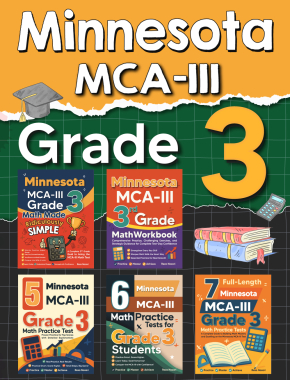
Ready for Grade 3 Math? The Minnesota Grade 3 Math Bundle
Second grade is the build-up year, and when your child is ready for what comes next, this bundle makes the jump to Grade 3 math feel easy. It packs full practice-test books, complete answer keys, and step-by-step explanations for the Grade 3 math skills just ahead.
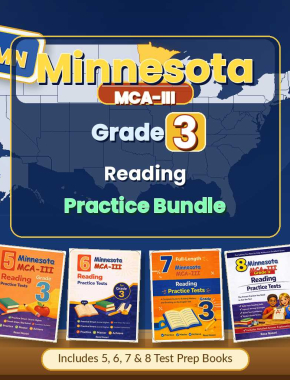
Getting Ready for Grade 3 English, Too? The Minnesota Grade 3 English Bundle
Reading and writing grow right alongside math. If your second grader could use a head start in English as well, this Minnesota Grade 3 English bundle covers it — practice tests, answer keys, and friendly explanations in one download.
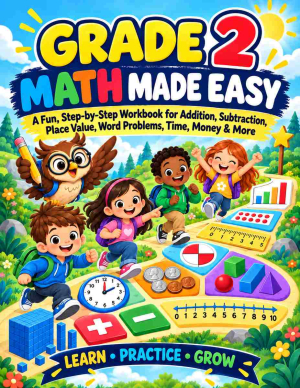
Recommended EffortlessMath Books
For a workbook that pairs neatly with these printable practice pages, Mastering Grade 2 Math walks your child through every second-grade topic with clear examples and lots of try-it-yourself problems. For extra word-problem practice (the part many second graders find hardest), see Mastering Grade 2 Math Word Problems.
Related EffortlessMath Lessons
If a topic on this page feels rusty, these short lessons go deeper:
- How to add and subtract two-digit numbers
- Place value to the hundreds
- How to tell time to the nearest five minutes
- How to count coins and dollar bills
- How to solve word problems

Related to This Article
More math articles
- Division of Labor, Alienation, Labor Markets, and Professions
- Top 5 ACT Math Study Guides
- Free Grade 4 English Worksheets for Indiana Students
- Top Proven Strategies To Increase Your SAT Math Score
- How to Estimate Angle Measurements
- The Best Grade 7 Math Book for Montana Students
- Party-in-government
- How to Use Place Value Blocks to Compare Decimals
- NYSTCE Grades 1-6 Math (222) Worksheets: FREE & Printable
- Free Grade 4 English Worksheets for California Students







What people say about "Free Minnesota Grade 2 Math Worksheets: Free and Printable"?
No one replied yet.