How the Federal Bureaucracy Is Held Accountable
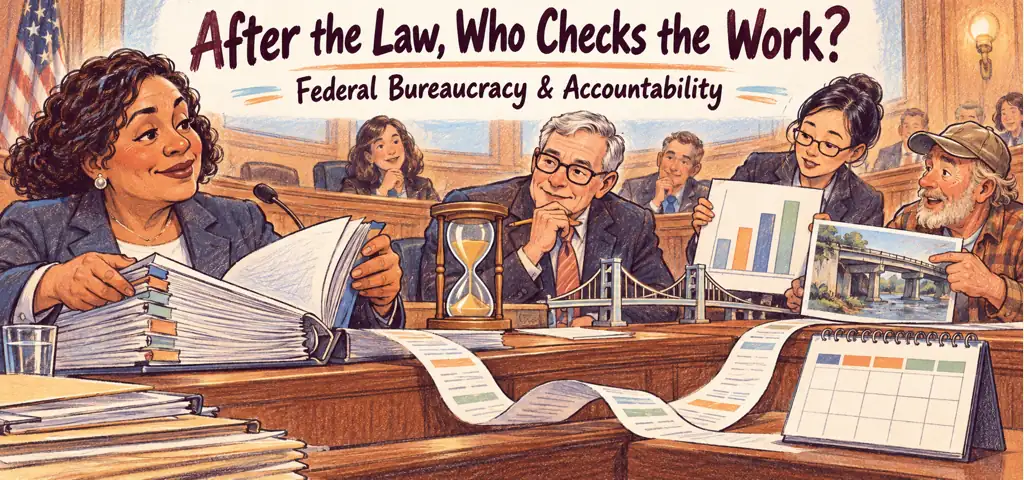
Congress passes a clean-air law and announces a national goal. Two years later, a committee learns that regional offices apply the law differently, regulated firms complain about delays, and communities say enforcement is too weak. The legislative vote settled what the statute says. It did not settle whether the program would work. Congressional oversight is the continuing work of examining how executive agencies administer public policy and deciding whether law, organization, leadership, or funding should change.
Oversight grows out of Congress’s legislative responsibilities rather than from a free-standing power to investigate anything. Committees hold hearings, request reports, question officials, commission studies, examine audits, and sometimes issue subpoenas. The Government Accountability Office and congressional support staff can supply information that individual legislators lack. A valid investigation must remain connected to a legislative purpose and within the authority delegated to the committee. Oversight therefore differs from prosecution: a hearing may expose misconduct or recommend reform, but a committee does not convict an administrator of a crime.
A practical reading of how the federal bureaucracy is held accountable
The mechanism is an information-and-response cycle. Congress first identifies a gap between a statutory objective and administrative performance. It gathers evidence from agency leaders, career employees, affected citizens, experts, and records. Members then choose among responses: clarify the law, alter deadlines or procedures, change the agency’s authority, adjust funding, require additional reporting, or leave the program intact. Public hearings can also create political pressure, but visibility is not the same as legal correction.
Oversight can be routine or event-driven. A committee may build regular reporting requirements into a statute and revisit a program each year, much like a standing alarm system. It may instead react after a scandal, implementation failure, court decision, or constituent complaint. Political incentives affect which method legislators use. Majority-party leaders may hesitate to investigate an administration controlled by their own party, while divided government often increases confrontational oversight. That pattern affects intensity, not the existence of Congress’s responsibility to learn how a law operates.
How the Federal Bureaucracy Is Held Accountable: a common mistake
Subpoenas illustrate both the force and the limits of investigation. A committee acting within its jurisdiction may compel testimony or records, but disputes can arise over relevance, privilege, confidentiality, and accommodation between the branches. The fact that Congress requests a document does not prove that every part must immediately become public. In a test scenario, separate the investigative power, the possible legal objection, and the eventual remedy. Do not assume that a public argument itself resolves the dispute.
Worked application. A transportation committee discovers that an agency has missed a statutory safety deadline. Calling the administrator to explain the delay is oversight. Requiring quarterly progress reports is a prospective reporting control. Amending the statute to set a clearer standard is legislation. Referring evidence of possible crime to the Justice Department is not itself a criminal judgment. The same controversy can activate several tools, but each tool has a different actor and consequence.
The common beginner error is to treat oversight as direct management. Congress may investigate the delayed inspections, change the appropriation, or rewrite the deadline. It does not ordinarily assign inspectors to particular bridges or decide individual enforcement files. Ask what Congress is doing with the information: learning, exposing, funding, or legislating. That verb identifies the accountability tool.
Apply the lesson on how the federal bureaucracy is held accountable
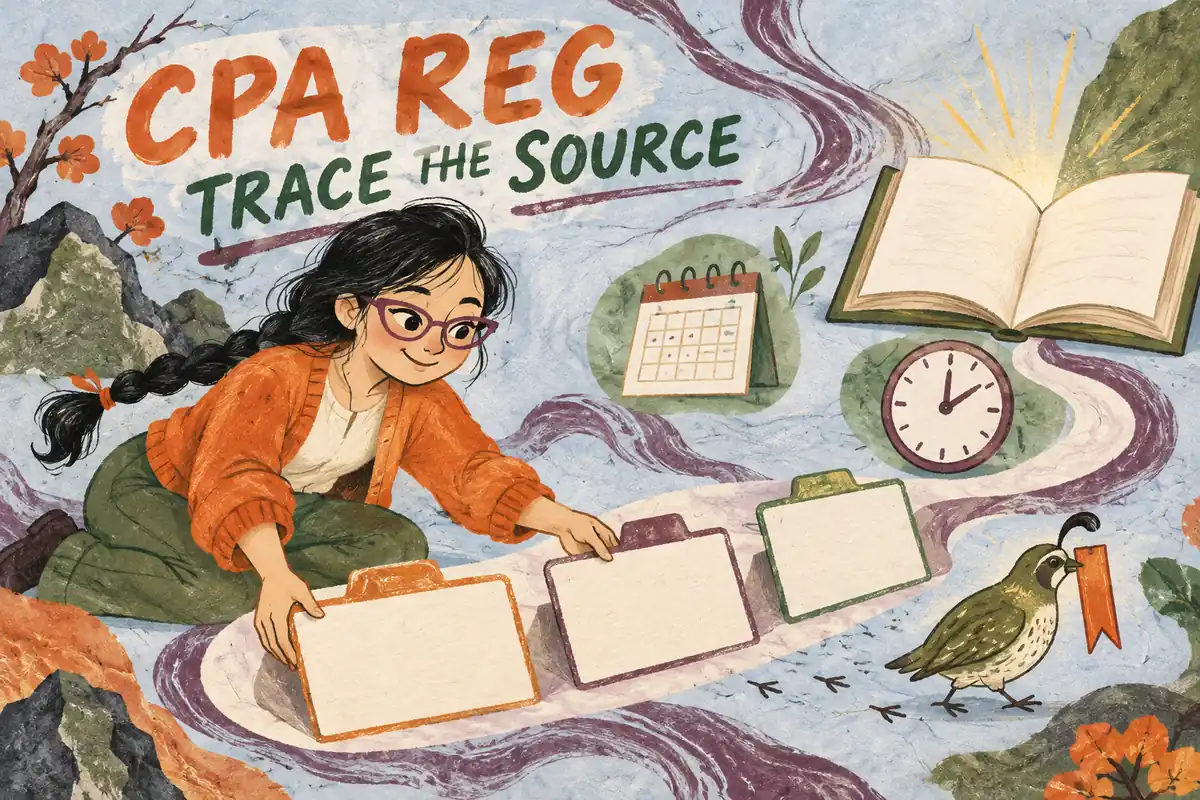
A committee suspects that an agency ignored its statute. Trace the evidence Congress could gather and the lawful tools it could use in response. The missing piece is: In bureaucratic accountability, congressional committees compare agency action with statutory purpose, spending authority, deadlines, and performance. Hearings and investigations gather information. Appropriations and legislation can then change incentives or authority. Appropriations, funding conditions, reprogramming rules, audits, and reporting requirements let Congress shape agency capacity and priorities.
Video lesson: How the Federal Bureaucracy Is Held Accountable
CrashCourse gives a focused explanation of this topic in Controlling Bureaucracies: Crash Course Government and Politics #17.
If the player does not load, watch this lesson directly on YouTube.
Connect this lesson to the larger course
For a broader map connecting how the federal bureaucracy is held accountable to Congress, the presidency, the courts, and the bureaucracy, use the AP U.S. Government and Politics learning hub.

Related to This Article
More math articles
- 49 Free MTYA Grade 5 Math Worksheets for Maine Students (Aligned, One Skill Per Page)
- Best Free Math Worksheets for Every Grade Level
- Disfranchisement, the Civil Rights Cases, and Plessy
- Free Grade 7 English Worksheets for Maryland Students
- 3rd Grade STAAR Math FREE Sample Practice Questions
- Back to School: The Best Laptops for Students
- Algebra Puzzle – Challenge 43
- Teamwork and Triumph: How to Solve Percent Equations
- Temperature for 5th Grade: Celsius and Fahrenheit
- Society and Social Structure












What people say about "How the Federal Bureaucracy Is Held Accountable"?
No one replied yet.