How Sudoku Helps Improve Logical Thinking and Mathematical Reasoning

Many students believe that improving mathematical ability requires only practicing formulas and solving textbook problems. While traditional exercises are important, developing strong logical thinking skills is equally essential for success in mathematics.
One surprisingly effective way to train logical reasoning is through puzzles. Among all logic puzzles, Sudoku has become one of the most popular brain exercises used by students, teachers, and even professional mathematicians to strengthen analytical thinking.
Although Sudoku looks like a simple number puzzle, the mental processes required to solve it closely resemble the reasoning skills used in mathematics.
The Connection Between Logic and Mathematics
Mathematics is not only about calculations. At its core, mathematics is about recognizing patterns, applying rules, and making logical deductions. These skills are essential for solving algebra problems, understanding geometry, and analyzing mathematical relationships.
Students who develop strong logical thinking abilities often find it easier to approach complex mathematical problems. Instead of memorizing steps mechanically, they learn how to analyze situations and determine which strategy works best.
Logic puzzles such as Sudoku provide an excellent way to practice these reasoning skills in a relaxed and engaging environment.
What Makes Sudoku a Powerful Brain Exercise
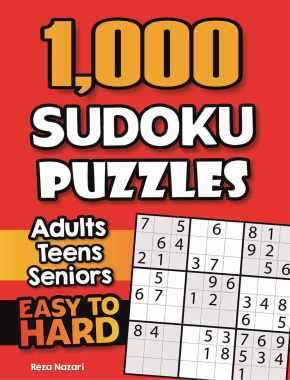
Sudoku is based on a simple set of rules. The puzzle consists of a grid where numbers must be placed so that each row, column, and section contains all digits without repetition. While the rules are straightforward, solving the puzzle requires careful analysis and step-by-step reasoning.
Unlike arithmetic drills, Sudoku does not rely on calculation. Instead, it focuses on logical deduction. Players must examine the grid, identify constraints, and determine which numbers are possible in each position.
This process trains several important cognitive skills:
- pattern recognition
- logical deduction
- attention to detail
- systematic problem solving
- strategic thinking
These abilities are highly valuable for students studying mathematics and other analytical subjects.
How Sudoku Supports Mathematical Thinking
Solving Sudoku puzzles encourages the same type of structured reasoning used in many mathematical problems. When working on a Sudoku grid, players must analyze the available information and make logical conclusions based on the puzzle’s rules.
This is similar to solving algebraic equations or geometry proofs, where each step follows logically from previous information.
For example, a Sudoku player may determine that a specific number can only appear in one particular cell because all other positions violate the puzzle’s constraints. This type of reasoning mirrors the deductive thinking required in mathematics.
As students become more comfortable with this type of thinking, they often gain confidence when approaching academic math problems.
Improving Concentration and Focus
Another benefit of Sudoku is improved concentration. Solving puzzles requires sustained attention and careful observation of the grid. Even small mistakes can affect the entire solution, so players must stay focused throughout the process.
Regular practice with logic puzzles can help students develop stronger concentration skills, which are extremely useful during exams and complex assignments.
Students who train their focus through activities like Sudoku often find it easier to maintain attention when solving multi-step math problems.
Reducing Math Anxiety Through Puzzles
Many students experience anxiety when dealing with mathematics. This anxiety often comes from the pressure of grades, time limits, and the fear of making mistakes.
Logic puzzles provide a low-pressure environment where students can practice reasoning without worrying about scores or deadlines. Sudoku allows learners to explore logical strategies at their own pace.
This relaxed approach to problem solving can gradually build confidence in analytical thinking.
Sudoku as a Daily Brain Training Habit
Just like physical exercise strengthens the body, mental exercises strengthen the brain. Even a few minutes of daily puzzle solving can help maintain cognitive sharpness.
Students who incorporate logic puzzles into their daily routine often notice improvements in problem-solving speed and accuracy.
Teachers and parents can also encourage Sudoku as a short daily activity that complements traditional learning.
Practicing Sudoku Online
Today, students can easily access Sudoku puzzles online and practice them anytime. Digital platforms allow learners to choose different difficulty levels and solve puzzles directly in their browser.
One example of an online Sudoku practice platform is https://sudoku-play.org/, where players can solve Sudoku puzzles and improve their logical reasoning skills through regular practice.
Online puzzles make it easy for students to practice anywhere, whether they are studying at home, taking a break between classes, or preparing for exams.
Developing Stronger Thinking Skills
While Sudoku may appear to be a simple puzzle, it offers significant cognitive benefits for students learning mathematics. The logical reasoning, concentration, and analytical thinking developed through puzzle solving are directly applicable to many areas of academic learning.
By combining traditional math practice with brain-training activities like Sudoku, students can strengthen both their numerical skills and their ability to think logically.
Over time, these abilities form the foundation for success in mathematics, science, engineering, and many other disciplines that rely on structured reasoning and analytical thinking.

Related to This Article
More math articles
- How to Write Slope-intercept Form and Point-slope Form?
- Best Note-Taking Tablet for College Students
- The Ultimate 7th Grade OSTP Math Course (+FREE Worksheets)
- 4th Grade ACT Aspire Math Worksheets: FREE & Printable
- Top 10 CLEP College Mathematics Practice Questions
- Finding the Area Between Two Triangles
- 4th Grade PSSA Math FREE Sample Practice Questions
- How to Perform Operations of Positive and Negative Decimals
- 5th Grade ISASP Math Worksheets: FREE & Printable
- 7th Grade STAAR Math Worksheets: FREE & Printable
















What people say about "How Sudoku Helps Improve Logical Thinking and Mathematical Reasoning - Effortless Math: We Help Students Learn to LOVE Mathematics"?
No one replied yet.