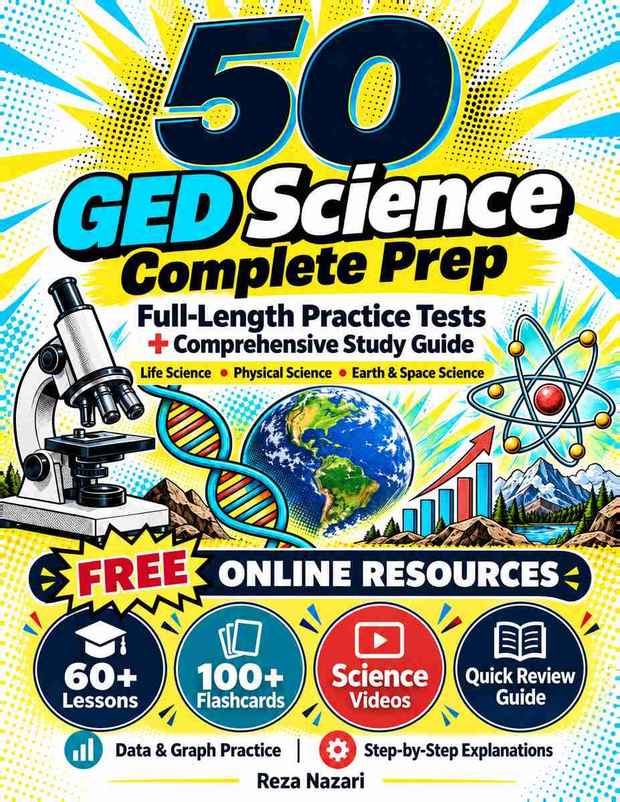
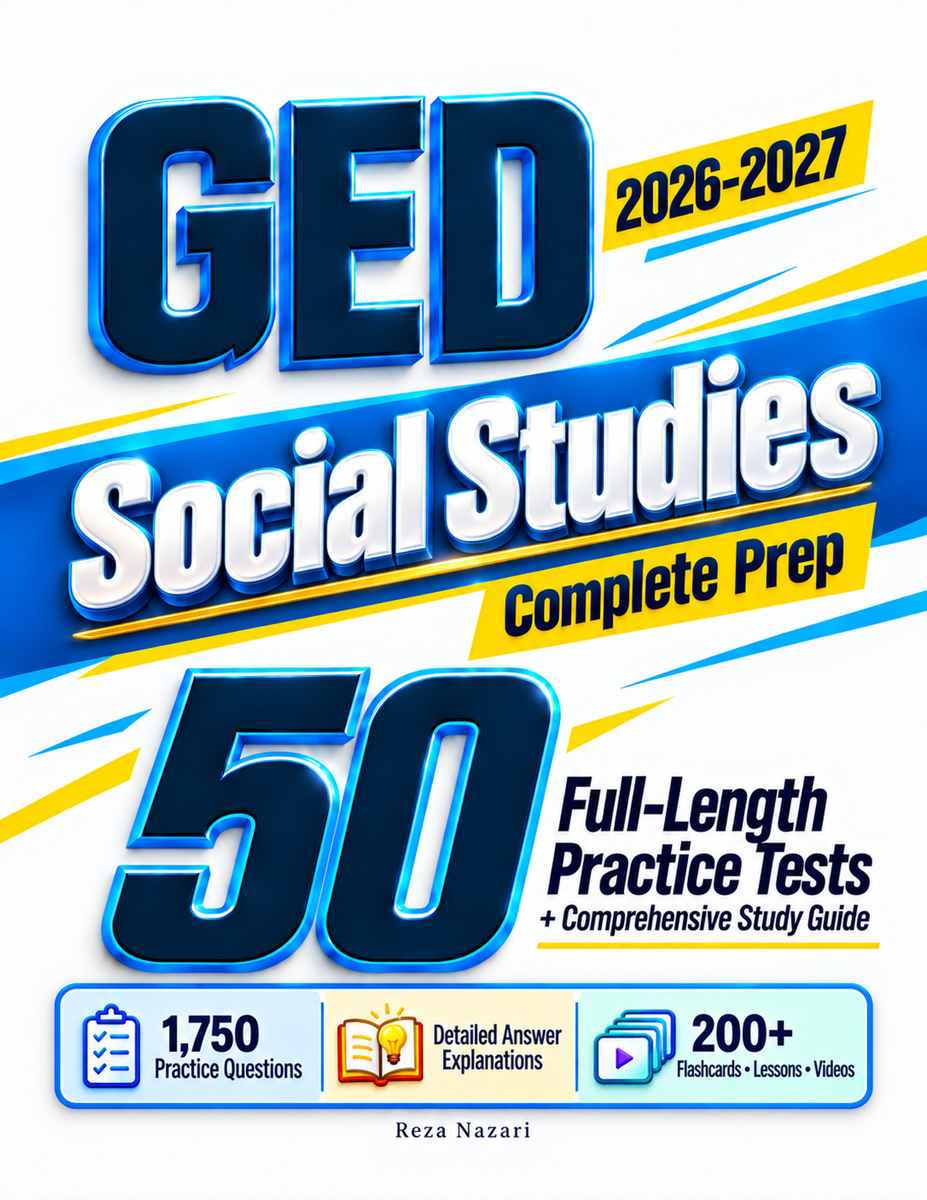
YOUR GED REASONING THROUGH LANGUAGE ARTS PREP STARTS HERE
GED Reasoning Through Language Arts Online Center
Prepare for GED Reasoning Through Language Arts with independent practice, flashcards, and connected lessons. Support an answer with details from the passage rather than a reasonable outside assumption. Choose one skill to strengthen before your next practice session.
Free study tools · Focused review · Books to compare
GED Reasoning Through Language Arts Practice Tests
Open the existing practice form, review explanations, and use the results to choose a skill. Results are study feedback, not official scores.
GED Reasoning Through Language Arts Flashcards
Recall the idea, then connect it with an example.
GED Reasoning Through Language Arts Study Guides
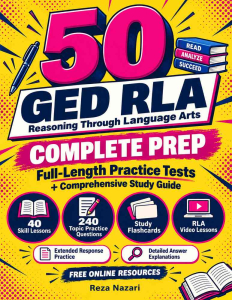
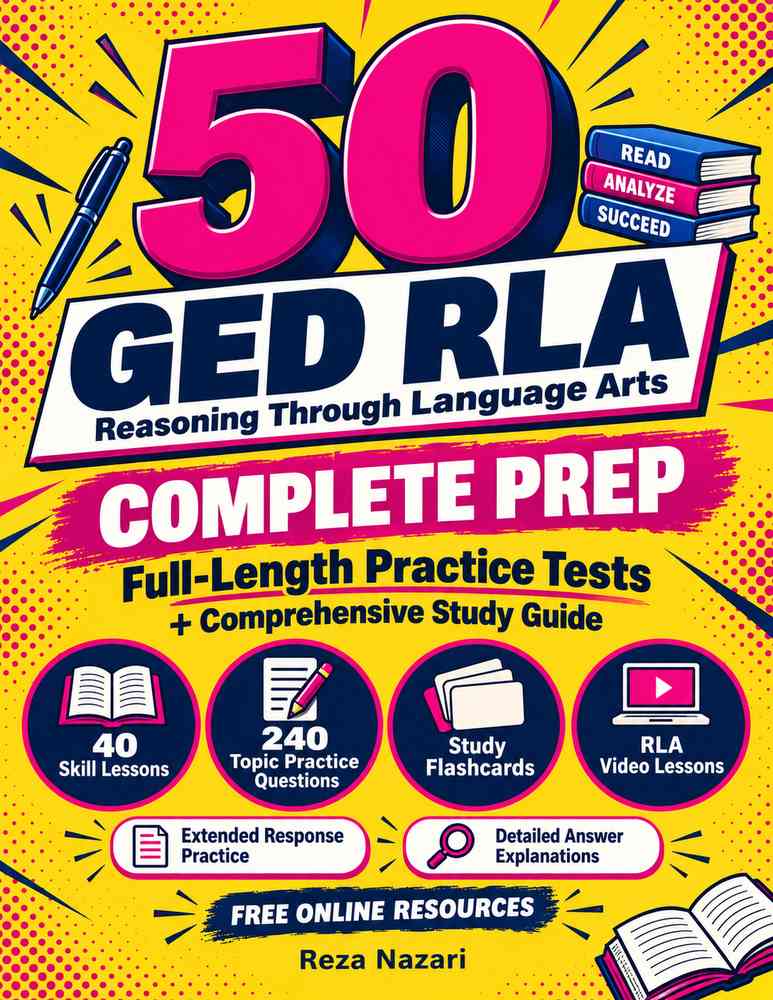
GED Reasoning Through Language Arts (RLA) Complete Prep: 50 Practice Tests
RLA-focused review and independent practice. Check the book preview for reading, editing, and extended-response preparation.
View book & purchase options →GED Reasoning Through Language Arts Quick Review
Refresh a reading, editing, or argument skill.
Open this resource →MEET THE ASSESSMENT · CHOOSE YOUR NEXT SKILL
Know GED Reasoning Through Language Arts before you start.
The U.S. GED RLA test allows 150 minutes, including a 45-minute extended response and a 10-minute break. Prepare for passage analysis, argument evidence, and editing as well as the essay. Independent selected-response practice does not grade your official extended response or reproduce an official GED score.
Official assessment information ↗Reading evidence and inference
Support an answer with details from the passage rather than a reasonable outside assumption.
Explore this study route →Language and editing
Read the whole sentence and nearby context before making an edit.
Explore this study route →Extended-response planning
Explain which argument is better supported with evidence; personal agreement alone is insufficient.
Explore this study route →Official preparation
Check the current assessment guidance and use official samples alongside your independent study.
Explore this study route →GED Language Arts Practice Center
Take a full practice test, review the explanations, then use the flashcards to repair the terms and ideas that slowed you down.
GED Language Arts Study Blueprint
Open each area to see what to master. The bars show how this Online Center distributes its lessons, so you can plan study time without mistaking the map for an official exam weighting.
01 Reading foundations and main ideasIdentify explicit meaning, central ideas, details, summaries, and inferences. 12lessons
- What the text says and how details support it
- Main idea, summary, sequence, and inference
02 Structure and literary textsAnalyze organization and the elements that shape literary meaning. 16lessons
- Text structure, transitions, and relationships
- Character, conflict, setting, theme, and point of view
03 Vocabulary, craft, arguments, and evidenceInterpret language and evaluate how writers build claims. 18lessons
- Context, tone, purpose, figurative language, and craft
- Claims, reasons, evidence, assumptions, and credibility
04 Comparing texts and visualsIntegrate ideas across paired passages, charts, and other formats. 8lessons
- Agreement, disagreement, and synthesis
- Tables, graphs, illustrations, and multimodal evidence
05 Grammar and editingRevise sentences for correctness, clarity, precision, and flow. 19lessons
- Boundaries, agreement, pronouns, modifiers, and mechanics
- Punctuation, word choice, concision, and paragraph revision
06 Extended response and test planBuild an evidence-based response and manage the complete exam. 16lessons
- Claim, evidence, explanation, organization, and revision
- Pacing, calculator awareness, review, and readiness
Study-map shares describe the learning resources on this page. They are not presented as official test percentages.
Effortless Math • GED Language Arts (RLA) Prep Center
One place to prepare for the GED Language Arts (RLA) test — close reading, main ideas and inference, literary and argument analysis, grammar and editing, and the extended-response essay. Each topic below links to a full lesson with a clear explanation, a video, and practice.
📖 Reading & inference
✎ Grammar & editing
📝 The essay
🎥 Video for every topic
🃏 Study flashcards
Read with purpose.
Write with confidence.
Start with Reading or Writing. Follow a picture, watch a worked example, and try a question at each stop. You can switch paths whenever you like.
Start Here: What the GED RLA Test Really Measures
The GED Language Arts test (RLA) is a reading and writing test. You read passages, answer questions about meaning, structure, and evidence, fix grammar and punctuation, and write one short analytical essay. Strong reading and clear writing matter far more than memorizing rules.
Test format reflects the official GED RLA guidelines. Always confirm current specifics at your testing center.
How to Use This Online Center
Start with Reading Foundations and Main Ideas — those skills carry every reading question. Then work through structure, literary and argument analysis, and vocabulary. The Grammar and Punctuation groups prepare you for the editing questions, and the Extended Response group walks you through the essay step by step.
All GED RLA Topics
89 of 89 lessons live
Reading Foundations
Main Ideas and Inference
Relationships and Structure
Literary Texts
Vocabulary, Purpose and Craft
Arguments and Evidence
Comparing Texts and Visuals
Grammar and Sentence Boundaries
Clarity, Punctuation and Editing
Extended Response (Essay)
- Understanding the Prompt and Rubric
- Evaluating the Passages Before You Choose
- Writing a Focused Thesis
- Selecting and Integrating Evidence
- Analysis, Not Summary
- Writing Introductions and Conclusions
- Building Strong Body Paragraphs
- Organization, Tone, and Transitions
- A 45-Minute Essay Plan
- Revising, Editing, and Keyboarding
- A Scored Model Essay
- A Guided, Timed Response
GED RLA Study Flashcards
Flip through the key terms for the GED RLA test. Click a card to reveal the answer, use Next and Prev to move, and Shuffle to quiz yourself.
A Simple Study Plan
Week 1 — Reading
Active reading, main ideas, inference, and text structure — the foundation for every reading question.
Week 2 — Analysis
Literary elements, vocabulary and craft, and how to analyze arguments and evidence.
Week 3 — Grammar & Editing
Sentence boundaries, agreement, punctuation, and clarity — everything the editing questions test.
Week 4 — The Essay & Review
Plan, draft, and revise the extended response, then full practice sets to tie it together.
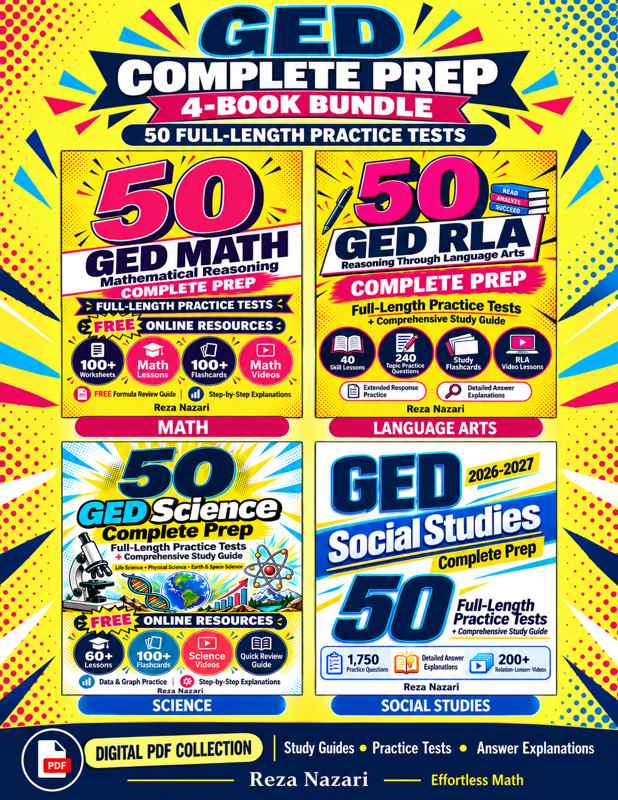
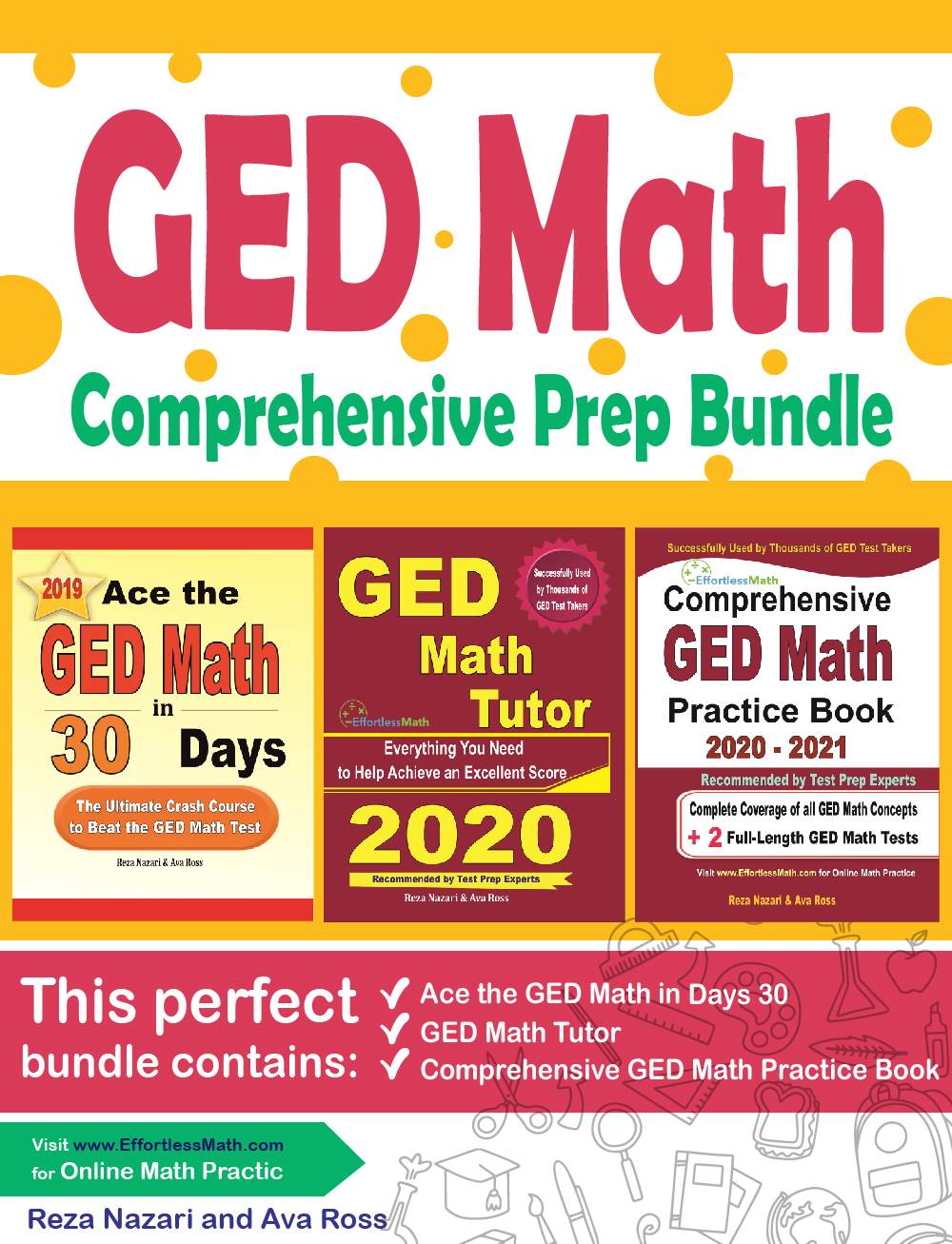
Recommended GED Prep Books
Pair these lessons with a full study guide and practice tests to stay on track.
GED RLA FAQ
How long is the GED RLA test?
About 150 minutes, which includes a 45-minute extended-response essay and a short break.
Do I have to write an essay?
Yes — one extended response. You read two passages that argue opposite sides of an issue and write an essay explaining which is better supported by evidence.
What is on the test besides the essay?
Reading comprehension (main ideas, inference, structure, and evidence) and language questions (grammar, sentence structure, punctuation, and clear writing).
What score do I need to pass?
A score of 145 or higher passes each GED subject, including RLA.
Related Online Centers
Make This Your GED RLA Starting Point
Bookmark this Online Center, pick a topic, and start building real confidence — one clear lesson at a time.
Every lesson in one place
Open a lesson in a new tab and keep this Online Center nearby as your study home.
Browse the complete lesson directory
A USEFUL NEXT STEP
GED Reasoning Through Language Arts: study questions
What should I know about GED Reasoning Through Language Arts?
The U.S. GED RLA test allows 150 minutes, including a 45-minute extended response and a 10-minute break. Prepare for passage analysis, argument evidence, and editing as well as the essay. Independent selected-response practice does not grade your official extended response or reproduce an official GED score.
Official source ↗How should I use these independent GED Reasoning Through Language Arts study tools?
Start with a practice activity, review explanations for missed questions, and use quick review or flashcards for one weak topic. The practice results are study feedback, not official exam scores. Compare a book’s contents with your course or test requirements before buying.
Resources from Effortless Math · Editorial standards