How to Make Math into a Fun Experience
Let’s agree that Math is not the easiest subject to learn. Mastering complex algorithms and even basic Math concepts is a challenge-packed experience for many students. Hence, in a classroom, every student engages with the class content differently. Some absorb the topics right away, while some find the subject boring and complicated, and lose interest in studying.
So, the main task here is to help students think of Math as a fascinating subject that continually forms our environment. But how can this be achieved? Engaging students in a Math lesson should be a balancing act – using fun and joyful activities along with systematic and traditional ways of teaching can give good results. What are the key activities and methods to make Math fun, and why do you need them? Let’s find out together.
Ways to Make Math Fun and Interesting
The main goal is to turn plain and boring studying into a fun activity. Try to introduce games or funny stories to the process. Explore some key ways to make the subject enjoyable for students and help them get better at Math.
Games
Games are a great way to have fun, and they become powerful teaching tools in Math. Card and board games capture students’ attention and build problem-solving and strategic thinking skills, making Math concepts more accessible to grasp through hands-on play.
For example, playing cards can help students sort and visualize fractions. This makes numerators and denominators easier to understand. Or you can engage in board games like chess to foster strategic thinking.
Stories and Fairy Tales
Incorporating Math problems into stories can make learning more meaningful. It will give students a narrative that explains the “why” and “how” of Math. For example, create a mystery story in which solving each clue requires Math problem-solving to move on to the next.
You can also encourage students to write short stories featuring a Math problem they face daily. Make PDF task sheets and gather them all in one place. Use a PDF creator like PDF Guru to edit and convert their stories easily.
Outdoor Activities
You can make the outdoors a one-of-a-kind classroom, as it delivers countless opportunities for hands-on Math experiences. Use manipulatives and real-life objects to create tactile, visual learning experiences that stick with young learners. Here are some unique outdoor Math activities to explore:
- Have students create a layout for a school garden, meaningfully applying their knowledge of area and perimeter.
- Set up a Math trail around the schoolyard where students can tackle nature-themed Math challenges at different stops.
Art Integration
When Math is combined with art, it brings symmetry, exploration of patterns, and geometry in a creative and visually engaging manner. Gathering natural materials to craft artworks that showcase geometric shapes and symmetry found in nature can be a great way to do this.
Why Make Math a Joyful Experience for Students
Imagine a classroom where Math feels more like an exciting discovery than hard work. This is the main goal of making Math enjoyable – a shift that benefits students and teachers.
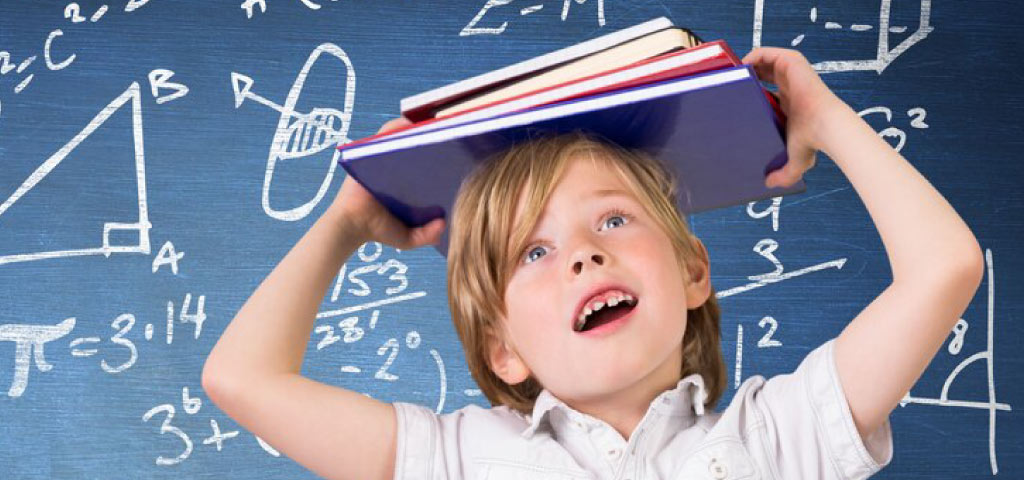
Engagement is the key to success in Math and other STEM subjects. When students have fun with Math, their curiosity grows, which, in turn, leads to deeper involvement with the material. This kind of learning helps students to enjoy Math, grasp concepts better, and retain them longer.
In addition, making Math enjoyable goes beyond improving test scores. It helps reduce the anxiety many students feel toward the subject. Thus, when classrooms shift from stressful tasks to playful learning and from individual worksheets to group problem-solving, students become more willing to take risks and embrace challenges as opportunities to grow.
Why Students Struggle with Math – Main Reasons
Many students struggle with Math because it feels complicated and overwhelming. Instead of being a fun learning experience, it often becomes frustrating. To help students learn Math more willingly,” we must understand why they find it difficult. Let’s take a look at the study from 2022 created by W. W. David, lecturer at the Faculty of Education of Ishik University, Iraq.
We can see that it highlights three main sources of challenges students face when learning Math: the processes and steps involved in solving Math problems, their natural cognitive abilities, and external factors such as fear and anxiety, overcrowded classrooms, weak foundational skills, and the quality of teachers and learning materials. Some other reasons hindering students’ growth in Math cover:
- Misunderstanding or confusion about key concepts;
- Boring or unengaging teaching methods;
- Bad experiences lower confidence.
- Lack of real-world examples to make Math meaningful;
- Viewing Math as too complex or uninteresting;
- Limited interaction or engagement in class;
- Not receiving enough personalized help.
We can only create a more positive and supportive Math environment by addressing these and other challenges.
Final Thoughts
By making lessons enjoyable and playful, we help students learn Math and spark a love for learning. It’s about showing them that Math can be a place where everyone has a chance to shine.
Plus, using interactive and enjoyable methods in Math education goes beyond teaching. It helps students view Math as more than just numbers and equations — it shows them that it’s part of a bigger, exciting world of discovery.
Frequently Asked Questions
How do you calculate the area and perimeter of different shapes?
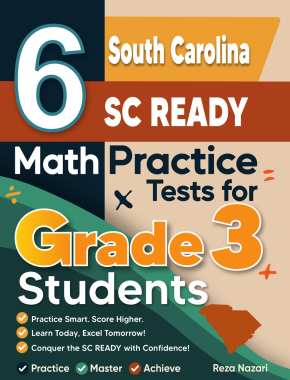
Understanding how to calculate the area and perimeter of various shapes can make math more engaging and practical for students. The perimeter of a shape is calculated by adding up the lengths of all its sides. For the area, the method depends on the shape: rectangles and squares require multiplying the length by the width, while triangles require multiplying the base by the height and then dividing by two. For a fun and interactive way to explore these concepts, consider using resources like practice tests from Effortless Math, for example, SC READY Grade 3 Math Practice Tests, which can provide both practice and real-world application problems.
How do you calculate the area of a circle?
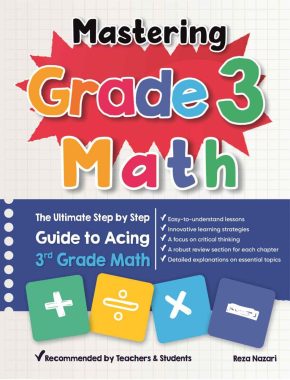
To calculate the area of a circle, you need to use the formula \( A = \pi r^2 \), where \( A \) represents the area, \( \pi \) (approximately 3.14159) is a constant, and \( r \) is the radius of the circle. First, measure the distance from the center of the circle to any point on its edge to determine the radius. Then, square this radius (multiply it by itself) and multiply the result by \(\pi\). This formula is not only fundamental in math but also a fun challenge to explore with students, helping them see the practical applications of what they learn. For more engaging ways to teach and learn math concepts, consider checking out the Top 10 Grade 3 Math Books Inspiring Young Mathematicians To Explore.
What is the difference between area and perimeter?
The difference between area and perimeter can be understood through simple and fun examples. The area is the amount of space inside a shape, measured in square units (like square feet or square meters), while the perimeter is the total distance around the edges of the shape, measured in linear units (like feet or meters). For instance, if you imagine painting the inside of a rectangular room, the amount of paint you need depends on the area. But if you are putting up a frame around the room, you need to know the perimeter. Understanding these concepts can make math more engaging and applicable to real-life scenarios, thus making it a more enjoyable learning experience. For more helpful insights, explore our guide on Geometry concepts.

Related to This Article
More math articles
- 49 Free Grade 3 Math Worksheets for Montana MAST Prep, Built Around the Real Skill List
- Comparing and Ordering Numbers for 5th Grade: Tips and Practice
- Trust in government
- Converting Units of Length (Metric) for 4th Grade
- How to Convert Place Values?
- Chapter 31: General Elections
- The Ultimate 6th Grade PSSA Math Course (+FREE Worksheets)
- FREE 3rd Grade MCAS Math Practice Test
- Education as a Social Institution
- Unfolding Shapes: How to Identify the Nets of Prisms and Pyramids









What people say about "How to Make Math into a Fun Experience - Effortless Math"?
No one replied yet.