How Quick Number Recognition Improves Mathematical Performance

Mathematics is not only about solving equations and applying formulas. A large part of mathematical success depends on how quickly and accurately a student can process numerical information. Skills such as recognizing patterns, identifying correct values, and making decisions under time pressure are essential in both academic and real-world situations.
While traditional math practice focuses on structured problem solving, there is another important aspect of learning: speed of recognition. Students who can quickly identify numbers and patterns often perform better in timed tests and complex problem-solving scenarios.
The Role of Speed in Mathematics
In many exams, including standardized tests, time is a critical factor. Students are not only required to find correct answers but also to do so efficiently. Even if a student understands the material, slow processing can lead to incomplete tests or unnecessary mistakes.
Improving speed does not mean rushing through problems. Instead, it involves training the brain to recognize familiar patterns and respond more quickly. This allows students to allocate more time to complex questions that require deeper analysis.
Why Number Recognition Matters
Number recognition is the ability to quickly identify and differentiate between values. It may seem basic, but it plays a key role in many mathematical tasks.
For example, when solving algebraic expressions or working with data sets, students must constantly interpret numerical values. The faster they can do this, the smoother their problem-solving process becomes.
Strong number recognition skills help students:
- process information more efficiently
- reduce calculation errors
- improve focus during problem solving
- build confidence in handling numbers
Training the Brain Through Simple Exercises
Just like physical fitness improves with regular exercise, cognitive skills develop through consistent mental training. Short, focused activities that challenge the brain can significantly improve performance over time.
Exercises that involve identifying numbers quickly are particularly effective because they engage attention, memory, and reaction speed simultaneously.
These exercises do not need to be complex. In fact, simple tasks performed regularly can produce noticeable improvements.
Using Interactive Tools for Practice
Modern educational tools provide students with new ways to practice essential skills. Interactive platforms allow learners to engage with exercises in a dynamic and engaging way, making practice more effective.
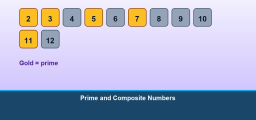
One example is Number Hunt, a browser-based activity where players must quickly identify specific numbers under time pressure.
Although the activity is simple, it requires concentration and quick decision-making. These are the same skills students use when solving mathematical problems, especially in timed environments.
Improving Focus and Attention
Another important benefit of number-based exercises is improved focus. Mathematics requires sustained attention, particularly when dealing with multi-step problems.
Short exercises that demand quick responses can help train the brain to stay focused for longer periods. Over time, students may find it easier to maintain concentration during exams and complex assignments.
Reducing Mistakes in Calculations
Many mathematical errors are not caused by a lack of understanding but by small mistakes in reading or interpreting numbers. Training number recognition can help reduce these errors by improving attention to detail.
When students become more comfortable identifying numbers quickly and accurately, they are less likely to make simple mistakes that affect their overall performance.
Integrating Practice Into Daily Learning
One of the most effective ways to improve math skills is through consistent daily practice. Short sessions of targeted exercises can be easily integrated into a student’s routine.
For example, spending just a few minutes each day on quick number recognition tasks can lead to noticeable improvements over time.
Teachers and tutors can also incorporate these exercises into lessons as warm-up activities or short practice sessions between topics.
About the Project
The project was created by developer Ivan Lukichev, who builds simple and accessible web-based tools and games designed to support learning and improve everyday cognitive skills.
Conclusion
Mathematical success depends on more than just understanding concepts. It also requires speed, accuracy, and the ability to process information efficiently.
By incorporating simple number recognition exercises into their study routine, students can strengthen these essential skills and improve their overall performance in mathematics.
Over time, these small improvements can lead to greater confidence, better exam results, and a deeper understanding of mathematical concepts.

Related to This Article
More math articles
- Top 5 Free Websites for Pre-Algebra Preparation
- 10 Must-Have Elementary Classroom Math Supplies
- The Ultimate 7th Grade NJSLA Math Course (+FREE Worksheets)
- 6th Grade Common Core Math Worksheets: FREE & Printable
- 8th Grade PSSA Math Practice Test Questions
- How to Classify Numbers?
- How to Subtract Mixed Numbers? (+FREE Worksheet!)
- 8th Grade NYSE Math FREE Sample Practice Questions
- How to Find Percent of Increase and Decrease? (+FREE Worksheet!)
- Parallel and Perpendicular Lines for 4th Grade













What people say about "How Quick Number Recognition Improves Mathematical Performance - Effortless Math: We Help Students Learn to LOVE Mathematics"?
No one replied yet.