10 Must-Have Elementary Classroom Math Supplies
Heads up: some of the links below are affiliate links, so we may earn a small commission if you buy through them. It never costs you anything extra.
In elementary math, hands-on tools do the teaching, kids learn numbers, place value, and fractions best when they can touch them. These are the must-have elementary classroom math supplies for 2026, the manipulatives and tools that make early math click.
At a glance
| Product | Best for | Type | Price | |
|---|---|---|---|---|
| Three Bear Family Counters | Best for counting | Counting manipulative | $ | Check price → |
| Plastic Base Ten Starter Set | Best for place value | Place-value manipulative | $ | Check price → |
| Rainbow Fraction Tiles (51) | Best for fractions | Fraction manipulative | $ | Check price → |
| Multiplication 0-12 Flash Cards | Best for fact fluency | Math flash cards | $ | Check price → |
| View-Thru Geometric Solids | Best for geometry | 3D shape set | $ | Check price → |
| Melissa & Doug Wooden Abacus | Best for early math | Wooden abacus | $ | Check price → |
1. Three Bear Family Counters – Best for counting
These colorful counting bears are an elementary classic for counting, sorting, patterning, and simple operations. Endlessly useful hands-on math for little learners.

What’s good:
- Counting, sorting, patterning
- Four colors and sizes
- Hands-on and engaging
- Long-lasting
Worth knowing:
- Small parts for young kids
2. Plastic Base Ten Starter Set – Best for place value
Base ten blocks make place value click, students physically build tens and hundreds and see how numbers work. The go-to manipulative for teaching place value and regrouping.

What’s good:
- Makes place value concrete
- Ones, tens, hundreds, thousand
- Includes activity book
- Durable plastic
Worth knowing:
- Storage takes some space
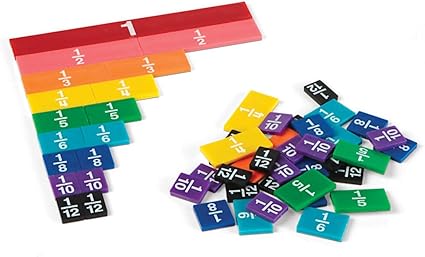
3. Rainbow Fraction Tiles (51) – Best for fractions
Color-coded fraction tiles turn an abstract topic into something students can see and touch, comparing, ordering, and finding equivalents. A teacher-favorite for fractions.
What’s good:
- Makes fractions visual
- Color-coded for comparison
- Hands-on equivalence
- Great value
Worth knowing:
- Pieces can get mixed up
4. Multiplication 0-12 Flash Cards – Best for fact fluency
The bestselling multiplication flash cards are a simple, proven way to build fact fluency. Cheap, durable, and effective for class drills or take-home practice.

What’s good:
- Builds multiplication fluency
- Cheap and durable
- Class or home use
- Self-checking
Worth knowing:
- Single operation per deck
5. View-Thru Geometric Solids – Best for geometry
These transparent geometric solids have removable bases you can fill, perfect for teaching surface area and volume in a way students can actually see. The top pick for hands-on geometry.

What’s good:
- See-through 3D shapes
- Fillable for volume lessons
- Great for geometry
- Sturdy
Worth knowing:
- Mainly upper-elementary and up
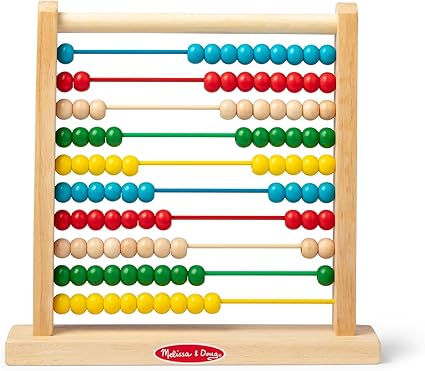
6. Melissa & Doug Wooden Abacus – Best for early math
A sturdy 100-bead wooden abacus is a timeless tool for counting, place value, and early operations, and it stands up to years of classroom use. Simple, durable, and effective.
What’s good:
- Counting and place value
- Solid wood build
- Lasts for years
- Engaging for young kids
Worth knowing:
- Basic, early-grades focus
Choosing elementary math supplies
At the elementary level, hands-on manipulatives do the heavy lifting, counters, base ten, and fraction tiles turn abstract ideas into things kids can see and touch. Pick durable sets that survive daily use, and add flash cards for fact fluency. Keep storage simple so cleanup is quick.
Start with counting bears and base ten blocks for number sense and place value, then add fraction tiles and geometric solids as concepts grow. A set of flash cards builds fact fluency. Together they cover the heart of elementary math.
Frequently asked questions
What math manipulatives do elementary teachers need?
The essentials are counting bears (counting and sorting), base ten blocks (place value), fraction tiles (fractions), and geometric solids (shapes and volume). These hands-on tools turn abstract ideas into things kids can see and touch.
Are math manipulatives really necessary?
Yes, especially in early grades. Manipulatives like base ten blocks and fraction tiles help children build a concrete understanding before moving to abstract numbers, which research consistently links to stronger math learning.
What helps kids learn math facts?
Regular, low-pressure practice with tools like multiplication flash cards builds fact fluency. Short daily drills, in class or at home, work better than occasional long sessions.

Related to This Article
More math articles
- Using Number Lines to Add Two Negative Integers
- PSAT Math Practice Test Questions
- The Best Grade 3 Math Book for Louisiana Students
- FREE AFOQT Math Practice Test
- How To Get A Perfect Score Of 36 On The ACT® Math Test?
- The Ultimate 7th Grade North Carolina EOG Math Course (+FREE Worksheets)
- How to Prepare for the PERT Math Test?
- Seventeenth Amendment
- Decimals on Display: How to Compare with Number Lines
- Impression Management and Regions






What people say about "10 Must-Have Elementary Math Classroom Supplies"?
No one replied yet.