The Best Grade 2 English Worksheets for Colorado Students
The Best Grade 2 English Worksheets for Colorado Students: a free, printable set you can download and use right away, with answer keys, organized by topic so students can practice one skill at a time and teachers can assign exactly what a lesson needs.
54 free PDFs covering reading, foundational skills, writing, and vocabulary, answer keys included.
Here’s a small thing that means a lot. A second grader is reading a poem out loud, and partway through they slow down, then speed up, then drop their voice for the quiet part, without anyone telling them to. They’re not just reading the words. They’re hearing the music in them. That’s a second-grade reader growing up.
Second grade is the year reading gets steadier and deeper. Kids stop spending all their effort on decoding and start thinking about meaning, what a story is really about, what an article wants them to know, why a character did what they did. They read more, write more, and start to sound like real readers.
These free Grade 2 English worksheets were put together for Colorado families and teachers. Each one is a printable PDF with an answer key, and there’s no signup, no email, nothing standing between you and the file. Click the title, it opens, you print. Use them at home, in a classroom in Denver or Grand Junction, or wherever your second grader does their best thinking.
The worksheets follow the Grade 2 English Language Arts standards Colorado has adopted, so they line up with the work happening in your child’s classroom right now.
What’s here and how it’s arranged
The collection is split into eight strands, a tidy way of covering all of second-grade English. There’s reading literature and reading nonfiction. There’s the hands-on work of decoding words. There’s writing, speaking and listening, grammar, the rules of capital letters and punctuation, and building vocabulary.
Each worksheet takes on a single skill. That’s the point. A second grader who works carefully through one idea will hold onto it. A second grader who sprints through a packet usually won’t. Pick a strand, choose a page, and you’re set.
Reading: Literature
- Asking and Answering Questions About Stories, answer who, what, where, when, and why
- Central Message, Lesson, or Moral, find the lesson hidden inside a story
- How Characters Respond to Events, watch how a character feels and acts when the plot turns
- Rhythm and Meaning in Stories, Poems, and Songs, hear how a beat or rhyme adds to the meaning
- The Structure of a Story, link the beginning, middle, and end
- Points of View of Characters, see that characters can feel different ways
- Using Illustrations to Understand Stories, pull clues from the pictures
- Comparing Two Versions of the Same Story, spot what changes when a tale is retold
Reading: Nonfiction
- Asking and Answering Questions About Nonfiction, find facts in an information text
- Main Topic and Focus of Paragraphs, name what a paragraph is mainly about
- Connections Between Events, Ideas, and Steps, follow how ideas and steps link together
- Nonfiction Vocabulary, learn the words science and history texts use
- Text Features, use headings, captions, and bold print to navigate
- The Author’s Main Purpose, figure out why the writer wrote the text
- How Images Help a Text, see what a photo or diagram explains
- How Reasons Support the Author’s Points, match reasons to the points they back up
- Comparing Two Texts on the Same Topic, compare two texts about one topic
Foundational Reading Skills
- Long and Short Vowels, hear the difference between not and note
- Vowel Teams, read vowel pairs like ee, oa, and ai
- Decoding Two-Syllable Words, break a long word into syllables
- Prefixes and Suffixes, read add-ons like re- and -less
- Words with Tricky Spelling Patterns, handle spellings that bend the rules
- Irregularly Spelled Words (Sight Words), learn the words that won’t sound out
- Reading Fluency: Accuracy, Rate, and Expression, read smoothly, at a good pace, with feeling
- Self-Correcting While You Read, catch a slip and back up to fix it
Writing
- Opinion Writing, say what you think and give a reason
- Informative and Explanatory Writing, explain a topic clearly to a reader
- Narrative Writing, write a story that moves in order
- Revising and Editing, return to a draft and improve it
- Shared Research Projects, explore a topic together
- Gathering Information to Answer a Question, collect facts to answer a question
Speaking and Listening
- Recounting Ideas from a Read-Aloud, retell what a read-aloud was about
- Asking and Answering Questions About a Speaker, listen closely and ask back
- Telling a Story or Sharing an Experience, share out loud so others can follow
Grammar
- Collective Nouns, group words, like herd and crowd
- Irregular Plural Nouns, plurals like mice, feet, and children
- Reflexive Pronouns, using myself, herself, and ourselves
- Past Tense of Irregular Verbs, run becomes ran, see becomes saw
- Adjectives and Adverbs, words that describe things and actions
- Expanding and Rearranging Sentences, stretch a sentence or move its parts
Capitalization, Punctuation, and Spelling
- Capitalizing Holidays, Products, and Place Names, give capitals to the names that need them
- Commas in Greetings and Closings of Letters, place the comma right in a letter
- Apostrophes: Contractions and Possessives, don’t and the bird’s nest, made clear
- Spelling Patterns, spell new words with patterns you already know
- Using Reference Materials to Check Spelling, check a spelling instead of guessing
Vocabulary and Word Study
- Formal and Informal English, when to talk casual and when to talk careful
- Context Clues, use nearby words to figure out a new one
- Prefixes, how a beginning like un- flips a word
- Root Words and Word Endings, find the base word inside a bigger one
- Compound Words, two words joined into one, like snowflake
- Using Glossaries and Dictionaries, look up meanings and use them
- Real-Life Word Connections, connect new words to everyday life
- Shades of Meaning, the difference between cold, chilly, and freezing
- Using Describing Words and New Vocabulary, use lively new words in speech and writing
Getting the most from these worksheets
A free worksheet only helps if it’s used in a way that matches how second graders actually learn. A short plan makes all the difference.
Print one worksheet. Just one. One skill at a time is the right size for a young reader’s attention. A fat packet looks productive and ends up rushed.
Read the Quick Review box at the top together. That box is a small lesson, not decoration. Read it out loud, talk over the example, then hand the pencil to your child.
When the page is done, sit together and check the answer key. Don’t make it about the grade. When something’s wrong, read the explanation together and figure out the snag. That quiet conversation is where the worksheet truly teaches.
If a skill is shaky, leave it for now and come back in a week with a different worksheet on the same idea. Putting space between practice sessions helps far more than drilling the same thing twice in one night.
A straight word about CMAS
If you came here searching for Grade 2 English practice, CMAS, the Colorado Measures of Academic Success, might be on your mind. Here’s the reassuring fact: CMAS English language arts begins in third grade. Your second grader won’t take it this year.
That makes Grade 2 the foundation year. With no test on the calendar, there’s a full, unhurried year to build reading and writing skills steadily. Every worksheet your child finishes, every main topic named, every two-syllable word decoded, every apostrophe placed right, is another solid piece of the base. The kids who walk into the Grade 3 CMAS calm and capable are usually the ones who built carefully the year before. No cramming. Just regular, friendly practice while time is on your side.
Questions Colorado families ask
Are these aligned with Colorado’s standards? Yes. Each worksheet targets a skill from the Grade 2 English Language Arts standards Colorado has adopted.
How long does one worksheet take? Most second graders finish a page in ten to fifteen minutes. If it stretches past twenty, take a break. That’s a good stopping point.
Can I use these for homeschooling? Absolutely. They work as the main lesson of the day or as a quick check after reading together, with no prep required.
My child reads above grade level. What should I give them? Try Comparing Two Texts on the Same Topic and Shades of Meaning. Both stretch a strong reader without leaving second grade behind.
Before you go
If your second grader breezes through a worksheet today and forgets it by tomorrow, that’s just fine. That’s how seven-year-olds work. The goal was never a finished stack. It was steady practice, one good conversation, and a little growing confidence. Print one whenever your week allows, and come back for the next. They’re free, and they’ll be right here.
Ready for Grade 3 English? The Colorado CMAS Grade 3 English Bundle
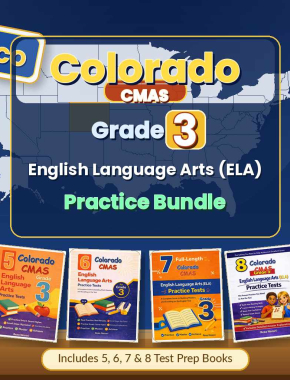
Second grade is the build-up year, and when your child is ready for what comes next, this bundle makes the jump to Grade 3 English feel easy. It includes four full practice-test books (5 + 6 + 7 + 8 tests) covering the Grade 3 reading, writing, and language skills just ahead, with explained answer keys and an instant PDF download.
Getting Ready for Grade 3 Math, Too? The Colorado CMAS Grade 3 Math Bundle
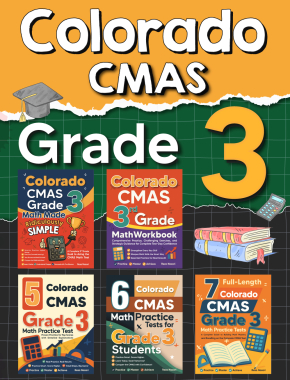
The same jump to Grade 3 happens in math. If your second grader could use a head start there as well, this Colorado CMAS Grade 3 Math bundle is the shortest path, workbook, study guide, and full practice tests in one instant download, with answer keys throughout.

Related to This Article
More math articles
- The Math of the Wheel: Probability in Online Games
- Remainder and Factor Theorems
- The Best Grade 8 ELA Practice Tests for Wyoming Students
- Conflict Approaches
- How to Write Slope-intercept Form and Point-slope Form?
- Polynomial Identity
- 3rd Grade MEAP Math FREE Sample Practice Questions
- Geometry Puzzle – Challenge 75
- Commerce Clause
- Complete the Equation: How to Finish Subtraction and Addition Sentences with Mixed Numbers




What people say about "Colorado Grade 2 English Worksheets: Free PDFs"?
No one replied yet.