Free Texas Grade 2 Math Worksheets
TL;DR: Free printable grade 2 math worksheets aligned with the Texas Essential Knowledge and Skills (TEKS), place value, addition and subtraction within 1,000, money, time, measurement, and basic geometry. All PDFs include answer keys.
Key takeaways:
- Free printable PDFs aligned with Texas TEKS for grade 2 math.
- Topics include place value to 1,200, addition/subtraction to 1,000, money, time, and geometry.
- Each worksheet comes with an answer key.
- Useful for STAAR readiness (though STAAR starts at grade 3).
- Works for classroom packets, homework, and home practice.
Printable practice built around the TEKS, for the year second-grade math comes together.
There’s a small ceremony that happens at a lot of Texas kitchen tables around second grade: the clock lesson. A kid stares at the two hands, gets the hour easily enough, then frowns at the minutes. You point to the 3 and say “fifteen.” You point to the 6 and say “thirty.” And then, one afternoon, it just clicks. They read 4:45 without help and grin like they’ve cracked a code. Because they have.
Second grade is full of those quiet victories. Reading a clock, counting a pile of coins, finally seeing why 100 is ten tens. These are the wins that make a child feel like a real mathematician. If you’re a parent or teacher in Texas hoping to make more of those moments happen, this page is for you.
We’ve built a complete set of free, printable Grade 2 math worksheets that cover the whole year’s worth of topics. Each one is a clean PDF, ready to print at home or in the classroom. Each set comes with a full answer key. There’s no signup, no email, and no paywall, just download and print.
These worksheets are built around the Texas Essential Knowledge and Skills (TEKS) for Grade 2 Mathematics, so the practice your child does here matches what’s expected in Texas classrooms. They’re handy for shoring up a tricky skill, reviewing before moving on, or keeping math from going rusty over a long break.
A Look at What’s Inside
The collection is organized into eight chapters. Each one covers a major area of second-grade math, and the worksheets within each chapter build up gradually from simpler ideas to harder ones.
The eight chapters are:
- Place Value and Number Sense, what digits actually represent
- Addition and Subtraction, fluency from quick facts to three-digit numbers
- Word Problems and Equations, math put to work on real questions
- Odd, Even, and Arrays, early patterns that lead toward multiplication
- Measurement and Length, measuring, estimating, and comparing
- Time and Money, clocks and coins from everyday life
- Data and Graphs, reading and building simple charts
- Geometry, shapes, partitions, and equal shares
You don’t have to go in order. Pick the chapter that fits what your child is learning right now, or whatever skill has been hardest. Each worksheet starts with a short Key Ideas box, shows a worked example, gives practice problems, and ends with an answer key.
The Worksheets
Place Value and Number Sense
- Understanding Place Value, Helping kids see that a digit’s position decides how much it’s worth.
- Reading and Writing Numbers to 1,000, Moving between number words and numerals all the way to 1,000.
- Expanded Form, Pulling a number apart into hundreds, tens, and ones.
- Skip Counting, Counting by 2s, 5s, 10s, and 100s until the rhythm sticks.
- Comparing and Ordering 3-Digit Numbers, Deciding which number is greater and putting numbers in order.
Addition and Subtraction
- Addition Facts Within 20, Practice that turns sums under 20 into quick recall.
- Subtraction Facts Within 20, Fast take-away practice that pairs with the addition facts.
- Adding Within 100, Two-digit addition, regrouping included.
- Subtracting Within 100, Two-digit subtraction with borrowing, one careful step at a time.
- Adding Within 1,000, Stretching addition skills into three-digit numbers.
- Subtracting Within 1,000, Three-digit subtraction that rewards neat, careful work.
- Mentally Adding and Subtracting 10 and 100, Jumping by tens and hundreds without a pencil.
Word Problems and Equations
- One-Step Word Problems, Story problems that need one well-chosen operation.
- Two-Step Word Problems, Two-part problems that teach kids to plan before solving.
- Finding the Unknown Number, Solving for the missing value in an equation.
Odd, Even, and Arrays
- Odd and Even Numbers, Pairing objects up to find out which numbers come out even.
- Even Numbers as Equal Addends, Showing that even numbers split into two equal groups.
- Rectangular Arrays, Arranging objects in rows and columns to count them faster.
- Repeated Addition with Arrays, Adding equal rows to find a total, a friendly preview of multiplication.
Measurement and Length
- Measuring Length with Tools, Using rulers and tape measures the right way.
- Estimating Lengths, Making a smart guess, then measuring to check it.
- Comparing Lengths, Figuring out how much longer one object is than another.
- Adding and Subtracting Lengths, Combining measurements to solve length word problems.
- Length on a Number Line, Showing length and distance using a number line.
Time and Money
- Telling Time to the Nearest Five Minutes, Reading analog clocks down to each five-minute mark.
- A.M. And P.M., Knowing whether a time means morning or evening.
- Counting Coins, Adding pennies, nickels, dimes, and quarters into a total.
- Money Word Problems, Everyday questions about spending money and making change.
Data and Graphs
- Line Plots, Marking measurement data above a number line.
- Picture Graphs, Reading graphs that use pictures to stand for amounts.
- Bar Graphs, Drawing and reading bars to compare amounts at a glance.
Geometry
- Recognizing and Drawing Shapes, Naming shapes by their sides and corners, then sketching them.
- Partitioning Rectangles into Rows and Columns, Splitting a rectangle into equal squares and counting them.
- Equal Shares: Halves, Thirds, and Fourths, Dividing shapes into fair pieces, the first taste of fractions.
Making These Worksheets Work
A printed page won’t do much on its own. A little routine, though, turns it into real learning. Here’s an approach that fits how second graders learn best:
- One worksheet at a time. Skip the thick packet. A single page done with care beats five pages rushed through.
- Read the Key Ideas box first. It’s short for a reason. Going over it together sets up the skill before the first problem.
- Work the example out loud. Don’t skip past it. Hearing the steps spoken gives your child a model to copy.
- Check the answer key together. A wrong answer is a clue, not a verdict. Help your child find where it went sideways and fix it.
- Revisit weak skills. Wait about a week, then print the worksheet again. The pause between practice sessions is where real memory forms.
A Note on the STAAR Test
Texas uses the STAAR test, the State of Texas Assessments of Academic Readiness, for statewide testing. If you have a second grader, here’s something reassuring: the STAAR math test begins in third grade. Your child won’t take it in second grade.
That makes second grade the foundation year, and a low-pressure one. With no STAAR test on the calendar, there’s room to focus on real understanding rather than test-day strategy.
The skills these TEKS-aligned worksheets cover are exactly the ones the third-grade STAAR will eventually expect. Place value, fluent addition and subtraction, measuring length, telling time, reading graphs, solving word problems. Those are the building blocks a Texas third grader needs walking into the test. Set them firmly in place this year, and everything ahead gets easier.
Frequently Asked Questions
Are these worksheets aligned to the TEKS? Yes. They’re built around the Texas Essential Knowledge and Skills (TEKS) for Grade 2 Mathematics, so they match what Texas classrooms cover.
Do I have to pay or sign up? No. Every worksheet is free to download and print, with no account and no email required.
Are answer keys included? They are. Each set comes with an answer key so you can check work together and spot where your child needs another look.
How much should my second grader practice? Short and consistent is the goal, ten to fifteen focused minutes, a few times a week. That keeps skills sharp without burnout.
Will this get my child ready for STAAR? The STAAR math test starts in third grade, so it doesn’t affect your second grader directly. But strong, TEKS-aligned second-grade math is the best preparation for it.
One Last Thought
Second grade is when math leaves the worksheet and shows up everywhere, in coins counted out at the store, in the time before recess, in fair shares of a snack. These free, TEKS-aligned worksheets are here to support that, one page at a time. Print a set, sit down with your Texas second grader, and watch the confidence build. The steady work now pays off for years to come.
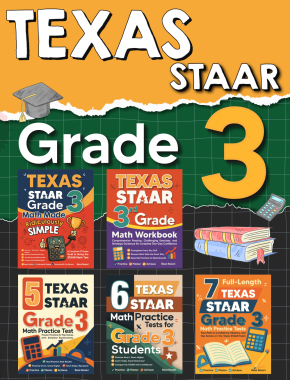
Ready for Grade 3 Math? The Texas Grade 3 Math Bundle
Second grade is the build-up year, and when your child is ready for what comes next, this bundle makes the jump to Grade 3 math feel easy. It packs full practice-test books, complete answer keys, and step-by-step explanations for the Grade 3 math skills just ahead.
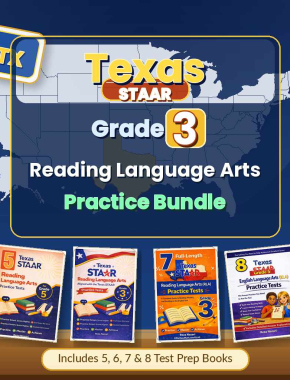
Getting Ready for Grade 3 English, Too? The Texas Grade 3 English Bundle
Reading and writing grow right alongside math. If your second grader could use a head start in English as well, this Texas Grade 3 English bundle covers it — practice tests, answer keys, and friendly explanations in one download.
Recommended EffortlessMath Books
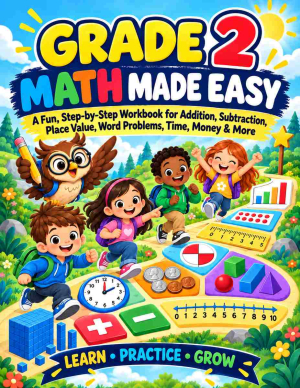
For a structured grade 2 workbook, the Grade 2 Math for Beginners covers every TEKS-aligned topic with worked examples. For Texas students ready to look ahead at STAAR-tested content, the STAAR Grade 3 Math for Beginners previews next year’s test content.
Related EffortlessMath Lessons
If a topic on this page feels rusty, these short lessons go deeper:
- How to add large numbers
- How to subtract large numbers
- How to tell time
- How to count money
- How to identify 2D shapes

Related to This Article
More math articles
- Machines, Pressure, and Fluids
- Identifying patterns in turnout and party support
- The Ultimate 6th Grade STAAR Math Course (+FREE Worksheets)
- Platforms coordinate interdependent groups
- Three and A Half Principles of Extraordinary Techniques for Math Teaching
- How to Solve a System of Equations Using Matrices?
- Reaction Types and Redox: Recognizing What Changes
- Top 10 Tips to ACE the ACT Mathematics
- The Best Grade 8 ELA Practice Tests for Vermont Students
- Graph to Grid: How to Completing a Table Using Information from a Graph








What people say about "Free Texas Grade 2 Math Worksheets: Free and Printable"?
No one replied yet.