Free Alabama Grade 2 Math Worksheets
TL;DR: Free printable Grade 2 math worksheets for Alabama families and teachers, covering place value to \(1{,}000\), two- and three-digit addition and subtraction, time, money, simple measurement, and word problems aligned with the Alabama Course of Study.
Key takeaways:
- Alabama second graders aren’t tested by ACAP in grade 2, but strong grade-2 math skills set up the grade-3 ACAP year that follows.
- Worksheets cover place value to \(1{,}000\), two- and three-digit addition and subtraction, telling time, counting money, and word problems.
- All pages are free PDFs – print as many copies as you need for home or a whole classroom.
- Content is aligned with the 2019 Alabama Course of Study for Mathematics (grade 2).
- Short, focused practice (10-15 minutes per page) works better than long sessions for most second graders.
Printable practice that helps your Alabama second grader build a math foundation that lasts.
Picture a Tuesday afternoon at the kitchen table. Your second grader has a little jar of coins spilled out, and they’re sorting the quarters from the dimes, counting under their breath. They get to forty-five cents, lose track, and start over. That moment, the recounting, the small frustration, the little victory when the number finally sticks, is exactly what second grade math is made of.
If you’re an Alabama parent or teacher looking for solid, no-fuss practice to support those moments, you’re in the right place. This collection of Grade 2 math worksheets is free, printable, and ready whenever you are. Every worksheet comes as a PDF with a full answer key, so you can check work together without guessing. There’s no account to create and no email to hand over. You click, you print, you practice.
Second grade is a big year. Kids move from counting things they can see to thinking about numbers all the way up to 1,000. They start adding and subtracting with real fluency, reading clocks, measuring with rulers, and noticing patterns everywhere. It’s the year math starts to feel like a tool instead of a mystery.
These worksheets line up with the Grade 2 math standards Alabama has adopted, and they’re organized so you can move through them at a comfortable pace, one skill at a time.
What’s Inside This Collection
The worksheets are grouped into eight chapters. Each chapter covers one big area of second grade math, and the topics inside build on each other in a sensible order. You don’t have to start at the beginning, though. If your child already counts coins like a pro but stumbles on three-digit subtraction, jump straight to the part that helps.
Every worksheet includes a short Key Ideas box at the top that explains the skill in plain language, a couple of worked examples, and then practice problems. The answer key lives at the end so you can check together. Here’s the full set.
Place Value and Number Sense
- Understanding Place Value, Helps kids see that the 3 in 352 means three hundreds, not just a three. Base-ten thinking starts here.
- Reading and Writing Numbers to 1,000, Practice turning “four hundred seven” into 407 and back again.
- Expanded Form, Breaking numbers apart into hundreds, tens, and ones so the structure is obvious.
- Skip Counting, Counting by 5s, 10s, and 100s, which quietly sets up multiplication later.
- Comparing and Ordering 3-Digit Numbers, Deciding which number is bigger and lining up a handful from least to greatest.
Addition and Subtraction
- Addition Facts Within 20, The bread-and-butter sums kids should know without counting on fingers.
- Subtraction Facts Within 20, The matching take-away facts, practiced until they’re automatic.
- Adding Within 100, Two-digit addition, including the trickier problems that need regrouping.
- Subtracting Within 100, Two-digit subtraction with borrowing, worked step by step.
- Adding Within 1,000, Stretching addition into three-digit territory.
- Subtracting Within 1,000, Three-digit subtraction, carefully scaffolded.
- Mentally Adding and Subtracting 10 and 100, Quick mental jumps that build real number sense.
Word Problems and Equations
- One-Step Word Problems, Short stories that ask kids to pick the right operation once.
- Two-Step Word Problems, Problems with two parts, so kids learn to plan before they solve.
- Finding the Unknown Number, Filling in the missing piece of an equation, an early taste of algebra.
Odd, Even, and Arrays
- Odd and Even Numbers, Discovering which numbers split into two equal groups and which leave one behind.
- Even Numbers as Equal Addends, Writing an even number as a double, like 8 = 4 + 4.
- Rectangular Arrays, Arranging objects in neat rows and columns to count faster.
- Repeated Addition with Arrays, Adding equal rows again and again, the doorway to multiplication.
Measurement and Length
- Measuring Length with Tools, Using rulers and measuring tapes the right way.
- Estimating Lengths, Making a smart guess before measuring, then checking how close it was.
- Comparing Lengths, Figuring out how much longer one object is than another.
- Adding and Subtracting Lengths, Combining and comparing measurements in word problems.
- Length on a Number Line, Showing distance as a jump along a number line.
Time and Money
- Telling Time to the Nearest Five Minutes, Reading both analog and digital clocks down to the five-minute mark.
- A.M. And P.M., Knowing whether 7:00 means breakfast or bedtime.
- Counting Coins, Adding pennies, nickels, dimes, and quarters into a total.
- Money Word Problems, Figuring out change and totals in everyday shopping situations.
Data and Graphs
- Line Plots, Plotting measurements above a number line and reading the result.
- Picture Graphs, Reading graphs where each picture stands for a number of things.
- Bar Graphs, Comparing categories at a glance and answering questions about them.
Geometry
- Recognizing and Drawing Shapes, Naming and sketching shapes by their sides and angles.
- Partitioning Rectangles into Rows and Columns, Splitting a rectangle into equal squares and counting them.
- Equal Shares: Halves, Thirds, and Fourths, Cutting shapes into fair pieces, the gentle start of fractions.
Getting the Most Out of These Worksheets
A stack of worksheets won’t do much on its own. How you use them matters more than how many you finish. A few things that help.
Work one worksheet at a time. A single page of focused practice beats three pages rushed through. Read the Key Ideas box out loud together before your child picks up a pencil, even if they think they already know it. Then walk through the worked examples side by side, so the first real problem isn’t also the first time they’ve seen the method.
When the page is done, check the answer key together rather than grading it yourself in another room. A wrong answer is a conversation, not a verdict. Ask your child to talk you through how they got it, and you’ll usually spot the slip right away.
And give skills a second visit. If subtraction within 1,000 was shaky on Monday, come back to it the following week with a fresh worksheet. That little gap between practice sessions is what makes a skill stick for good.
A Note on the ACAP Test
Alabama uses the ACAP, the Alabama Comprehensive Assessment Program, to check how students are doing. Here’s the honest, reassuring part: ACAP math testing begins in third grade. Your second grader will not sit a state math test this year.
That makes second grade the foundation year, and a calm one. There’s no test pressure, just time to build the skills the third grade test will eventually lean on. Place value, quick addition and subtraction facts, reading word problems carefully, working with measurement and data, these are exactly the things that show up later. A child who finishes second grade comfortable with this material walks into third grade ready, not rushed.
So treat this year as building, not cramming. Steady, friendly practice now means far less stress when ACAP rolls around.
Frequently Asked Questions
Are these worksheets really free? Yes, completely. Every worksheet is a free printable PDF. There’s no fee, no subscription, and no account to set up. Print what you need and skip the rest.
Do I need to print them in order? Not at all. The eight chapters follow a logical path, but you can start anywhere. Pick the topic your child is working on in class, or the one that’s giving them trouble.
How long should a practice session be? For most second graders, ten to twenty minutes is plenty. One worksheet, done with attention, is a good day’s work. Stop before frustration sets in.
My child says they “already know this.” Should we skip it? Try one worksheet anyway. If they breeze through it, great, move on with confidence. If a few problems trip them up, you’ve just found something worth a closer look.
Can teachers use these in the classroom? Absolutely. They work well as morning warm-ups, homework, review stations, or extra practice for students who need another pass at a skill.
Keep It Light and Keep Going
Second grade math doesn’t need to be stressful for anyone at the table. With short, regular practice and an answer key you can talk through together, your Alabama second grader can build real confidence one page at a time. Pick a chapter, print a worksheet, and start whenever you’re ready. The coins, the clocks, the base-ten blocks, they all add up to a strong start.
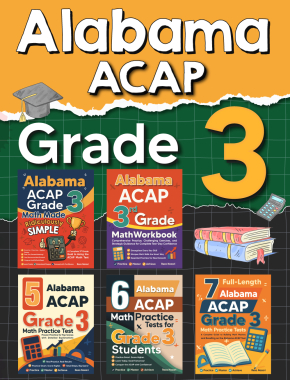
Ready for Grade 3 Math? The Alabama Grade 3 Math Bundle
Second grade is the build-up year, and when your child is ready for what comes next, this bundle makes the jump to Grade 3 math feel easy. It packs full practice-test books, complete answer keys, and step-by-step explanations for the Grade 3 math skills just ahead.
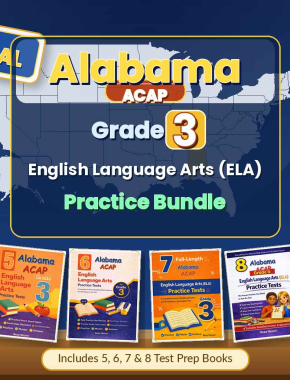
Getting Ready for Grade 3 English, Too? The Alabama Grade 3 English Bundle
Reading and writing grow right alongside math. If your second grader could use a head start in English as well, this Alabama Grade 3 English bundle covers it — practice tests, answer keys, and friendly explanations in one download.
Recommended EffortlessMath Books
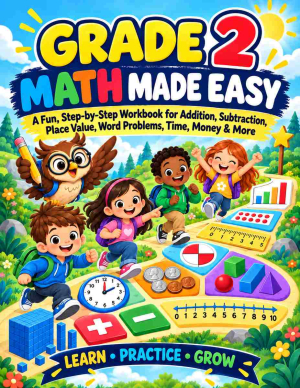
For a workbook that pairs neatly with these printable practice pages, Mastering Grade 2 Math walks your child through every second-grade topic with clear examples and lots of try-it-yourself problems. For extra word-problem practice (the part many second graders find hardest), see Mastering Grade 2 Math Word Problems.
Related EffortlessMath Lessons
If a topic on this page feels rusty, these short lessons go deeper:
- How to add and subtract two-digit numbers
- Place value to the hundreds
- How to tell time to the nearest five minutes
- How to count coins and dollar bills
- How to solve word problems

Related to This Article
More math articles
- 8th Grade NHSAS Math Worksheets: FREE & Printable
- Family Change, Cohabitation, Divorce, and the Second Shift
- Writing down Variable Expressions Involving Two Operations
- Free Grade 7 English Worksheets for Mississippi Students
- How to Use Number Lines for Multiplication by a Negative Integer?
- The Best Grade 7 ELA Practice Tests for Alaska Students
- FREE 6th Grade STAAR Math Practice Test
- What is the Best Calculator for the SAT or ACT?
- Algebra 2 to Pre-Calculus Bridge Guide: Summer Prep for 2026
- EZ Baccarat, Punto Banco, Chemin de Fer: A Probability Comparison








What people say about "Free Alabama Grade 2 Math Worksheets: Free and Printable"?
No one replied yet.