STAAR Math 2026: A Texas Parent’s Complete Survival Guide (Grades 3–8)

TL;DR: A Texas parent’s complete guide to the 2026 STAAR Math test for grades 3-8, what it is, how it’s scored, what your child needs to know, and a week-by-week prep plan you can actually follow. STAAR redesigned in 2023, so older prep advice no longer applies.
Key takeaways:
- STAAR is the Texas state assessment for grades 3-8 in Math and Reading.
- STAAR redesigned in 2023: now online by default, with new item types beyond multiple choice.
- No calculator on grade 3-5 STAAR Math; on-screen calculator allowed grade 6-8 (Algebra I).
- Reports performance levels: Did Not Meet, Approaches, Meets, Masters Grade Level.
- Aligned to Texas Essential Knowledge and Skills (TEKS), not Common Core.
I want to start with a thing I tell every Texas parent who calls me up worried about STAAR: this test is not a referendum on your child. It is also not a referendum on you. It’s a yearly snapshot of how Texas measures grade-level math, and it has a lot of weird quirks, but it is not the dragon some people make it out to be.
That said. It is a real test, with real cutoffs, in a real testing window that’s happening right now across Texas. And if you’re reading this trying to figure out what’s actually on it, what’s different this year, and how to help your kid get through it without losing your weekend to panicked review, I’ve got you.
I’ve been working with Texas families on STAAR prep for years. Here’s the parent guide I wish someone had handed me the first time.
What STAAR Is, In One Honest Paragraph
STAAR (State of Texas Assessments of Academic Readiness) is the standardized test Texas gives every spring to students in grades 3 through 8, plus several high school end-of-course exams. Each grade has its own math test aligned to that grade’s Texas Essential Knowledge and Skills (TEKS). Students must score at “Approaches Grade Level” or higher to be considered on track. Schools use STAAR scores for accountability ratings. In some grades, repeated failure can affect promotion to the next grade, though most districts have appeal processes. That’s the system.
What’s Changing in 2026 (And What’s Not)
If your older kid took STAAR in 2022 or 2023, this is a real change. Here’s where things stand for the 2025 to 2026 school year:
Mostly stable, with two real changes:
- First Monday testing is now allowed. HB 8 repealed the previous rule that prevented testing on the first Monday of each window. So your district might test on a Monday now without needing special notification. Practically: your testing date might be a Monday this year when it wasn’t before.
- Test-anxiety language in the directions. The state updated the directions test administrators read aloud to be more student-friendly and to acknowledge anxiety. This is small but real, if your child has test anxiety, knowing they’re not the only one matters.
What’s not changing in 2026:
- The TEKS standards being tested
- The general format (multiple choice + a few short-answer / griddable items)
- The “Approaches / Meets / Masters” scoring tiers
- The general testing windows
Bigger changes are coming, but not until 2027 to 28. The Texas Legislature passed sweeping reforms in fall 2025 that will overhaul the assessment program, different test name, different format, possibly even different timing during the year. Those changes aren’t hitting your kid in 2026. But it’s worth knowing that “STAAR 2026” is essentially the last test in its current form for grades 3 to 8.
The 2026 Math Testing Window
For grades 3 through 8, plus Algebra I: April 20, May 1, 2026.
That window is the official statewide window. Your school can pick any day within it (including, as of HB 8, the first Monday, April 27, 2026). Check with your child’s teacher for the specific date.
If you’re reading this in early-to-mid May 2026, your child has already tested or is about to. The information below still matters. You’ll want to know what they were tested on and what the scores mean when they come back.
What’s Actually on Each Grade’s STAAR Math Test
I’ll keep this short and useful. Each grade tests grade-level TEKS, but here are the heavy hitters that matter most for prep.
Grade 3 STAAR Math
- Place value to 100,000
- Addition and subtraction with regrouping (3-digit, 4-digit)
- Multiplication facts through 10×10
- Fractions on a number line, equivalent fractions
- Perimeter, area (basic), measurement
- Time, money, basic data analysis
The hardest skills for most third graders: fluency with multiplication facts and reading multi-step word problems. If your kid is shaky on times tables, that’s the single most leveraged thing to drill.
Grade 4 STAAR Math
- Place value through millions and decimals
- Multi-digit multiplication and long division
- Fraction operations (add, subtract, multiply by whole numbers)
- Geometry (angles, lines, quadrilaterals)
- Conversion within a measurement system
Common stumbling block: long division. Texas tests it heavily in grade 4. If your child can’t comfortably do 6,432 ÷ 8 by hand, that’s where to spend time.
Grade 5 STAAR Math
- All four operations with decimals
- All four operations with fractions (including division of fractions)
- Volume of rectangular prisms
- Coordinate plane (first quadrant only)
- Numerical patterns
The tough one: fraction division. “Why is 3 ÷ ½ equal to 6?” trips up nearly every fifth grader I’ve worked with. If your kid can explain it (not just compute it), they’re ahead of the curve.
Grade 6 STAAR Math
- Ratios, rates, percentages
- Integer operations (positive and negative)
- All four operations with rational numbers
- Equations and inequalities (one-variable)
- Area of triangles, quadrilaterals, circles
- Statistical measures (mean, median, mode, range)
This is the year math gets abstract for many kids. The biggest difficulty leap is moving from arithmetic with positive numbers to integer operations with negatives. If “negative times negative equals positive” still feels mysterious, drill that.
Grade 7 STAAR Math
- Proportional relationships, scale drawings
- Linear equations in one and two variables
- Probability (simple and compound)
- Surface area and volume of prisms and pyramids
- Inferences from data samples
The classic stumbling block: solving equations like 3(x − 5) + 4 = 22 with the distributive property. Texas loves this question type. Drill it.
Grade 8 STAAR Math
- Linear functions (slope, y-intercept, graphing)
- Systems of linear equations
- Exponents and scientific notation
- Pythagorean theorem
- Transformations and similarity
- Bivariate data and scatter plots
Eighth grade STAAR is functionally a pre-algebra-into-algebra-1 readiness check. The biggest concept to lock down: understanding what slope and y-intercept mean in a real situation, not just how to calculate them.
Books for the Lower Grades (3 to 5)
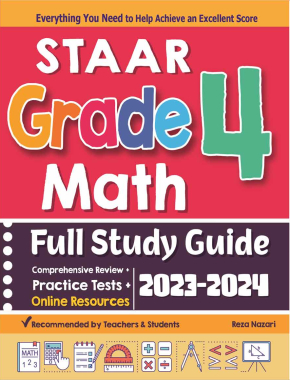
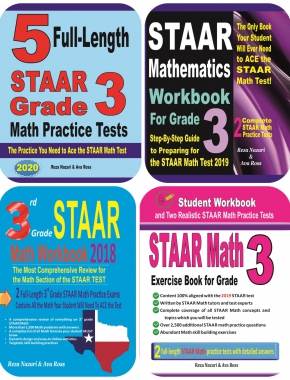
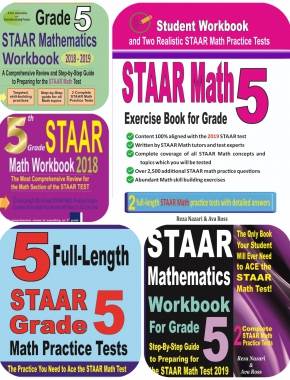
If your kid is in grades 3, 4, or 5 and the test is on the horizon, here are the prep resources I most often hand to parents. The grade-3 and grade-5 ones are full bundles (study guide + practice tests in one); the grade-4 one is the standalone study guide, which is the right starting point if your kid is still finding their footing with multi-digit multiplication and long division.
How Scores Work (and What to Actually Care About)
STAAR math scores come back as both a raw scaled score and a performance tier:
- Did Not Meet Grade Level, the lowest tier
- Approaches Grade Level, the passing threshold
- Meets Grade Level, solid grade-level mastery
- Masters Grade Level, exceeds grade-level expectations
The score that matters for promotion (in grades where promotion is tied to STAAR) is Approaches Grade Level. If your child is at Approaches or above, the test is essentially “passed.”
What I tell parents: don’t fixate on the scaled score. Look at the category-level breakdown. Texas reports your child’s performance in each TEKS reporting category. That breakdown tells you what they actually need to work on for next year, much more useful than the headline number.
What a Realistic Two-Week Prep Plan Looks Like
If you have two weeks before testing, or if you’re reading this for next year, here’s the plan I’d actually run with my own kid.
Days 1 to 2: Take a practice test. Use a grade-appropriate full-length STAAR practice. The Texas Education Agency publishes released STAAR test questions for free. Have your child take it under realistic conditions, one sitting, no help, around the time of day they’ll test.
After they’re done, score it together. Categorize each missed question:
- “Didn’t know the concept.”
- “Knew it but made a mistake.”
- “Ran out of time or skipped.”
Days 3 to 7: Target the weakest concept. Pick the single largest hole and work on that for the week. Twenty minutes a day, not two hours. Burnout helps no one. Don’t try to fix everything, fix the biggest thing.
Days 8 to 10: A second practice section. Just one section this time, not a full test. See if the targeted work moved the needle on that concept. Adjust.
Days 11 to 13: Light review and pacing. Short timed sections. Focus on pacing, running out of time is one of the most common reasons strong students score lower than they should.
Day 14: Off. Yes, the day before. Sleep. Eat. Watch a movie. Cramming the night before lowers scores.
Books for the Upper Grades (6 to 8)
If your kid is in grades 6, 7, or 8, the math gets noticeably more abstract, integer operations, proportional relationships, linear functions, the Pythagorean theorem. These three comprehensive prep bundles cover the full TEKS for each grade with worked examples and full-length practice tests inside. Pick the one matching your kid’s grade.
What to Do (and Not Do) the Morning of the Test
The morning matters more than parents realize. A short list:
Do:
- Feed your kid a real breakfast, protein, not just sugar
- Get them to school with 10 minutes of buffer time
- Send them in with a water bottle (if their school allows it)
- Tell them, and mean it, that one test does not define them
Don’t:
- Quiz them in the car on the way to school. This is the single most common thing anxious parents do and it is the single worst thing for performance.
- Tell them how important the test is. They know.
- Send them in tired. A 9 p.m. Bedtime the night before is worth more than a study session.
When STAAR Scores Come Back: What to Look At
Scores typically post in late May or early June. When they do:
- Read the performance tier first. Are they at Approaches or higher? That’s the main question.
- Look at the reporting categories. Texas reports performance by category (e.g., “Numerical Representations,” “Computations and Algebraic Relationships,” “Geometry and Measurement”). The one with the lowest performance is what to work on this summer.
- Compare year-over-year. If your child took STAAR last year, look at the trend. A bump up is encouraging. A drop is data, not catastrophe, but data.
Don’t compare to other kids’ scores. That helps no one.
What to Do If Your Child Doesn’t Pass
First, breathe. A “Did Not Meet” score isn’t the end of the road. Texas has appeal processes in most grades where promotion is tied to STAAR, and most districts have summer school or accelerated instruction options designed exactly for this situation.
Specifically:
- In grades 5 and 8, where promotion can be affected, there’s a process called the Grade Placement Committee that reviews retention decisions. Parents have a real voice in this process.
- Most districts offer free summer learning programs for students who don’t pass.
- Your child can usually retake STAAR in June if needed.
If you’re in this situation, the most useful conversation isn’t with your child. It’s with your child’s math teacher. Set up a meeting. Ask: “What specifically does my child not have yet?” Get a concrete answer. Then build a summer plan around that one or two skills.
The Texas-Specific Test Anxiety Conversation
I’ll be honest with you. STAAR carries more weight in the Texas school system than tests do in most other states. Kids feel it. Teachers feel it. Sometimes the pressure spills over into a kid who hyperventilates in the testing room.
If your child has test anxiety:
- Talk to the school before the test. Many Texas schools can provide accommodations, extended breaks, separate testing rooms, anxiety mitigation strategies the state has actually built into the directions this year.
- Practice with low-stakes timed sections at home so the experience isn’t novel.
- Don’t tell your child not to be anxious. Tell them anxiety is a normal response and they can perform anyway.
The new state-mandated test-anxiety language in 2026’s directions is a real, if small, acknowledgment. Use it as a conversation starter at home.
The Summer After STAAR: What Actually Helps
Once scores come back, you have about 10 weeks before the new school year. Here’s what’s actually worth doing:
For kids who passed comfortably (Meets or Masters): A light summer math practice routine, 15 to 20 minutes, 3 times a week. The goal is maintenance, not advancement. Don’t burn them out before fall.
For kids who passed but barely (Approaches): A more focused 30 minutes, 5 days a week, on the lowest reporting category from their score report. Grade-level summer math worksheets work well here, pick one that matches your kid’s grade and the weak area.
For kids who didn’t pass (Did Not Meet): Daily 30-minute sessions, plus whatever the school offers in summer school. Get specific feedback from the teacher about which TEKS to focus on. Don’t try to “do all of math”, pick two or three specific skills and drill those.
A Quick Word About Grade-Level Practice Books
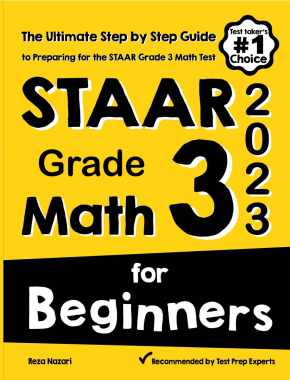
You don’t need to buy ten things. You need one solid grade-level workbook that mirrors the STAAR format. The “for beginners” study guides below are the right starting point if your kid is shaky on the basics, each one walks through every TEKS reporting category with worked examples before you ever hit a practice test.
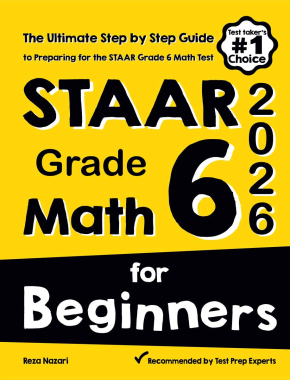
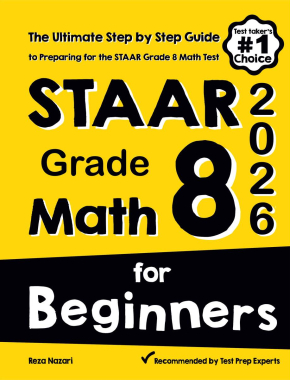
If your kid is already comfortable with the content and just needs reps, skip the study guide and grab the practice-test books from the grade-specific sections above.
Free STAAR Resources Worth Bookmarking (Math AND Reading)
You can do a real, serious prep without spending a dollar if you know where to look. I’m going to give you the resources I actually use with families, in priority order. Bookmark the first three. Use the rest as needed.
The official Texas sources (start here, always)
These are run by the Texas Education Agency and the state’s contracted test vendor. They publish real released test items that students previously took. No third-party material will ever be a closer match.
- STAAR Released Test Questions (TEA), full released test forms for math, reading, science, and social studies, by grade. This is the single most valuable free STAAR resource on the internet, and most parents don’t know it exists. Use one full release form as your kid’s diagnostic in week one.
- Texas Assessment Practice Tests, the official online practice site. Since STAAR is now fully online, this is where your kid practices the actual digital format, including the equation editor, inline dropdowns, hot text, and multiselect questions that look weird on paper.
- STAAR Mathematics Resources (TEA), the TEA’s curated math hub: TEKS alignment documents, reference materials, and links to every released math form by grade.
- STAAR Reading Language Arts Resources (TEA), same idea, for the reading and writing side. Includes released RLA passages and questions, plus the genre and TEKS breakdown for each grade.
Free third-party practice (good supplements)
These are not affiliated with TEA but they’re solid for extra reps or a different teaching voice when the official material isn’t clicking.
- Lumos Learning, Free STAAR Practice Tests, free practice questions for both math and ELA, by grade, with answer explanations. Good for varied reps after you’ve used the official forms.
- ReadTheory, free adaptive reading practice that pulls toward TEKS reading standards. Especially good for kids who need passage-comprehension reps for STAAR Reading.
- Khan Academy, not STAAR-specific, but the math content lines up almost perfectly with TEKS. Search a topic (“ratios,” “linear equations”), watch a video, do practice. Free, well-made, and works on any device.
- Union Test Prep, STAAR, free practice tests by grade. The interface is a little dated but the questions are solid.
What I’d actually do with these (in priority order)
- Week 1 diagnostic: TEA released test form. Real items, real difficulty.
- Week 1-2 review: Khan Academy videos for any concept your kid missed on the diagnostic.
- Week 2-3 reps: Lumos Learning or Union Test Prep, extra practice questions for the topics your kid needs.
- Reading prep: ReadTheory daily for 15 minutes if STAAR RLA is the weaker side.
- Week 4 (pacing): Texas Assessment online practice tests, so your kid sees the real digital format before test day.
That sequence, diagnostic → instruction → practice → format familiarity, is the same shape the most expensive tutoring services follow. You can run it for free.
A Note on the 2026 Online Format
Worth flagging since most parents don’t realize this yet: STAAR is fully online now, and the test includes question types you can’t replicate on paper, equation editors where your kid types math expressions, inline dropdown questions, hot-text questions where they click words in a passage, and multiselect items with more than one correct answer. The math content didn’t change, but the input format did. The Texas Assessment Practice Tests site is the only place to practice in the real digital interface. Skip that step and your kid walks into test day fighting the platform on top of the math.
A Note for Parents Who Are Themselves Anxious About Math
If math wasn’t your favorite subject in school, supporting your kid through STAAR can feel scary. Two thoughts:
First, your kid doesn’t need you to know all the math. They need you to believe they can learn it. The most consistent predictor I’ve seen of kids doing well on STAAR is whether their parent talks about math like it’s solvable rather than like it’s a curse.
Second, when your kid asks for help and you don’t know the answer, the right move is: “Let’s figure it out together.” Not: “I was never good at math either.” Those two responses look similar from the outside. One of them grows your kid’s confidence. The other quietly tells them math is something their family doesn’t do.
The Bottom Line
STAAR is one test, on one day, in one year of your child’s school life. It carries real weight in the Texas system, and it deserves real preparation. It does not deserve panic. The kids who do best are the ones whose parents stay calm, target weak areas with focused practice, and treat the whole thing like a checkup rather than a diagnosis.
If your child is testing this week, you’ve already done the prep you could. Send them in well-rested, well-fed, and gently reassured. Whatever the score says, it’s information, not a verdict.
You’ve got this. So do they.
Looking for grade-specific STAAR math practice that matches the actual test format? Our STAAR math prep books at EffortlessMath are organized by grade and by TEKS reporting category, with full-length practice tests in the real format.
Recommended EffortlessMath Books
For a workbook matched to your child’s grade, the EffortlessMath STAAR Math for Beginners series (one workbook per grade) walks through every TEKS standard with worked examples, for example, the 6th Grade STAAR Math for Beginners (resource currently unavailable). For complete grade-specific prep with multiple full-length practice tests and STAAR-2.0 item-type practice, see the matching 6th Grade STAAR Math Test Prep Bundle (resource currently unavailable) (also available for grades 3-5 and 7-8).
Frequently Asked Questions
What is the STAAR test?
STAAR (State of Texas Assessments of Academic Readiness) is the Texas state standardized test for Math and Reading in grades 3-8, plus end-of-course tests in Algebra I, English I and II, Biology, and U.S. History. It’s aligned to Texas Essential Knowledge and Skills (TEKS), the state’s curriculum standards, and was redesigned starting in 2023 to be online-by-default with new item types beyond multiple choice.
How many questions are on the STAAR Math?
It depends on grade. Grade 3 STAAR Math has 35 questions. Grade 4 and 5 have 40 questions each. Grade 6, 7, and 8 have 40-50 questions depending on the year. Algebra I has 54 questions. All grades have generous time limits (typically 4 hours), but most students finish in 2-3 hours.
Is a calculator allowed on STAAR Math?
It depends on grade. No calculator on grade 3, 4, or 5 STAAR Math. Grade 6, 7, and 8 include an on-screen four-function calculator (basic operations only, plus square root). Algebra I includes an on-screen graphing calculator. You cannot bring your own calculator into the STAAR test environment.
How is STAAR scored?
STAAR reports four performance levels per subject: Did Not Meet Grade Level, Approaches Grade Level, Meets Grade Level, and Masters Grade Level. “Approaches” is the bare minimum proficiency. “Meets” is the target for grade-level competence. “Masters” indicates above-grade-level performance. Score reports also break down performance by reporting category.
What’s STAAR 2.0 and how is it different?
Starting in spring 2023, Texas redesigned STAAR (sometimes called “STAAR 2.0” or the “Redesigned STAAR”) to be online-by-default and to include new non-multiple-choice item types: equation editor, multi-select, drag-and-drop, drop-down, hot-spot, inline choice, text entry, and graphing items. Total test length is about the same, but the question variety is much wider.
Does STAAR affect my child’s grade or grade promotion?
It depends on grade and district. Grade 5 and 8 STAAR results are used in Student Success Initiative (SSI) decisions in some districts, where failing can require summer school or grade-retention review. Most districts don’t use STAAR scores in classroom grades. Check your district’s specific policy.
When is STAAR administered?
STAAR is administered each spring, typically in April and May. End-of-course tests (Algebra I, etc.) also have a December retest window and a summer retest window. Specific dates vary by year and by school district, check your school’s testing calendar for the exact week your child will test.
What if my child fails STAAR Math?
For grade 5 and 8, the Student Success Initiative may require summer school and retest opportunities before considering grade promotion. For other grades, STAAR results inform instruction but don’t determine promotion. A “Did Not Meet” score is a signal that your child needs targeted math support, talk to your child’s teacher about a plan.
How can I help my child prepare without overwhelming them?
15-25 minutes a day for 4-6 weeks before STAAR is enough for most kids. Make it routine and low-pressure. Start with a single practice test to identify weak topics, focus on those one at a time, and finish with a timed practice run a week before the real test. Avoid cramming the night before, sleep and a normal breakfast matter more.
Where can I find more STAAR Math practice?
EffortlessMath has grade-specific STAAR Math for Beginners workbooks (one for each grade 3 through 8) covering every TEKS standard, plus grade-specific STAAR Math Test Prep Bundles with multiple full-length practice tests, detailed answer explanations, and STAAR-2.0-aligned item-type practice.
Related EffortlessMath Lessons
If a topic on this page feels rusty, these short lessons go deeper:
- Free STAAR Math practice tests by grade (resource currently unavailable)
- Order of operations (PEMDAS)
- How to find the slope of a line
- How to use the Pythagorean theorem
- Rules of exponents

Related to This Article
More math articles
- How to Solve Pythagorean Theorem Word Problems
- Congressional elections
- 4th Grade MCAS Math Practice Test Questions
- How to Analyze Cross Sections of 3D Solids: A Step-by-Step Guide
- Student speech
- How to Simplify Radical Expressions Involving Fractions?
- The Best Grade 6 ELA Practice Tests for Alaska Students
- Incitement
- SAT Math FREE Sample Practice Questions
- 10 Most Common 8th Grade PSSA Math Questions











What people say about "STAAR Math 2026: A Texas Parent's Guide"?
No one replied yet.