Free Oregon Grade 2 Math Worksheets
TL;DR: Free printable Grade 2 math worksheets for Oregon families and teachers – place value, two- and three-digit addition and subtraction, time, money, measurement, and word problems aligned with the Oregon Mathematics Standards.
Key takeaways:
- Oregon’s OSAS math test starts in grade 3, so grade 2 is the foundation year.
- Worksheets cover place value to \(1{,}000\), addition and subtraction within 1000, time, money, measurement, and word problems.
- Every page is a free PDF – print as many copies as you need.
- Aligned with the Oregon Mathematics Standards (Common Core-based) at grade 2.
- Short daily practice (10-15 minutes) builds the fluency the grade-3 OSAS expects.
Printable practice pages that turn everyday math moments into real second-grade confidence.
Picture a rainy Saturday morning in Portland. Your second grader is at the kitchen table, sorting a handful of coins into little piles, pennies here, nickels there, a couple of quarters off to the side. They’re not “doing homework.” They’re just counting. And right in that ordinary moment, real math is happening.
That’s the thing about second grade. So much of the math your child needs lives in everyday life: setting the clock for soccer practice, splitting a snack fairly with a sibling, stacking base-ten blocks until a number finally clicks. The worksheets on this page are built to catch those moments and give them a little structure.
We’ve put together a full set of free, printable Grade 2 math worksheets for Oregon students. Every page is a clean PDF you can print at home or at the library. Every set comes with an answer key. There’s no account to create, no email to hand over, and no paywall waiting three clicks in. Just download and go.
These pages line up with the Grade 2 math standards Oregon has adopted, so the skills your child practices here are the same ones they’ll meet in their classroom. Whether you’re reinforcing a tricky topic or simply keeping math fresh over a long break, you’ll find something useful below.
What’s Inside This Collection
The worksheets are sorted into eight chapters, each covering one big slice of second-grade math. You don’t have to work through them in order, pick the chapter that matches what your child is learning right now, or what’s been giving them trouble.
Here’s how the collection is organized:
- Place Value and Number Sense, understanding what digits really mean
- Addition and Subtraction, building fluency from facts to three-digit numbers
- Word Problems and Equations, using math to answer real questions
- Odd, Even, and Arrays, the early roots of multiplication
- Measurement and Length, measuring, estimating, and comparing
- Time and Money, clocks, coins, and everyday math
- Data and Graphs, reading and making simple charts
- Geometry, shapes, partitions, and equal shares
Each worksheet opens with a short Key Ideas box, walks through a worked example or two, and then gives your child plenty of practice. The answer key sits at the end so you can check the work together.
The Worksheets
Place Value and Number Sense
- Understanding Place Value, Helps kids see that the 4 in 248 means four tens, not just “four.”
- Reading and Writing Numbers to 1,000, Practice moving between number words and digits, all the way up to a thousand.
- Expanded Form, Breaking 365 into 300 + 60 + 5 so the structure of a number stands out.
- Skip Counting, Counting by 2s, 5s, 10s, and 100s, the rhythm that makes later math faster.
- Comparing and Ordering 3-Digit Numbers, Deciding which number is bigger and lining numbers up in order.
Addition and Subtraction
- Addition Facts Within 20, Quick practice that turns sums under 20 into instant recall.
- Subtraction Facts Within 20, The companion pages for fast, confident take-away facts.
- Adding Within 100, Two-digit addition, including the regrouping that trips many kids up.
- Subtracting Within 100, Two-digit subtraction with borrowing, one careful step at a time.
- Adding Within 1,000, Stretching addition skills up into three-digit numbers.
- Subtracting Within 1,000, Three-digit subtraction practice that builds real staying power.
- Mentally Adding and Subtracting 10 and 100, Jumping by tens and hundreds in your head, no pencil needed.
Word Problems and Equations
- One-Step Word Problems, Short stories that ask kids to pick the right operation and solve.
- Two-Step Word Problems, Problems with two parts, teaching kids to plan before they solve.
- Finding the Unknown Number, Filling in the missing piece of an equation, the start of real algebra thinking.
Odd, Even, and Arrays
- Odd and Even Numbers, Sorting numbers into pairs to see which ones come out even.
- Even Numbers as Equal Addends, Showing that even numbers split neatly into two equal groups.
- Rectangular Arrays, Arranging objects in rows and columns, a friendly preview of multiplication.
- Repeated Addition with Arrays, Adding equal rows to find a total, building toward “groups of.”
Measurement and Length
- Measuring Length with Tools, Using rulers and tape measures the right way.
- Estimating Lengths, Making a smart guess before measuring to check it.
- Comparing Lengths, Figuring out how much longer one object is than another.
- Adding and Subtracting Lengths, Combining and comparing measurements in word problems.
- Length on a Number Line, Showing distance and length using a number line.
Time and Money
- Telling Time to the Nearest Five Minutes, Reading analog clocks down to each five-minute mark.
- A.M. And P.M., Knowing whether 7:00 means breakfast or bedtime.
- Counting Coins, Adding pennies, nickels, dimes, and quarters into a total.
- Money Word Problems, Real spending and change questions kids actually relate to.
Data and Graphs
- Line Plots, Marking measurements on a number line to show how data spreads out.
- Picture Graphs, Reading graphs where pictures stand in for numbers.
- Bar Graphs, Building and reading bars to compare amounts at a glance.
Geometry
- Recognizing and Drawing Shapes, Naming and sketching shapes by their sides and angles.
- Partitioning Rectangles into Rows and Columns, Splitting a rectangle into equal squares, another nudge toward multiplication.
- Equal Shares: Halves, Thirds, and Fourths, Dividing shapes into fair pieces, the first taste of fractions.
Making the Most of These Worksheets
A stack of printed pages won’t teach much on its own. A little routine, though, goes a long way. Here’s what tends to work for second graders:
- One worksheet at a time. A single page your child finishes well beats five pages rushed through. Ten focused minutes is plenty at this age.
- Read the Key Ideas box first. It’s short on purpose. Reading it together sets up the skill before the first problem appears.
- Work the examples side by side. Don’t skip the worked example. Talk through it out loud so your child hears how the thinking goes.
- Check the answer key together. Treat a wrong answer as a clue, not a verdict. Ask, “Where did this one go sideways?” and let your child find it.
- Come back to weak spots. If a skill felt shaky, print a fresh copy a week later. The gap between practice sessions is where real memory forms.
A Note on Oregon’s State Test
If you’ve heard about OSAS, the Oregon Statewide Assessments, and you’re wondering how it affects your second grader, here’s the honest answer: it doesn’t, not directly. The OSAS math test begins in third grade. Your second grader won’t sit for it this year.
So why does second-grade math matter so much? Because it’s the foundation everything else is built on. Place value, fluent addition and subtraction, reading a clock, making sense of a word problem. Those are the exact skills the third-grade test leans on. A child who feels steady with them walks into Grade 3 ready to learn new things instead of patching old gaps.
Think of second grade as the quiet, important year. There’s no test pressure, which means there’s room to build true understanding. The worksheets here are designed for exactly that, solid practice, no cramming.
Frequently Asked Questions
Are these worksheets really free? Yes, completely. Every PDF on this page downloads at no cost, with no account and no email required. Print as many copies as you need.
Do the worksheets include answers? They do. Each set has an answer key at the end so you can check work together and spot where your child needs another look.
My child is ahead of grade level. Can they still use these? Absolutely. Some families use these pages for review and others use them to get a head start. Pick the chapters that fit your child, not their grade label.
How often should we practice? Short and regular wins. Two or three short sessions a week keeps skills warm without turning math into a chore.
Will this prepare my child for OSAS? Not directly, OSAS starts in third grade. But strong second-grade math is the best possible preparation for everything that comes after, including that test.
A Final Word
Second grade is where math stops feeling like a separate school subject and starts showing up everywhere, in coins, in clocks, in how many cookies each person gets. These free worksheets are here to support that, one page at a time. Print a set, sit down with your Oregon second grader, and watch their confidence grow. You’ve got this, and so do they.
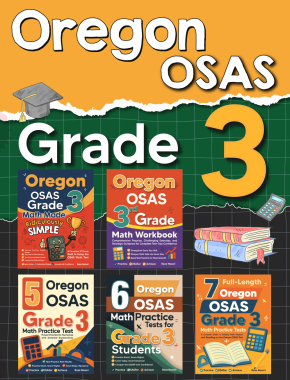
Ready for Grade 3 Math? The Oregon Grade 3 Math Bundle
Second grade is the build-up year, and when your child is ready for what comes next, this bundle makes the jump to Grade 3 math feel easy. It packs full practice-test books, complete answer keys, and step-by-step explanations for the Grade 3 math skills just ahead.
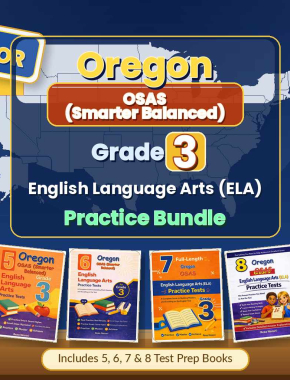
Getting Ready for Grade 3 English, Too? The Oregon Grade 3 English Bundle
Reading and writing grow right alongside math. If your second grader could use a head start in English as well, this Oregon Grade 3 English bundle covers it — practice tests, answer keys, and friendly explanations in one download.
Recommended EffortlessMath Books
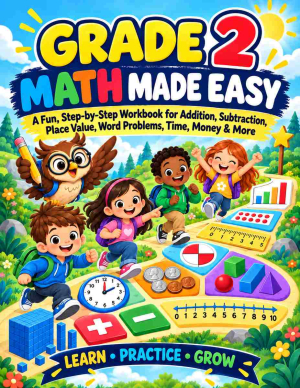
For a workbook that pairs neatly with these printable practice pages, Mastering Grade 2 Math walks your child through every second-grade topic with clear examples and lots of try-it-yourself problems. For extra word-problem practice (the part many second graders find hardest), see Mastering Grade 2 Math Word Problems.
Related EffortlessMath Lessons
If a topic on this page feels rusty, these short lessons go deeper:
- How to add and subtract two-digit numbers
- Place value to the hundreds
- How to tell time to the nearest five minutes
- How to count coins and dollar bills
- How to solve word problems

Related to This Article
More math articles
- The Best Grade 5 Math Book for New Hampshire Students
- New Mexico NM-MSSA Grade 6 Math Free Worksheets: Printable Grade 6 Math PDFs with Worked Solutions
- Factors and Factor Pairs for 4th Grade
- World War I, the Great Depression, and the New Deal
- 4th Grade RICAS Math Worksheets: FREE & Printable
- How to Solve Linear Equations in Two Variables?
- Grade 3 Math: Multiplication Facts (0-5)
- Long Division: How to Deconstruct complex Integrals
- ACT Aspire Grade 8 Math Free Worksheets: Free Printable Practice Worksheets with Worked Keys
- Free Grade 3 Math Worksheet Library for New Jersey (NJSLA): 49 Printable Skill Pages







What people say about "Free Oregon Grade 2 Math Worksheets: Free and Printable"?
No one replied yet.