Forming Plurals: Regular, Irregular, and Medical
Forming Plurals: Regular, Irregular, and Medical: this Effortless Math guide explains the topic in plain language, shows how it works through solved examples, and gives you free practice to try immediately, so the idea sticks instead of staying abstract.
Plural questions look harmless until the answer choices include diagnosises, diagnoses, and diagnosi. Suddenly a one-second question becomes a coin flip.
Most plurals cost you nothing: add an s and move on. The points are won and lost on the smaller groups—the hissing endings that need -es, the y words, the knife/knives family, and the Latin and Greek borrowings that fill medical writing.
A plural names more than one person or thing. Most English nouns simply add -s or -es (charts, classes), some change internally (man becomes men), and many borrowed words keep their original Latin or Greek endings: one vertebra, several vertebrae; one diagnosis, two diagnoses.
How Do Regular Plurals Work?
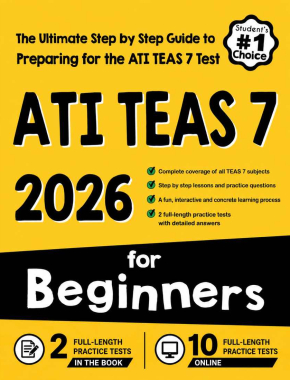
The default is -s: nurses, charts, results. When a word ends in a hissing sound—s, x, z, ch, or sh—you can hear an extra syllable in the plural, and that syllable is spelled -es: classes, boxes, churches, brushes.
For a final y, check the letter before it. After a consonant, y becomes -ies: baby to babies, injury to injuries. After a vowel, just add -s: days, keys, trays. Words ending in o split both ways—potatoes and heroes take -es, while photos and pianos take -s—so when in doubt, a dictionary settles it.
Which F and FE Words Change to -VES?
A cluster of everyday words trades the f sound for a v sound in the plural: knife/knives, wife/wives, leaf/leaves, half/halves, shelf/shelves. Others keep the f and simply add -s: roofs, chiefs, beliefs, safes.
Worked example. Wrong: The nurse restocked the supply shelfs. Corrected: The nurse restocked the supply shelves. Say the plural out loud—if you hear the v, spell the v.

What Are Irregular Plurals?
Some of the oldest words in English change from the inside instead of taking an ending: man/men, woman/women, child/children, foot/feet, tooth/teeth, mouse/mice, person/people. A few do not change at all: deer, sheep, fish, series, species.
The trap to avoid is the double plural. Childrens and feets are never correct—the word has already done its plural work.
How Do Medical (Latin and Greek) Plurals Work?
Scientific and medical English borrowed heavily from Latin and Greek, and those words brought their plural endings with them. The good news: they follow patterns, so a small table covers a lot of ground.
| Singular | Plural | Pattern |
|---|---|---|
| vertebra | vertebrae | -a becomes -ae |
| bacterium | bacteria | -um becomes -a |
| ovum | ova | -um becomes -a |
| diagnosis | diagnoses | -is becomes -es |
| index | indices | -ex becomes -ices |
Two habits make these stick. First, read them in real sentences: The X-ray showed two fractured vertebrae. The culture grew a single bacterium, but the sample contained several species of bacteria. Second, let the plural drive the verb: bacteria are, a bacterium is. The same -is to -es pattern gives crisis/crises and hypothesis/hypotheses, and in everyday (non-technical) writing, indexes is also accepted.
Watch: A Short Video Lesson
Khan Academy walks through the borrowed Latin and Greek plurals—the same family as vertebrae and diagnoses—in a few clear minutes:
A Routine for Plural Questions
- Say the plural out loud. An extra syllable after s, x, z, ch, or sh is spelled -es.
- Check the letter before a final y: consonant means -ies; vowel means plain -s.
- For f and fe words, listen for the v sound: knives and leaves, but roofs and chiefs.
- For borrowed medical words, match the ending pattern: -a to -ae, -um to -a, -is to -es, -ex to -ices.
- Reread the sentence to confirm the verb agrees with the new plural: the bacteria are growing.
Practice
- Write the plural of baby.
- Write the plural of box.
- Write the plural of knife.
- Write the plural of diagnosis.
- Fix this sentence: “The lab report listed three bacterias.”
- Complete it: one vertebra, thirty-three ______.
Answers
- babies — consonant before the y, so y becomes -ies.
- boxes — you hear the extra syllable after the x.
- knives — the f sound turns into v.
- diagnoses — the Greek -is ending becomes -es.
- “The lab report listed three types of bacteria” (or simply “three bacteria”). Bacteria is already plural; it never takes -s.
- vertebrae — the Latin -a ending becomes -ae.
Where This Fits in Your Prep
Plurals sit inside a bigger web of word-level skills. The essential spelling rules explain the y-to-i change you just used, and homophones and frequently misspelled words covers the sound-alike traps. Since a new plural changes the verb too, review subject-verb agreement—and to keep plurals and possessives apart, revisit how apostrophes work. All the topics live on our English and Language Usage practice hub.
Recommended Prep Books
These study guides and practice tests help you keep building momentum as you get ready:




Related to This Article
More math articles
- Parallel Sides in Quadrilaterals for 4th Grade
- FREE 4th Grade ACT Aspire Math Practice Test
- 10 Most Common GED Math Questions [Updated for 2026]
- How to Tutor Your Child in Math at Home (Parent’s Guide)
- How to Solve Linear Equation and Inequality Word Problems?
- Alabama ACAP Grade 6 Math Free Worksheets: 72 Printable PDFs with Step-by-Step Answer Keys
- Free Grade 8 English Worksheets for Virginia Students
- How to Prepare for the ASTB Math Test?
- OAE Elementary Education Math Flashcards
- Crowds, Publics, and Masses






















What people say about "Forming Plurals: Regular, Irregular, and Medical Nouns"?
No one replied yet.