The Best Algebra 1 Book for Pennsylvania Students
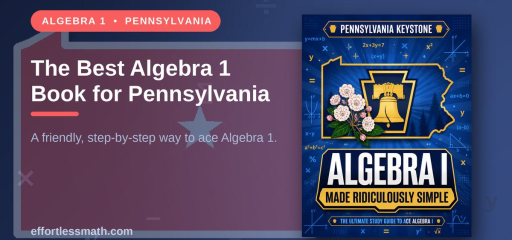
TL;DR: Pennsylvania’s Keystone Algebra I exam is tied to the state’s graduation pathways, which is a polite way of saying it matters. A patient, clear book paired with steady practice is what gets Pennsylvania students through – here’s the one we recommend.
Our recommended book

Keystone Algebra I for Beginners
Check Price on AmazonAs an Amazon Associate we earn from qualifying purchases.
Key takeaways:
- The Keystone Algebra I exam is part of Pennsylvania’s graduation pathways.
- Pennsylvania math standards are the PA Core Standards.
- Topics: operations with numbers and expressions, linear equations/inequalities, functions, systems, data and probability.
- Slow, clear explanation closes more gaps than rushed practice.
- Algebra I for Beginners is the book we recommend for Pennsylvania students.
Every Pennsylvania family with a high schooler eventually runs into the word “Keystone.” The Keystone Exams are the state’s end-of-course tests, and the Keystone Algebra I exam is the one that tends to arrive first and worry students most. It is connected to Pennsylvania’s graduation pathways, which is a polite way of saying it matters.
If your child is staring down Algebra 1 and the Keystone, take a breath. This is a test you can prepare for, and preparation is the entire difference between a stressful spring and a calm one. The students who do well on the Keystone Algebra I exam are not the ones born loving math. They are the ones who had the subject explained clearly and then practiced it steadily. You can give your child both.
Algebra 1 and the Keystone, briefly
Pennsylvania teaches to its PA Core Standards, and the Keystone Algebra I exam is built from them. Students usually take Algebra 1 in eighth or ninth grade and sit the Keystone at the end of the course. The exam centers on the essentials of the subject: operations with numbers and expressions, linear equations and inequalities, functions and their graphs, systems of equations, and an introduction to data and probability alongside the core algebra.
Notice that none of that is exotic. The Keystone is not trying to ambush anyone. It is checking whether a student really understands ordinary Algebra 1. The reason capable students still stumble is almost always the same: somewhere in the year, a topic went by too fast, the gap never got filled, and the next topic was built on the missing piece. A clear, patient book closes those gaps before they can stack up.
The book we recommend for Keystone Algebra 1
For a Pennsylvania student preparing for Algebra 1 and the Keystone, the book we point families toward is Pennsylvania Keystone Algebra I Made Ridiculously Simple.
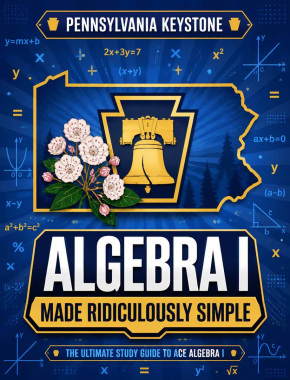
The book is built on a simple, generous idea: a student working alone should never hit a wall they cannot get over. So every topic is introduced in plain language, demonstrated with a fully worked example, and then practiced, with answer keys that give feedback right away. It is aligned to Pennsylvania’s standards and to the Keystone Algebra I exam, which means the practice a student does is practice for the actual test, not a vague approximation of it.
And because it is written to teach directly, a student does not need a tutor beside them to use it well. That makes it a steady resource for homeschoolers, for students catching up after a hard stretch, and for parents who want to help at home without relearning algebra from scratch first.
How to use it well
The plan around the book is short and forgiving:
- Choose short, regular sessions over long, rare ones. Half an hour a few times a week is plenty, and it actually gets done.
- Solve every problem on paper. Reading a solution feels like learning. Producing one is learning.
- Check answers immediately and read your wrong ones carefully. They are the cheapest, most accurate study guide you will ever get.
- Keep going only when a section feels easy, not just familiar. Familiar fades under exam pressure. Easy holds.
Start a few months before the Keystone and a relaxed pace will carry a student all the way there. If you want a wider look at studying the subject from the beginning, our guide to the best Algebra 1 book for self-study is worth a read alongside this.
Questions Pennsylvania families ask
Is the Keystone Algebra I exam required to graduate?
The Keystone Exams are connected to Pennsylvania’s graduation pathways, and Algebra I is the math Keystone most students take. The exact way a student satisfies the requirement can depend on their pathway, so your school counselor is the right person to confirm the details, but solid Algebra 1 preparation helps under every pathway.
When do students take Keystone Algebra I?
At the end of the Algebra 1 course, which most students take in eighth or ninth grade. Keystone testing windows run at a few points during the school year.
Can a student retake the Keystone if needed?
Pennsylvania does allow students to retake Keystone Exams, and there are additional pathways to meet the requirement. Still, the calmest route is to prepare well the first time, which is exactly what a clear study book is for.
Can this book be used without a tutor?
Yes. It teaches the student directly, with self-contained explanations and instant-feedback answer keys. It is just as useful as a companion if a tutor or parent is helping.
The bottom line
The Keystone Algebra I exam looms large in a lot of Pennsylvania households, but it does not have to. It is a fair, predictable test of ordinary Algebra 1, and ordinary Algebra 1 is entirely learnable with the right guide. Pennsylvania Keystone Algebra I Made Ridiculously Simple is built to be that guide. Begin early, keep a steady rhythm, and the Keystone becomes one more thing your student handles and moves past.
Recommended EffortlessMath Books
The book we recommend for Pennsylvania Algebra 1 students is Algebra I for Beginners, which walks through every Algebra 1 topic in plain language with full worked examples. For Keystone-specific timed practice, pair it with the Keystone Algebra I practice tests (resource currently unavailable).
Frequently Asked Questions
What is the Keystone Algebra I exam?
The Keystone Exams are Pennsylvania’s end-of-course state tests in core subjects. The Keystone Algebra I exam is given at the end of the Algebra 1 course and is one of the ways students can satisfy Pennsylvania’s graduation pathways.
Do Pennsylvania students have to pass the Keystone Algebra I to graduate?
Not necessarily – Pennsylvania offers several graduation pathways, and the Keystone Algebra I is one of them. Students can also satisfy the requirement through alternate pathways like passing other approved assessments or completing certain coursework. Check your child’s school for current options.
What standards does Pennsylvania use for Algebra 1?
The Pennsylvania Core Standards (PA Core), which are aligned with the Common Core. The Keystone Algebra I exam is built directly from those standards.
What topics does the Keystone Algebra I cover?
Operations with numbers and expressions, linear equations and inequalities, functions and their graphs, systems of equations, and an introduction to data and probability alongside the core algebra. It’s a fair test of standard Algebra 1.
When do Pennsylvania students take Algebra 1 and the Keystone?
Most take Algebra 1 in 8th or 9th grade and sit the Keystone exam at the end of the course. Accelerated students sometimes take it earlier.
Why do capable students struggle on the Keystone?
Pace and presentation, almost always. A class has to keep moving. A textbook introduces a new idea in two paragraphs. A student who needed one more example slips behind, and the next topic gets built on that gap. A patient book closes those gaps as they appear.
Which book do you recommend for Keystone prep?
Algebra I for Beginners. It walks through every Algebra 1 topic in plain language, shows worked examples for each concept, and gives practice problems with full answer keys. The content lines up well with the Keystone.
Is there a Keystone-specific practice book?
Yes – EffortlessMath publishes Pennsylvania Keystone Algebra I practice tests that mirror the actual exam format. Use the main book to learn the material, then switch to timed practice tests in the last month before the exam.
How early should we start preparing?
If your child is on track in class, two to three months of light daily review (15-20 minutes) is enough. If they’re behind, start four to six months out at 30-45 minutes a day. Spread-out practice beats cramming.
What if my child doesn’t pass the Keystone on the first try?
They can retake. Pennsylvania offers multiple administrations each year, and there are also project-based alternatives and other graduation pathways students can pursue. Talk to your school counselor about retake dates and pathway options.
Related EffortlessMath Lessons
If a topic on this page feels rusty, these short lessons go deeper:

Related to This Article
More math articles
- Feminist Theory and Intersectionality
- ISEE Middle Level Math Formulas
- 7th Grade New York State Assessments Math Worksheets: FREE & Printable
- WEST-B Math Flashcards
- Understanding Science Vocabulary From Context
- The Best Algebra 1 Book for Delaware Students
- The Ultimate ATI TEAS 7 Math Course (FREE Worksheets)
- Counterclaims and Rebuttals
- How to Find the Expected Value of a Random Variable?
- The Best Algebra 1 Book for Ohio Students


















What people say about "The Best Algebra 1 Book for Pennsylvania Students"?
No one replied yet.