Employment, Unemployment, and the Labor Force
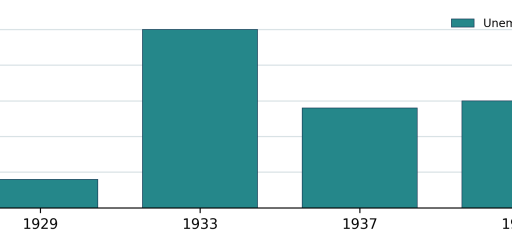
The labor force is everyone classified as employed or unemployed. Part-time workers count as employed; people who have stopped looking for work are outside the labor force. This lesson explains the classification rules, three labor-market rates, and why a falling unemployment rate does not always mean more people have jobs.
Chapter 8 companion lesson
Two headlines can report the same unemployment rate while describing very different labor markets. Participation, job search, and the reason for unemployment determine what the headline leaves out.
In plain language: The labor force includes employed people and unemployed people who are available for work and actively seeking it. The unemployment rate divides unemployed workers by the labor force; the participation rate divides the labor force by the adult population. Classification comes before calculation because discouraged workers and nonparticipants change the denominator.
Who counts in the labor force?
The Current Population Survey classifies each person in the civilian noninstitutional population age 16 and older as employed, unemployed, or not in the labor force. The categories are mutually exclusive. Start with employment. A person is employed if the person did any work for pay or profit during the reference week, worked unpaid in a family business under the official criteria, or had a job from which the person was temporarily absent.
Part-time and temporary work count as employment. A person who wants full-time work but worked one paid hour is employed under the headline classification, though underemployment measures can reveal the person's situation. A worker on vacation or temporarily absent because of illness can remain employed if a job is held.
A jobless person is unemployed if actively seeking work during the prior four weeks and currently available, or if waiting to be recalled from temporary layoff. Active search includes contacting employers, submitting applications, interviewing, or using methods that can connect the person with a job. Merely reading listings without taking active steps is generally passive and does not satisfy the search condition.
Unemployment, participation, and employment-population formulas
The labor force equals employed plus unemployed people. The official unemployment rate is u = [U ÷ (E + U)] × 100, where E is employed people and U is unemployed people. If 95 million are employed and 5 million unemployed, the labor force is 100 million and unemployment is 5 percent. Dividing by the entire population would understate the rate because people outside the labor force are not in the denominator.
The labor force participation rate is LFPR = [(E + U) ÷ P] × 100, where P is the civilian noninstitutional population age 16 and older. If the relevant population is 125 million, participation is 100/125=80 percent. The employment-population ratio is employed divided by that population, or 95/125=76 percent. Together, the rates show different parts of labor-market engagement.
Flows among categories can move the unemployment rate counterintuitively. If an unemployed person finds a job, U falls and E rises while the labor force remains unchanged, so unemployment falls. If an unemployed person stops searching, U and the labor force both fall; unemployment may fall even though employment does not rise. If a person outside the labor force begins searching without finding work, U and the labor force rise, potentially raising unemployment.
Watch the model in motion
Jacob Clifford explains the same core relationship visually. Pause before each result and predict the next movement or calculation.
Frictional, structural, and cyclical unemployment
Frictional unemployment arises from normal search and matching. A worker leaves one job to find a better fit, a graduate searches for a first job, or a family moves and one earner seeks new work. Information is imperfect and matches take time. Frictional unemployment can exist in a healthy, growing economy and may support better job matches.
Structural unemployment reflects a mismatch between workers and available jobs. Technology can reduce demand for a skill, trade can shift industry location, or jobs can grow in regions far from displaced workers. Retraining, relocation, or changes in wage expectations may be required. The defining feature is mismatch, not simply that a job loss lasts a long time.
Cyclical unemployment results from insufficient aggregate demand during a contraction. Firms across industries reduce production and employment because total spending falls. As the economy returns toward potential output, cyclical unemployment tends to decline. An economy operating below full-employment output has positive cyclical unemployment in the standard model.
Natural unemployment and full employment
The natural rate of unemployment is the unemployment rate associated with frictional and structural unemployment when cyclical unemployment is zero. Full employment means the economy operates at potential output with no cyclical unemployment; it does not mean every person has a job or the unemployment rate is zero.
The natural rate can change. Better job information may reduce frictional search time. Demographic shifts can change how frequently workers enter and leave jobs. Technology, education, regulation, geographic mobility, and industry change can alter structural mismatch. The natural rate is therefore an economic estimate, not an eternal constant.
If actual unemployment exceeds the natural rate, the difference is commonly treated as cyclical unemployment in the introductory model. If actual unemployment is 7 percent and the natural rate 5 percent, cyclical unemployment is about 2 percentage points. Actual unemployment can temporarily fall below the estimated natural rate during an overheated expansion, accompanied by upward wage and price pressure.
How to approach a labor-force question
Practice classification cases, rate calculations, changes caused by entry or exit from the labor force, and the distinctions among unemployment types. A person collecting benefits is not automatically unemployed; official status follows work, active search, availability, and temporary-layoff rules.
A useful check is to name the model before doing arithmetic. Then write the first change, the intermediate market response, and the final macroeconomic result. This keeps a plausible distractor from borrowing one true step and attaching it to the wrong conclusion.
Practice and worked answers
Try these public lesson exercises before checking the explanations below.
- Classify a part-time worker seeking full-time work, a vacationing worker with a job, an available active job seeker, a discouraged worker, and an available person awaiting recall from temporary layoff. State the deciding evidence in each case.
- Starting with E=144, U=6, and a civilian noninstitutional population age 16 and older of 200, calculate unemployment, participation, and employment-population rates. Recalculate after three unemployed people stop searching and explain every change.
- Classify someone who left a job and is searching for a better match, a graduate searching for a first job, a worker displaced by permanent automation, and a construction worker laid off during a national recession. Explain the mechanism rather than relying on duration.
For each prompt, say why the tempting wrong answer fails. That extra sentence is often the difference between recognizing a term and being able to use it under time pressure.
Check your answers
1. Classification: The part-time worker and vacationing worker are employed. The available jobless person who actively searched within the prior four weeks is unemployed. The discouraged worker is outside the labor force because active search has stopped. The available worker awaiting recall from temporary layoff is unemployed even without an active search. Wanting more hours does not turn an employed person into an unemployed person.
2. Before anyone stops searching: Labor force = 144 + 6 = 150. Unemployment = (6 ÷ 150) × 100 = 4%; participation = (150 ÷ 200) × 100 = 75%; employment-population ratio = (144 ÷ 200) × 100 = 72%.
After three unemployed people stop searching: E stays 144, U falls to 3, and the labor force becomes 147. Unemployment = (3 ÷ 147) × 100 ≈ 2.04%; participation = (147 ÷ 200) × 100 = 73.5%; the employment-population ratio stays 72%. Nobody gained a job. The lower unemployment rate comes from people leaving the labor force.
3. Types: Searching after leaving a job and searching for a first job illustrate frictional unemployment. Permanent automation that leaves a worker’s skills mismatched with available jobs illustrates structural unemployment. A recession-related layoff caused by falling demand illustrates cyclical unemployment.
For the official U.S. classification rules and rate definitions, see the Bureau of Labor Statistics guide to measuring unemployment. These examples use hypothetical counts, not current employment statistics.
Keep studying with the complete guide
For a structured book to use alongside these lessons, explore CLEP Principles of Macroeconomics for Beginners and its preview pages. Continue with the free study hub or adjacent lessons below.

Reza is an experienced Math instructor and a test-prep expert who has been tutoring students since 2008. He has helped many students raise their standardized test scores--and attend the colleges of their dreams. He works with students individually and in group settings, he tutors both live and online Math courses and the Math portion of standardized tests. He provides an individualized custom learning plan and the personalized attention that makes a difference in how students view math.
Related to This Article
More math articles
- Weaknesses of the national government
- The ratification process
- Derivative of Logarithmic Functions: A Hard Task Made Easy
- How to Solve and Graph One-Step Multiplication and Division Equations
- Algebra Puzzle – Challenge 44
- Plant Structure and Function: A Beginner’s Guide
- Why Inequality Persists
- Cramer’s Rule Calculator (2×2 and 3×3 Systems, Free)
- What Is a Polynomial?
- Free Grade 5 English Worksheets for Colorado Students

















What people say about "Unemployment and the Labor Force | Effortless Math"?
No one replied yet.