Arizona Grade 2 Math Worksheets — Free Printable PDFs
Arizona Grade 2 Math Worksheets, Free Printable PDFs: a free, printable set you can download and use right away, with answer keys, organized by topic so students can practice one skill at a time and teachers can assign exactly what a lesson needs.
A friendly, complete set of practice pages for second graders across Arizona.
Here’s a scene a lot of Arizona families know well. Your second grader is building a tower of base-ten blocks, snapping ten unit cubes into a “ten rod,” then stacking ten rods into a “hundred flat.” Suddenly they hold up a hundred flat and say, “So this is the same as one hundred ones?” Yes. That’s it. That’s the whole idea of place value, and you just watched it land.
Second grade math is full of moments like that, and good practice makes more of them happen. If you’re looking for clear, kid-friendly worksheets to back up what your Arizona second grader is learning, this collection is for you. Everything here is free and printable. Each worksheet is a PDF that comes with its own answer key, and you won’t be asked to create an account or hand over an email. Just print and go.
Across the year, second graders move into bigger numbers, all the way to 1,000, and get genuinely fast with addition and subtraction. They tell time, count money, measure with rulers, read graphs, and start noticing how rows and columns make counting easier. It’s a year where math turns practical.
These worksheets follow the Grade 2 math standards Arizona has adopted. They’re built so you can take them one skill at a time, at a pace that suits your child rather than a calendar.
What the Collection Covers
The worksheets are split into eight chapters. Each one tackles a major area of second grade math, and inside each chapter the skills build sensibly from simpler to harder. The chapters don’t depend on each other, though, so feel free to start with whatever your child needs most.
At the top of every worksheet there’s a Key Ideas box that explains the skill in everyday language, followed by worked examples and then practice problems. The answer key is at the end of each page. Here’s everything you’ll find.
Place Value and Number Sense
- Understanding Place Value, The core idea that where a digit sits decides what it’s worth.
- Reading and Writing Numbers to 1,000, Translating between number words and digits with ease.
- Expanded Form, Pulling a number apart into its hundreds, tens, and ones.
- Skip Counting, Counting by 5s, 10s, and 100s, a quiet warm-up for multiplication.
- Comparing and Ordering 3-Digit Numbers, Deciding which number is bigger, then arranging a group in order.
Addition and Subtraction
- Addition Facts Within 20, Getting the basic sums down to quick recall.
- Subtraction Facts Within 20, Practicing the matching take-away facts until they’re fast.
- Adding Within 100, Two-digit addition, including problems that need regrouping.
- Subtracting Within 100, Two-digit subtraction with borrowing, shown step by step.
- Adding Within 1,000, Carrying addition into three-digit numbers.
- Subtracting Within 1,000, Three-digit subtraction with plenty of support.
- Mentally Adding and Subtracting 10 and 100, Quick mental jumps that sharpen number sense.
Word Problems and Equations
- One-Step Word Problems, Short story problems solved with a single operation.
- Two-Step Word Problems, Two-part problems that teach kids to plan before solving.
- Finding the Unknown Number, Filling in the missing piece of an equation.
Odd, Even, and Arrays
- Odd and Even Numbers, Spotting which numbers split into two equal groups.
- Even Numbers as Equal Addends, Writing an even number as a double, such as 12 = 6 + 6.
- Rectangular Arrays, Arranging objects in tidy rows and columns.
- Repeated Addition with Arrays, Adding equal rows together, the first step toward multiplication.
Measurement and Length
- Measuring Length with Tools, Using a ruler or tape measure accurately.
- Estimating Lengths, Making a thoughtful guess, then measuring to see how close it was.
- Comparing Lengths, Finding the difference between two lengths.
- Adding and Subtracting Lengths, Solving word problems by combining measurements.
- Length on a Number Line, Showing length as a jump on a number line.
Time and Money
- Telling Time to the Nearest Five Minutes, Reading analog and digital clocks to the five-minute mark.
- A.M. And P.M., Telling morning hours from afternoon and night.
- Counting Coins, Adding up a handful of coins to find the total.
- Money Word Problems, Working out costs and change in everyday situations.
Data and Graphs
- Line Plots, Plotting measurement data above a number line.
- Picture Graphs, Reading graphs where each picture counts for several items.
- Bar Graphs, Comparing categories with bars and drawing conclusions.
Geometry
- Recognizing and Drawing Shapes, Naming and sketching shapes by sides and angles.
- Partitioning Rectangles into Rows and Columns, Splitting a rectangle into equal squares and counting them.
- Equal Shares: Halves, Thirds, and Fourths, Dividing shapes into fair pieces, an early look at fractions.
Making These Worksheets Count
The worksheets do their best work when they’re paired with a few simple habits. The aim is understanding that holds, not pages stacked up.
Take them one at a time. Second graders do their best thinking in short, focused stretches, and a single page done carefully teaches more than a pile rushed through. Start each session by reading the Key Ideas box together, out loud. Then work the examples side by side, so your child sees the method demonstrated before trying it alone.
Once the worksheet is complete, go over the answer key together. A missed problem is a chance to learn, not a mark against your child. Ask them to explain their thinking, and you’ll usually find the exact spot where things went sideways, which is also the spot you can fix.
And don’t be afraid to repeat. If two-step word problems were tough this week, give them another try with a fresh page next week. That short break between practice sessions is one of the most reliable ways to lock a skill in.
About the AASA
Arizona uses the AASA, the Arizona’s Academic Standards Assessment, to track how students are progressing. Here’s the part that takes the pressure off: AASA math testing begins in third grade. Your second grader won’t take a state math test this year.
That makes second grade a true foundation year. There’s no exam looming, just space to build the skills the third grade test will eventually rely on. Place value, fast and accurate addition and subtraction, careful reading of word problems, measurement, and reading data, all of it shows up later in some form. A second grader who gets comfortable with this material now is set up to handle third grade with confidence.
So use this year to build, not to cram. Easygoing, consistent practice today is what makes AASA feel manageable down the road.
Frequently Asked Questions
Do these worksheets cost anything?
No. Every single one is a free printable PDF. There’s no charge, no subscription, and no account required. Print whatever you need.
Where should we begin?
Start with whatever your child is studying in class right now, or with a topic that’s been a struggle. The chapters are independent, so there’s no wrong starting point.
My second grader gets tired quickly. How do we make this work?
Keep sessions short, ten to fifteen minutes is plenty, and stop while things are still going well. One good page beats a frustrating marathon.
Should I help while my child works, or wait until the end?
A bit of both. Walk through the Key Ideas and examples together at the start, then let your child try the practice on their own. Save the close review for when the answer key comes out.
Are these useful for teachers?
Very. They make solid homework, warm-up activities, review stations, or targeted practice for students who need another pass at a skill.
Cheering Your Second Grader On
Second grade math is a year of small breakthroughs, and your Arizona second grader has plenty of them coming. With short, regular practice and an answer key you can talk through together, those breakthroughs come a little easier. Choose a chapter, print a worksheet, and dig in. One page at a time, your child is building a foundation that will carry them a long way.
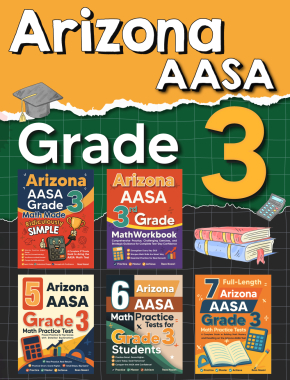
Ready for Grade 3 Math? The Arizona Grade 3 Math Bundle
Second grade is the build-up year, and when your child is ready for what comes next, this bundle makes the jump to Grade 3 math feel easy. It packs full practice-test books, complete answer keys, and step-by-step explanations for the Grade 3 math skills just ahead.
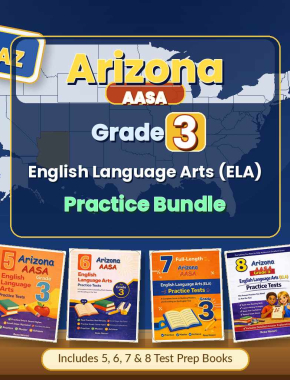
Getting Ready for Grade 3 English, Too? The Arizona Grade 3 English Bundle
Reading and writing grow right alongside math. If your second grader could use a head start in English as well, this Arizona Grade 3 English bundle covers it — practice tests, answer keys, and friendly explanations in one download.

Related to This Article
More math articles
- Common Core Grade 8 Math Free Worksheets: 72 Free Printable PDFs Aligned to CCSS Grade 8 Math
- Lines of Symmetry for 4th Grade
- 5th Grade Georgia Milestones Assessment System Math Practice Test Questions
- Using Distributive Property to Factor Numerical Expressions
- Federal and State Powers in the United States
- The Best Grade 4 Math Book for Ohio Students
- Dive into Fractions: How to Solve Addition and Subtraction Word Problems
- How to Use Number Lines to Graph Decimals
- SSAT Math-Test Day Tips
- The Ultimate 7th Grade K-PREP Math Course (+FREE Worksheets)








What people say about "Arizona Grade 2 Math Worksheets: Free PDFs"?
No one replied yet.