The Best Grade 2 English Worksheets for New Jersey Students
The Best Grade 2 English Worksheets for New Jersey Students: a free, printable set you can download and use right away, with answer keys, organized by topic so students can practice one skill at a time and teachers can assign exactly what a lesson needs.
54 free printable ELA worksheets with answer keys, built for the year before NJSLA testing.
Ask a New Jersey second grader to read you a chapter book and watch what happens. They’ll get through a page. Then they’ll pause and say something you didn’t expect, “I think the dog is going to run away” or “Why is the girl being so bossy?” That’s the whole year, right there, in one little comment.
Second grade is when reading turns into thinking. Last year, getting the words off the page took every ounce of effort. This year, the words come a little easier, and suddenly there’s room left over to wonder, predict, and disagree. It’s a wonderful shift to watch. It can also be uneven, smooth one week, stuck the next.
This page is a set of free Grade 2 English worksheets for New Jersey families and classrooms. Every worksheet is a printable PDF, every one comes with an answer key, and there’s no account to make and no email box to fill in. You click a title and the file opens. Print it for tonight, copy it for a study group, send it to Grandma who’s on homework duty Thursdays. It’s yours.
The skills here follow the Grade 2 English Language Arts standards New Jersey has adopted, so they line up with what your child’s teacher is teaching right now, reading stories, reading true-fact books, sounding out the longer words, and learning the small rules that make writing clear.
How the collection is arranged
The worksheets are split into eight strands, which are just the natural pieces of a second-grade English year: reading literature, reading nonfiction, the building blocks of decoding, writing, speaking and listening, grammar, capitalization and punctuation, and vocabulary.
Each worksheet is one skill and one skill only. We did that on purpose. A seven-year-old who spends a focused fifteen minutes on a single idea walks away with more than a kid who flips through ten pages in a hurry. Choose a strand, choose a page, and the afternoon’s plan is done.
Reading: Literature
- Asking and Answering Questions About Stories, work through the who, what, where, when, and why of a tale
- Central Message, Lesson, or Moral, name the lesson tucked inside a story
- How Characters Respond to Events, track how a character feels and acts when things change
- Rhythm and Meaning in Stories, Poems, and Songs, listen for how the beat of words shapes meaning
- The Structure of a Story, see how beginning, middle, and end click together
- Points of View of Characters, notice that two characters can see the same moment differently
- Using Illustrations to Understand Stories, get clues from the pictures, not just the print
- Comparing Two Versions of the Same Story, find what shifts when a familiar tale is retold
Reading: Nonfiction
- Asking and Answering Questions About Nonfiction, pull real facts out of an information text
- Main Topic and Focus of Paragraphs, say what a paragraph is mainly about
- Connections Between Events, Ideas, and Steps, follow how one idea or step leads to the next
- Nonfiction Vocabulary, get comfortable with words science and history books bring along
- Text Features, use headings, bold words, and captions to find your way around
- The Author’s Main Purpose, ask why the writer bothered to write this
- How Images Help a Text, let a photo or diagram carry part of the explaining
- How Reasons Support the Author’s Points, connect a writer’s reasons to the points they’re making
- Comparing Two Texts on the Same Topic, read two pieces on one subject and spot the differences
Foundational Reading Skills
- Long and Short Vowels, hear the difference between kit and kite
- Vowel Teams, handle pairs like ea, oa, and ai with confidence
- Decoding Two-Syllable Words, chop a long word into pieces you can read
- Prefixes and Suffixes, read word parts like un- and -ful on sight
- Words with Tricky Spelling Patterns, wrestle with spellings that don’t follow the rules
- Irregularly Spelled Words (Sight Words), lock in the words you just have to know by heart
- Reading Fluency: Accuracy, Rate, and Expression, read smoothly, at a comfortable pace, with feeling
- Self-Correcting While You Read, catch a sentence that stopped making sense and fix it
Writing
- Opinion Writing, say what you think and back it with a reason
- Informative and Explanatory Writing, teach a reader something, one clear step at a time
- Narrative Writing, tell a small story that runs in order
- Revising and Editing, take a first draft and make it a bit better
- Shared Research Projects, team up to learn about a single topic
- Gathering Information to Answer a Question, hunt down facts that answer a real question
Speaking and Listening
- Recounting Ideas from a Read-Aloud, retell what a read-aloud was really about
- Asking and Answering Questions About a Speaker, listen hard and ask a sharp question back
- Telling a Story or Sharing an Experience, share something out loud so listeners can follow along
Grammar
- Collective Nouns, words for groups, like herd and bunch
- Irregular Plural Nouns, plurals that skip the -s, like teeth and children
- Reflexive Pronouns, using myself, yourself, and ourselves the right way
- Past Tense of Irregular Verbs, run becomes ran, give becomes gave
- Adjectives and Adverbs, words that describe things and words that describe actions
- Expanding and Rearranging Sentences, stretch and reshuffle a sentence to make it land better
Capitalization, Punctuation, and Spelling
- Capitalizing Holidays, Products, and Place Names, hand a capital letter to the names that deserve one
- Commas in Greetings and Closings of Letters, drop the comma in the right spot in a friendly letter
- Apostrophes: Contractions and Possessives, sort out don’t and Mia’s bike
- Spelling Patterns, spell a new word using a pattern you already know
- Using Reference Materials to Check Spelling, look a word up instead of guessing at it
Vocabulary and Word Study
- Formal and Informal English, the difference between recess talk and classroom talk
- Context Clues, use the rest of the sentence to crack a new word
- Prefixes, how a beginning like re- flips a word’s meaning
- Root Words and Word Endings, spot the base word hiding inside a longer one
- Compound Words, two small words snapped together, like backpack
- Using Glossaries and Dictionaries, look up a word and trust what you find
- Real-Life Word Connections, tie words to things kids run into every day
- Shades of Meaning, the gap between glad, happy, and thrilled
- Using Describing Words and New Vocabulary, put fresh, colorful words to work in sentences
Getting real mileage out of these pages
Here’s the honest trap with any free worksheet page: you can print twenty of them and feel like you’ve accomplished something. But a stack on the kitchen counter doesn’t teach a kid anything. A small plan does.
Print one worksheet at a time. Just one. Second graders run on a short tank of focus, and you want every drop of it spent on a single skill instead of sprayed across a fat packet.
Before the pencil moves, read the Quick Review box at the top together. That box is the mini-lesson, short on purpose. Say it out loud, talk through the example, then hand things over.
Let your child do the page alone, then sit down and check the answer key together. Don’t just mark right and wrong. When something’s off, read the explanation as a pair and figure out what tripped them up. That little back-and-forth is where the real learning happens.
If a skill comes out shaky, resist the urge to drill it flat tonight. Come back to it in a week with a different page on the same idea. Spacing practice out beats stacking it up. It works every time.
What about the NJSLA?
If you’ve been searching for “Grade 2 English practice in New Jersey,” the NJSLA, the New Jersey Student Learning Assessment, is probably hovering somewhere in your thoughts. So here’s the reassuring truth: the NJSLA in English Language Arts doesn’t begin until third grade. Your second grader isn’t sitting for a state test this year.
That makes Grade 2 the foundation year, and that’s good news. It’s the season to build reading and writing skills calmly, with no test on the calendar. Every page your child finishes now, decoding a two-syllable word, finding the main topic, landing the apostrophe in the right place, is a brick in the wall that makes the NJSLA feel manageable later. The kids who walk into that test in third grade feeling steady are almost always the ones who built carefully in second. No cramming required. Just regular, friendly practice.
Questions New Jersey parents ask
Do these worksheets match what’s happening in my child’s classroom? Yes. They’re built around the Grade 2 English Language Arts standards New Jersey has adopted, the same skill list teachers across the state follow.
My second grader still reads slowly and stops a lot. Where should we begin? Start in the foundational strand. Long and Short Vowels and Reading Fluency are the right first stops. When the act of reading itself gets smoother, the thinking parts get easier too.
How long should a single worksheet take? Most second graders finish one page in ten to fifteen minutes. If it stretches past twenty, stop, take a break, and count it a success anyway.
My child already reads ahead of grade level. What should we try? Reach for Comparing Two Versions of the Same Story and Shades of Meaning. Both stretch a strong reader while staying right for a seven-year-old.
Can I use these for homeschooling? Definitely. They work beautifully at the kitchen table, whether as the day’s main lesson or as a quick check after you’ve read together.
Before you go
If your child zips through a worksheet today and has forgotten all about it by tomorrow morning, that’s completely normal. That’s just how seven-year-olds are wired. The goal was never to finish a pile. It was to practice one skill, have one good conversation, and add a little confidence. Come back any time you need the next page. We’ll keep them right here, free, for as long as you need them.
Ready for Grade 3 English? The New Jersey NJSLA Grade 3 English Bundle
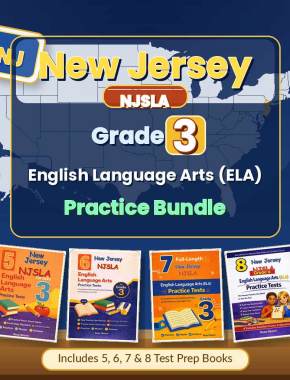
Second grade is the build-up year, and when your child is ready for what comes next, this bundle makes the jump to Grade 3 English feel easy. It includes four full practice-test books (5 + 6 + 7 + 8 tests) covering the Grade 3 reading, writing, and language skills just ahead, with explained answer keys and an instant PDF download.
Getting Ready for Grade 3 Math, Too? The New Jersey NJSLA Grade 3 Math Bundle
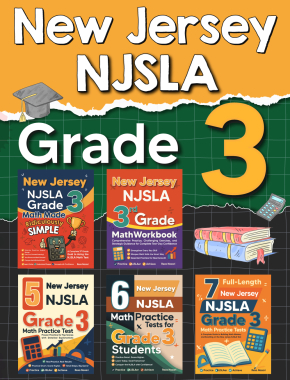
The same jump to Grade 3 happens in math. If your second grader could use a head start there as well, this New Jersey NJSLA Grade 3 Math bundle is the shortest path, workbook, study guide, and full practice tests in one instant download, with answer keys throughout.

Related to This Article
More math articles
- Geometry Puzzle – Challenge 76
- How to Help Your Child Love Math: 10 Tips That Actually Work
- Commerce Clause
- How Verification Became the Most Controversial Topic in Online Entertainment
- 4th Grade ACT Aspire Math Worksheets: FREE & Printable
- The Best Grade 5 Math Book for Colorado Students
- CLEP U.S. History I 068: Second Great Awakening and Moral Agency
- How to Find the Volume of a Cylinder, Cone, and Sphere
- Top 10 Tips to Create a CHSPE Math Study Plan
- Geometry Puzzle – Challenge 75



What people say about "New Jersey Grade 2 English Worksheets: Free PDFs"?
No one replied yet.