Free Grade 2 English Worksheets for Iowa Students
Free Grade 2 English Worksheets for Iowa Students: a free, printable set you can download and use right away, with answer keys, organized by topic so students can practice one skill at a time and teachers can assign exactly what a lesson needs.
Printable ELA practice for second graders, with explained answer keys and no sign-up required.
There’s a kind of magic to second grade that’s easy to miss because it happens so quietly. A child reads a story, closes the book, and then, without being asked, uses a word from that story in conversation three days later. The reading didn’t just get read. It got absorbed. That’s the whole year working the way it should.
This page is a collection of free English worksheets for Iowa second graders, built for that absorbing, building year. There are short stories and short nonfiction passages. There’s phonics, grammar, punctuation, and the first real writing, opinions, little reports, and stories that have a real beginning, middle, and end.
Everything here is free. Each worksheet is a printable PDF, every one comes with an answer key, and there’s no sign-up, no email, no account in the way. Click a title and print the page. Use one at the kitchen table or copy a set for the whole class.
The skills below follow the Grade 2 English Language Arts standards Iowa has adopted. Said plainly, this is the reading, language, and writing work happening in Iowa second-grade classrooms this year.
How the collection is organized
The worksheets fall into eight strands, the way a second-grade reading block usually runs. Reading literature and reading nonfiction. The foundational decoding skills beneath smooth reading. Writing. Speaking and listening. Grammar. Capitalization and punctuation. And vocabulary.
Each worksheet covers just one skill, and that’s on purpose. A focused page on compound words, followed by a quick chat, will teach more than a fat packet that gets half-finished before bed. Browse the list, grab what fits your child, and leave the rest. Nothing here needs to be done in order.
Reading: Literature
- Asking and Answering Questions About Stories, answering the who, what, and why behind a story
- Central Message, Lesson, or Moral, finding the lesson a story quietly teaches
- How Characters Respond to Events, tracking a character’s feelings and actions through the plot
- Rhythm and Meaning in Stories, Poems, and Songs, hearing beat and rhyme and what they bring to a piece
- The Structure of a Story, how the beginning, middle, and end work together
- Points of View of Characters, noticing that characters see the same event differently
- Using Illustrations to Understand Stories, reading the pictures alongside the words
- Comparing Two Versions of the Same Story, placing two tellings of one tale side by side
Reading: Nonfiction
- Asking and Answering Questions About Nonfiction, pulling real answers from a fact-filled text
- Main Topic and Focus of Paragraphs, pinning down what a paragraph is mainly about
- Connections Between Events, Ideas, and Steps, seeing how one idea connects to the next
- Nonfiction Vocabulary, the subject words that show up in science and social studies texts
- Text Features, using headings, bold words, and captions as guides
- The Author’s Main Purpose, working out why a writer wrote a piece
- How Images Help a Text, when a picture or diagram helps explain the words
- How Reasons Support the Author’s Points, spotting the reasons behind a writer’s ideas
- Comparing Two Texts on the Same Topic, two articles on one subject, comparing what each says
Foundational Reading Skills
- Long and Short Vowels, the difference between cut and cute
- Vowel Teams, pairs of vowels working together, as in meal, sail, and soap
- Decoding Two-Syllable Words, breaking longer words into smaller, readable pieces
- Prefixes and Suffixes, how parts like un- and -ness change a word
- Words with Tricky Spelling Patterns, the patterns that catch kids off guard
- Irregularly Spelled Words (Sight Words), the words that simply have to be memorized
- Reading Fluency: Accuracy, Rate, and Expression, reading accurately, at a comfortable pace, with feeling
- Self-Correcting While You Read, catching and fixing a mistake on your own
Writing
- Opinion Writing, telling what you think and supporting it with a reason
- Informative and Explanatory Writing, explaining a topic clearly for a reader
- Narrative Writing, telling a story in order, with details that make it real
- Revising and Editing, improving a draft one careful pass at a time
- Shared Research Projects, exploring a question together as a group
- Gathering Information to Answer a Question, collecting the facts that answer a real question
Speaking and Listening
- Recounting Ideas from a Read-Aloud, retelling the important parts after listening to a story
- Asking and Answering Questions About a Speaker, listening well enough to ask and answer thoughtfully
- Telling a Story or Sharing an Experience, speaking clearly so a listener can picture it
Grammar
- Collective Nouns, words that name a group, like team and flock
- Irregular Plural Nouns, when foot becomes feet and child becomes children
- Reflexive Pronouns, myself, yourself, ourselves
- Past Tense of Irregular Verbs, verbs that change shape, like see and saw
- Adjectives and Adverbs, words that describe nouns and words that describe actions
- Expanding and Rearranging Sentences, building a short sentence into a richer one
Capitalization, Punctuation, and Spelling
- Capitalizing Holidays, Products, and Place Names, knowing which words take a capital letter
- Commas in Greetings and Closings of Letters, the commas in Dear Grandma, and Love,
- Apostrophes: Contractions and Possessives. we’re and the bird’s nest
- Spelling Patterns, the patterns that make spelling more predictable
- Using Reference Materials to Check Spelling, checking a word instead of guessing
Vocabulary and Word Study
- Formal and Informal English, how language shifts between recess talk and a written note
- Context Clues, using nearby words to figure out a new one
- Prefixes, the little word-starts that change a meaning
- Root Words and Word Endings, finding the base word and what’s been added on
- Compound Words, two words joined into one, like sunshine and cornfield
- Using Glossaries and Dictionaries, looking up a word and its meaning
- Real-Life Word Connections, linking new words to everyday experience
- Shades of Meaning, the difference between warm, hot, and scorching
- Using Describing Words and New Vocabulary, bringing colorful new words into speaking and writing
Getting real value from each worksheet
The same page can teach a lot or almost nothing. It depends entirely on how it’s used. A few habits make the difference:
One worksheet at a time. Printing a stack feels efficient, but it usually swamps a young child. A single page with full attention beats a pile finished in a blur.
Read the Quick Review box together. That short box up top is the lesson itself. Read it aloud, talk through the example, then pass the pencil over.
Check the answer key together. A score doesn’t teach much on its own. Sit side by side and look closely at the missed questions. The talk about a wrong answer is where the learning happens.
Revisit weak skills after a week. If your child misses several questions on a skill, don’t redo it the same night. Wait five or six days and try a fresh worksheet on that skill. The little gap helps it last.
A word about the ISASP
Plenty of Iowa families come to a page like this because of the Iowa Statewide Assessment of Student Progress, the ISASP. So here’s the straightforward truth. The ISASP English Language Arts test starts in third grade. There is no ISASP ELA test in second grade. That makes second grade the foundation year, the season your child builds the reading and writing skills the ISASP will later draw on.
So these worksheets aren’t test prep in the cramming sense. They’re skill prep. A second grader who reads with understanding and writes a clear paragraph is steadily becoming a student who meets the ISASP with confidence years from now. Calm, steady building today; an easier test day later.
Questions families ask
Are these aligned with Iowa’s standards? Yes. Every worksheet targets a specific skill from the Grade 2 English Language Arts standards Iowa has adopted.
Is there an ISASP test in second grade? No. ISASP ELA starts in Grade 3. Second grade lays the groundwork.
My child reads ahead of grade level. What’s good for them? Try Comparing Two Texts on the Same Topic and Points of View of Characters. Both challenge a strong reader without leaving the grade behind.
Reading is hard for my child. Where do we start? Begin with Vowel Teams and Context Clues. Steady decoding and the habit of using clues make the rest of reading smoother.
Can I use these to homeschool? Yes. They fit a kitchen table as easily as a classroom, as daily practice or a check after a lesson.
My child rushes through worksheets. How do I slow them down? Do it together. Read each question aloud, ask your child to explain the answer before writing it, and the pace settles naturally.
One last note
If tonight’s worksheet ends up half done, with a tractor drawn in the corner, that’s a perfectly ordinary second-grade evening. Try a shorter one tomorrow, or come back to that skill next week. Growth at this age is slow and steady, never flashy. Keep practice small and regular, and stop by whenever you need the next page.
Ready for Grade 3 English? The Iowa ISASP Grade 3 English Bundle
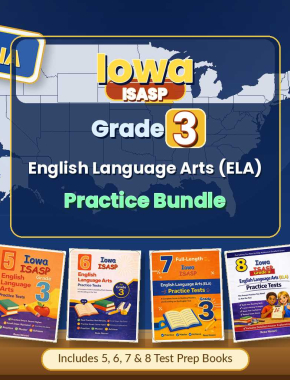
Second grade is the build-up year, and when your child is ready for what comes next, this bundle makes the jump to Grade 3 English feel easy. It includes four full practice-test books (5 + 6 + 7 + 8 tests) covering the Grade 3 reading, writing, and language skills just ahead, with explained answer keys and an instant PDF download.
Getting Ready for Grade 3 Math, Too? The Iowa ISASP Grade 3 Math Bundle
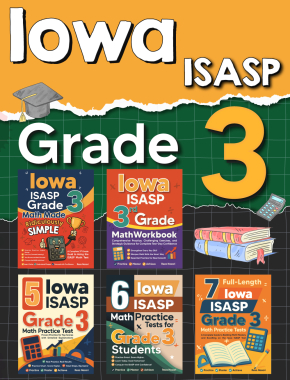
The same jump to Grade 3 happens in math. If your second grader could use a head start there as well, this Iowa ISASP Grade 3 Math bundle is the shortest path, workbook, study guide, and full practice tests in one instant download, with answer keys throughout.

Related to This Article
More math articles
- CLEP U.S. History I 024: Sugar and Stamp Acts and Constitutional Protest
- The Best Grade 3 ELA Practice Tests for Hawaii Students
- How to Write the Equation of a Cosine Graph?
- Free Grade 4 Math Worksheets: 43 Printable PDFs with Answers
- Digital Platforms: Revolutionizing Math Education
- Postwar Growth, Organized Labor, Automation, and the Service Economy
- North Carolina EOG Grade 8 Math Free Worksheets: Printable EOG-Ready Practice, Answers Included
- The Best Grade 8 ELA Practice Tests for Utah Students
- Montana MAST Grade 7 Math Worksheets: 95 Free Printable PDFs with Step-by-Step Keys
- Permutations & Combinations Practice (Free)










What people say about "Iowa Grade 2 English Worksheets: Free PDFs"?
No one replied yet.