The Best Grade 4 Math Book for New York Students
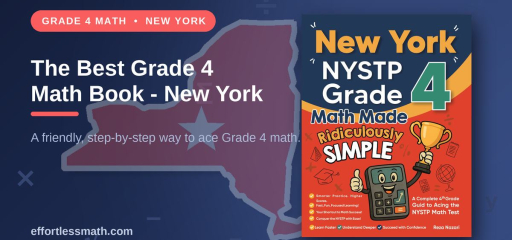
Fourth grade is the year math grows up for a New York student. The single-digit problems of the early grades give way to multi-digit multiplication, long division, and the first real work with fractions. It is the year math first asks for genuine effort.
How fourth grade goes shapes the years ahead. A student who masters these skills walks into fifth grade ready. The reassuring part is that fourth grade math is fully learnable, with clear teaching and steady practice.
What fourth grade math covers in New York
New York teaches math through its Next Generation Learning Standards, and fourth grade math is assessed each spring through the state testing program. The fourth grade course covers a real year of material: place value into the millions, multi-digit multiplication and division, equivalent and comparing fractions, adding and subtracting fractions, an introduction to decimals, factors and patterns, area and perimeter, angles, and classifying shapes.
Multi-digit operations and fractions are the heart of it, and they matter far beyond fourth grade, leading straight into fifth grade and middle school math. When a New York fourth grader struggles, it is rarely about ability. It is usually that a topic was taught too fast to land. A clear, patient book closes that gap.
The book we recommend for New York fourth graders
For a New York student working through fourth grade math, the book we recommend is New York NYSTP Grade 4 Math Made Ridiculously Simple.
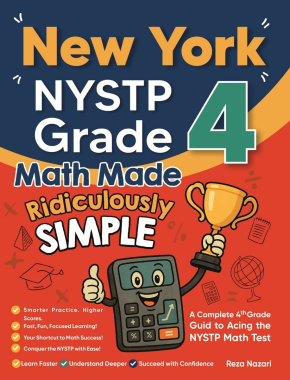
The book teaches the way a student working on their own needs. Each topic begins with a clear explanation in plain language. Then a worked example shows every step. Then the student practices, with answer keys for instant feedback. It follows New York’s standards and the topic order classrooms use.
Because the explanations are complete, the book teaches the student directly, with no tutor required. That makes it a dependable choice for homeschoolers, for summer catch-up, and for any student whose class has moved ahead of them.
Add the workbook for extra practice
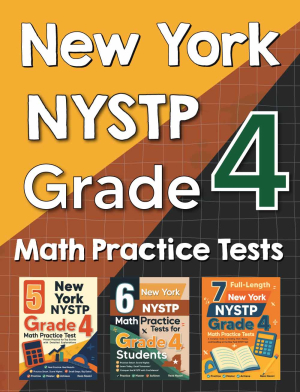
The book builds understanding. A workbook builds fluency. We pair the Made Ridiculously Simple book with the New York NYSTP 4th Grade Math Workbook.

The workbook gives a student plenty of extra practice, organized by topic and aligned to the way New York assesses fourth grade math. Once the book has explained a concept, the workbook is where it becomes automatic. Used together, they are a complete pair: one teaches, the other locks it in.
How to study with them
The routine that makes both books pay off is short and steady:
- Short, regular sessions beat long, rare ones. Half an hour a few times a week is plenty.
- Learn each topic from the book first, then drill it in the workbook.
- Use a pencil on every problem, and check answers as you go.
- Do not move on until a section feels easy. A weak spot left behind tends to resurface in fifth grade.
When fourth grade is done, fifth grade math comes next. Our guide to the best Grade 5 math book for New York students carries the same approach forward.
How to use this book during the school year
A strong math book works best when it becomes part of the weekly routine, not something saved only for the week before a test. For a New York Grade 4 student, the most useful rhythm is simple: preview the lesson, work through two or three examples, complete a short practice set, then review the missed problems while the mistake is still fresh.
Parents do not need to reteach the whole course. Their best role is to help the student slow down, show work clearly, and name the exact step that caused trouble. If the mistake is a computation error, assign a few fluency problems. If the mistake is a setup error, return to the explanation and copy one worked example before practicing again.
Skills to check before moving on
Before leaving a Grade 4 chapter, make sure the student can do more than recognize the topic. A student is ready to move forward when they can:
- multiply and divide multi-digit numbers without guessing
- use place value to explain large numbers, rounding, and estimation
- compare, simplify, and build equivalent fractions and decimals
- solve measurement, angle, area, perimeter, and shape problems with labeled work
- check an answer and explain why it is reasonable
This quick check prevents the most common problem in math study: moving ahead while the student only half-understands the previous lesson. That half-understanding often looks fine during easy practice, but it breaks down on mixed review and state-style questions.
A simple weekly study plan
| Day | What to do |
|---|---|
| Day 1 | Read the lesson, copy one worked example, and talk through the steps. |
| Day 2 | Complete a short practice set without rushing. Mark every uncertain problem. |
| Day 3 | Review missed questions, correct the work, and write one sentence explaining each error. |
| Day 4 | Do mixed review so older skills stay active while new topics are added. |
| Day 5 | Try a short timed set to build focus and confidence. |
This schedule is intentionally simple. Consistency matters more than long sessions. Twenty to thirty focused minutes several times a week usually produces better results than one long study session that leaves the student tired and frustrated.
What to do if your child is already behind
If your child is missing earlier skills, do not rush through the current chapter just to stay on pace. Start with the first lesson that feels shaky, rebuild that foundation, and then return to the current assignment. In math, catching up usually means repairing one small skill at a time, not trying to relearn the whole year at once.
A good sign of progress is not simply getting more answers correct. It is seeing cleaner work, fewer skipped steps, and better explanations. When a student can show the process clearly, they are much more likely to handle New York's classroom work, homework, and year-end assessment questions with confidence.
Used this way, the book becomes more than a product recommendation. It becomes a practical study system: learn the lesson, practice the skill, correct mistakes, and keep old topics alive until the student is ready for the next grade level.
Questions New York families ask
How is fourth grade math tested in New York?
Fourth grade math is assessed each spring through the state’s grade-level testing program. The skills it checks lead directly into fifth grade and middle school math.
Why does fourth grade math matter so much?
It is the year math gets serious, with multi-digit multiplication, division, and the first real fractions. Those skills are the foundation of fifth grade and everything after.
Do I need both the book and the workbook?
They serve different jobs. The book teaches each concept clearly; the workbook provides the extra practice that makes it stick. Together they are a complete study pair.
Can my child use these without a tutor?
Yes. The book teaches the student directly, with self-contained explanations and answer keys, and the workbook is built for independent practice.
The bottom line
Fourth grade is where math grows up, and in New York it sets up fifth grade and the years beyond. New York NYSTP Grade 4 Math Made Ridiculously Simple teaches it clearly, and the matching workbook makes it stick. Get this year right, and the math ahead begins on solid ground.

Related to This Article
More math articles
- Unraveling More about Limits at Infinity
- How to Identify Linear vs. Nonlinear Functions? (+FREE Worksheet!)
- Georgia Georgia Milestones Algebra 1 Free Worksheets: Free Printable Algebra 1 PDFs Covering Every Skill
- Take GED Test Online for Free
- Global Inequality and Development
- Labouchere Cancellation System: The Math of Why ‘Eraser Tape’ Fails
- FREE 7th Grade FSA Math Practice Test
- Patient-Care Equipment Basics
- What is the Best Algebra Book in the World?
- Fitting a Line to Data: Complete Guide with Video and Examples








What people say about "The Best Grade 4 Math Book for New York Students"?
No one replied yet.