Volume Practice — Prisms & Cubes (Free Drills)

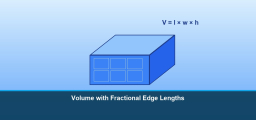
Practice finding volume with this free tool. It generates rectangular prisms and cubes, checks your answer instantly, and shows the V = length × width × height calculation.
How the practice works
- Pick a difficulty.
- Find the volume and press Check.
- Read the feedback and step-by-step solution, then press Next.
The formula
The volume of a rectangular prism is length × width × height; a cube is side cubed. The solution panel states the formula and substitutes the dimensions.
Frequently asked questions
How do you do volume problems?
To find the volume of a rectangular prism, multiply length × width × height. A box 5 cm long, 3 cm wide and 2 cm tall has V = 5 × 3 × 2 = 30 cm³. For a cube, multiply the side by itself three times, so a cube with 4-inch sides has V = 4³ = 64 in³. Always label the answer in cubic units.
How can I practice the volume of a rectangular prism?
Use the free volume practice tool, which creates a new rectangular prism or cube each time you press Next. Write the three dimensions on scratch paper, multiply them, and then press Check. If your answer is off, compare your work with the solution panel, which shows the formula and the substituted numbers, and try one more prism before moving on.
What volume practice problems are right for 5th grade?
Fifth graders learn volume as the number of unit cubes that fill a solid, then use V = l × w × h and V = B × h for rectangular prisms. Start on the easier setting with small whole-number dimensions, such as 2 × 3 × 4 = 24 cubic units, then move to larger numbers once you can multiply three factors quickly and accurately.
How do you find the volume of composite figures?
Split the solid into rectangular prisms that do not overlap, find the volume of each one, and add them. For example, an L-shaped solid made from a 4 × 3 × 2 prism (24 cubic units) and a 2 × 3 × 2 prism (12 cubic units) has a total volume of 36 cubic units. Getting fast with single prisms first makes composite figures much easier.
How do I learn volume?
Start with the idea that volume counts how many unit cubes fit inside a shape. Stacking blocks into a 2 × 2 × 2 cube shows 8 cubes, which matches 2 × 2 × 2 = 8. Once that picture makes sense, the formula length × width × height feels natural. Then practice a few prisms and cubes each day until the multiplication becomes automatic.
Read the full lesson: learn the method step by step.
How to use Volume Practice, Prisms & Cubes as real practice
Volume Practice, Prisms & Cubes works best when it is used as a short, focused study session rather than a quick click-through activity. The goal is not simply to finish the problems. The goal is to notice which skills feel automatic, which skills still need review, and which mistakes happen when you rush.
Start with a clean piece of scratch paper. For each item, solve each item on paper first, then use the page to check your answer and study the explanation. If you get something wrong, do not immediately move on. Write the correct step, circle the part that caused the mistake, and try one similar item before continuing. That small correction habit is what turns an online practice activity into lasting math improvement.
A three-round study routine
| Round | What to do | Goal |
|---|---|---|
| Round 1 | Work slowly and focus on accuracy. Use notes if the topic is still new. | Understand the method. |
| Round 2 | Repeat missed items or similar problems without looking at the previous answer. | Fix the mistake. |
| Round 3 | Try a short timed set after the skill feels familiar. | Build speed and confidence. |
This routine is simple, but it solves a common problem: students often practice only until an answer looks familiar. Real readiness means you can solve a fresh problem without hints, explain the first step, and check whether the final answer is reasonable.
What to write down while you practice
Keep a tiny mistake log next to the activity. You only need three columns: the topic, the mistake, and the correction. For example, a student might write “fractions,” “forgot common denominator,” and “rewrite both fractions before adding.” A log like that is more useful than a long list of scores because it tells you exactly what to review next.
- If the mistake is a fact or formula, review it before the next round.
- If the mistake is a setup error, copy one worked example and label each step.
- If the mistake is from rushing, slow down and require written work for the next five items.
- If the same mistake appears twice, stop and review that topic before continuing.
When you are ready to move on
You are ready for the next topic when you can get several items correct in a row and explain why the method works. A score by itself is helpful, but it is not the whole story. You should also be able to describe the rule, formula, or pattern that the activity is testing.
For test preparation, come back to Volume Practice, Prisms & Cubes after a day or two and try a fresh round. If the skill still feels easy after a short break, it is much more likely to stay with you during a quiz, unit test, or standardized test. If it feels shaky, that is useful information too: it tells you exactly where to spend your next study session.
Study tips for parents and teachers
When using this page with a student, ask for the reasoning before the answer. Questions such as “What is the first step?”, “Why did you choose that operation?”, and “How can you check it?” help students build mathematical language. That matters because many test questions measure more than calculation; they also measure whether the student can read the problem, choose a method, and explain a result.
Short sessions are usually best. Ten to fifteen minutes of careful practice can be more productive than a long session full of guessing. End by naming one skill that improved and one skill to review next time. That keeps practice positive, specific, and easy to continue.
Your next practice step
After finishing Volume Practice, Prisms & Cubes, choose one next step instead of trying to study everything at once. If the activity felt easy, increase the challenge by working faster, mixing in older topics, or explaining each answer without notes. If it felt difficult, lower the pressure: redo a smaller set, copy one correct example, and focus on accuracy before speed.
A useful rule is to review the same skill three times: once today, once tomorrow, and once later in the week. Spaced review is especially helpful for math because it tells you whether the method truly stuck or only felt familiar right after practice. Use this practice activity as one stop in that review cycle, then return to it when you want to check retention.

Related to This Article
More math articles
- The Ultimate College Mathematics Placement Course (+FREE Worksheets & Tests)
- 7th Grade ACT Aspire Math FREE Sample Practice Questions
- How is the TABE Test Scored?
- How to Find Fractions of Time Units
- Best equipment for online math teachers
- Symbolic speech
- Free Grade 3 English Worksheets for Connecticut Students
- Free Printable Grade 2 Math Worksheets for Nebraska
- What Skills Do I Need for the CHSPE Math Test?
- Grade 2 Math Practice for Delaware Second Graders







What people say about "Volume Practice: Prisms and Cubes"?
No one replied yet.