The Best Grade 2 English Worksheets for Wyoming Students
The Best Grade 2 English Worksheets for Wyoming Students: a free, printable set you can download and use right away, with answer keys, organized by topic so students can practice one skill at a time and teachers can assign exactly what a lesson needs.
54 free, printable ELA practice pages, built for the year before WY-TOPP testing.
Hand a second grader a book about something they love, horses, dinosaurs, the planets, and watch what happens. They don’t just read it. They start narrating it back to you, half from the page and half from memory, sure that you simply have to know that Jupiter is the biggest planet of all.
That eager retelling is second grade doing its job. First grade was all about decoding, the patient work of turning letters into sounds and sounds into words. By second grade, the reading runs smoother and a child has room to think while they read. They wonder why a character behaved a certain way. They scoop up facts from nonfiction. They write down opinions and explanations of their own. Wyoming second graders practice this every week, story by story and book by book.
This page gathers free Grade 2 English worksheets to give that growth some solid practice. Reading, writing, grammar, spelling, vocabulary, the full range. Each worksheet is a printable PDF with an answer key built right in. No account to create. No email to enter. No trial that quietly becomes a charge. Click, print, and you’re ready to go.
Use a page for ten minutes after supper. Pass a stack to a tutor. Photocopy one for every kid in a Cheyenne or Casper classroom. It’s free, and it’s yours to use however suits you.
What’s inside this collection
These worksheets cover the Grade 2 English Language Arts standards Wyoming has adopted, the reading, writing, and language skills a second grader works through across a normal school year. Stories and poems. Articles about real things. Spelling. Grammar. Picking the word that fits the moment.
The collection is sorted into eight strands, and each worksheet is built around a single skill. That’s intentional. A second grader gets far more from twelve focused minutes on one skill than from a thick packet that touches everything and settles on nothing. Find the skill your child needs this week, and let the rest wait.
Reading: Literature
- Asking and Answering Questions About Stories, pulling who, what, and why straight from a story
- Central Message, Lesson, or Moral, naming the lesson a story is quietly handing the reader
- How Characters Respond to Events, when something happens, what the character does about it
- Rhythm and Meaning in Stories, Poems, and Songs, catching the beat and rhyme, and why a writer used them
- The Structure of a Story, beginning, middle, end, and how the pieces fit together
- Points of View of Characters, characters in one story wanting different things
- Using Illustrations to Understand Stories, reading the picture as part of the story, not just decoration
- Comparing Two Versions of the Same Story, one tale told two ways, and spotting what changed
Reading: Nonfiction
- Asking and Answering Questions About Nonfiction, finding real answers in a true-facts text
- Main Topic and Focus of Paragraphs, answering what a section is mostly about
- Connections Between Events, Ideas, and Steps, seeing how one idea or step leads to the next
- Nonfiction Vocabulary, the science and history words found in true books
- Text Features, headings, bold print, captions, and each one’s job
- The Author’s Main Purpose, whether the writer set out to teach, explain, or persuade
- How Images Help a Text, when a photo or diagram makes the words clearer
- How Reasons Support the Author’s Points, the because behind an author’s claim
- Comparing Two Texts on the Same Topic, two books on one subject, and what each adds
Foundational Reading Skills
- Long and Short Vowels, the small shift that turns cap into cape
- Vowel Teams, two vowels working together, like ea and oa
- Decoding Two-Syllable Words, breaking longer words into readable chunks
- Prefixes and Suffixes, add-ons like un- and -ful that change a word
- Words with Tricky Spelling Patterns, spellings that don’t quite follow the rules
- Irregularly Spelled Words (Sight Words), words like said and was learned by sight
- Reading Fluency: Accuracy, Rate, and Expression, reading smoothly, at a good pace, with feeling
- Self-Correcting While You Read, catching a sentence that stopped making sense
Writing
- Opinion Writing, saying what you think and backing it with a reason
- Informative and Explanatory Writing, teaching a reader something true
- Narrative Writing, telling a story in order, with details that bring it alive
- Revising and Editing, going back through a draft to make it stronger
- Shared Research Projects, digging into a topic together and writing the findings down
- Gathering Information to Answer a Question, finding facts that actually answer the question asked
Speaking and Listening
- Recounting Ideas from a Read-Aloud, listening closely, then retelling the parts that count
- Asking and Answering Questions About a Speaker, good questions to ask when someone is presenting
- Telling a Story or Sharing an Experience, speaking clearly enough for a listener to follow
Grammar
- Collective Nouns, words for groups, like team, flock, and bunch
- Irregular Plural Nouns, when foot becomes feet, never foots
- Reflexive Pronouns, myself, yourself, herself, and where they belong
- Past Tense of Irregular Verbs, went, ate, ran, verbs that skip -ed
- Adjectives and Adverbs, words that describe things and words that describe actions
- Expanding and Rearranging Sentences, stretching short sentences into fuller, clearer ones
Capitalization, Punctuation, and Spelling
- Capitalizing Holidays, Products, and Place Names, which words get a capital letter and why
- Commas in Greetings and Closings of Letters, where the comma goes in Dear Grandma,
- Apostrophes: Contractions and Possessives, don’t and Sam’s, two jobs for one little mark
- Spelling Patterns, the patterns that make new words easier to spell
- Using Reference Materials to Check Spelling, looking a word up instead of guessing
Vocabulary and Word Study
- Formal and Informal English, talking to a friend vs. Writing a note to the principal
- Context Clues, using the rest of the sentence to figure out a new word
- Prefixes, how re- and un- flip a word’s meaning
- Root Words and Word Endings, finding the base word hiding in a longer one
- Compound Words, two words snapping together into one, like sunflower
- Using Glossaries and Dictionaries, finding a word’s meaning the grown-up way
- Real-Life Word Connections, linking new words to things kids already know
- Shades of Meaning, the difference between warm, hot, and boiling
- Using Describing Words and New Vocabulary, putting fresh words to work in writing and speaking
Getting real value from these
There’s a quiet trap with free worksheets. Printing a tall stack feels like getting something done, and then the stack just gathers dust on the counter. Here’s a simpler plan that genuinely teaches.
One worksheet at a time. One skill, one sitting. A second grader who does a single page carefully, and talks over the misses, learns more than one who sprints through five.
Read the Quick Review box together. That box at the top of the worksheet is the real lesson, not decoration. Read it aloud, work the example together, then hand over the pencil.
Check the answer key side by side. Skip the silent grading. Sit together and read why an answer is right. Those explanations are where the worksheet keeps teaching after the pencil goes down.
Come back to weak skills later. If your child misses several on Author’s Main Purpose, don’t redo it that night. Wait about a week, then try a fresh worksheet on the same skill. Spacing it out is what makes it stick.
A word about WY-TOPP
If you’re a Wyoming parent, you may already know about WY-TOPP, the Wyoming Test of Proficiency and Progress. Here’s the part that should ease any worry: Wyoming students don’t take the WY-TOPP English language arts summative test in second grade. It begins in third grade.
So second grade isn’t a testing year. It’s the foundation year, the season when a child builds the reading and writing muscles WY-TOPP will eventually ask about. A second grader who reads smoothly, finds the main idea, and writes a clear sentence is already in great shape for what’s ahead. No cramming. Just steady, friendly practice, one skill at a time.
If you want a starting point, Main Topic and Focus of Paragraphs and Context Clues quietly support nearly everything else. Begin there.
Questions Wyoming families ask
Do these match what my child’s teacher is doing? They should line up closely. Each worksheet targets the Grade 2 English Language Arts standards Wyoming has adopted, the same skills shaping classroom lessons across the state.
Is this genuinely free? Yes, every page. No account, no email, no trial that quietly turns into a bill. The PDF opens, you print, and the answer key is included.
My second grader sighs at the word “worksheet.” Any advice? Keep it short and make it shared. Sit right beside them. Ten focused minutes beats a long, lonely session, and letting them choose the topic helps.
Can I use these for homeschooling? Absolutely. They work well as the main practice for a skill or as a quick check after a longer lesson. Wyoming homeschool families use them at the kitchen table all the time.
My child guesses at new words instead of working them out. What helps? Try Context Clues alongside Decoding Two-Syllable Words. Together they give a second grader two reliable tools instead of a guess, what the word looks like, and what the sentence says it should mean.
What if my child is already reading above grade level? Lean into the thinking skills. Comparing Two Versions of the Same Story and Shades of Meaning give a strong reader something real to chew on while staying age-appropriate.
Before you go
If you print a worksheet tonight and it turns up half-finished and a little crumpled by morning. That’s fine. That’s ordinary second grade. Try a shorter one tomorrow. Try the same skill again next week. The goal was never a flawless page. The goal is a kid who keeps practicing and keeps getting steadier. Come back whenever you need the next one.
Ready for Grade 3 English? The Wyoming WY-TOPP Grade 3 English Bundle
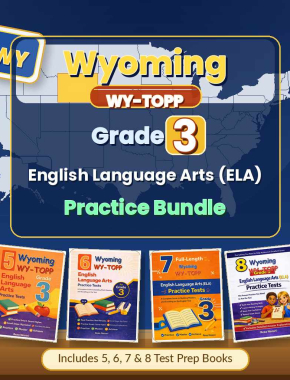
Second grade is the build-up year, and when your child is ready for what comes next, this bundle makes the jump to Grade 3 English feel easy. It includes four full practice-test books (5 + 6 + 7 + 8 tests) covering the Grade 3 reading, writing, and language skills just ahead, with explained answer keys and an instant PDF download.
Getting Ready for Grade 3 Math, Too? The Wyoming WY-TOPP Grade 3 Math Bundle
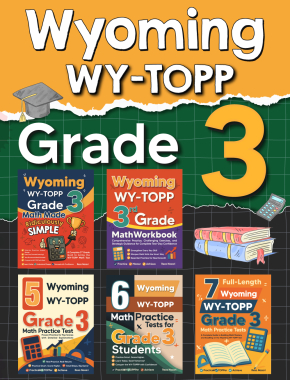
The same jump to Grade 3 happens in math. If your second grader could use a head start there as well, this Wyoming WY-TOPP Grade 3 Math bundle is the shortest path, workbook, study guide, and full practice tests in one instant download, with answer keys throughout.

Related to This Article
More math articles
- How to Find Arc Length and Sector Area? (+FREE Worksheet!)
- New Mexico NM-MSSA Grade 8 Math Free Worksheets: Printable Grade 8 Math PDFs with Worked Solutions
- Keep short-run adjustment separate from long-run adjustment
- How to Solve Two-variable Linear Equations Word Problems
- 6th Grade ILEARN Math Worksheets: FREE & Printable
- Treasure Hunt in Geometry: How to Navigate Through Polygons’ Scale Drawings
- Reveal the Secrets: “TSI Math for Beginners” Detailed Solution Manual
- Introduction to Sequences and Series: Fundamentals, Types, and Applications
- The Best Grade 3 Math Book for North Dakota Students
- The Best Grade 2 Math Worksheets for New Hampshire Students










What people say about "Wyoming Grade 2 English Worksheets: Free PDFs"?
No one replied yet.