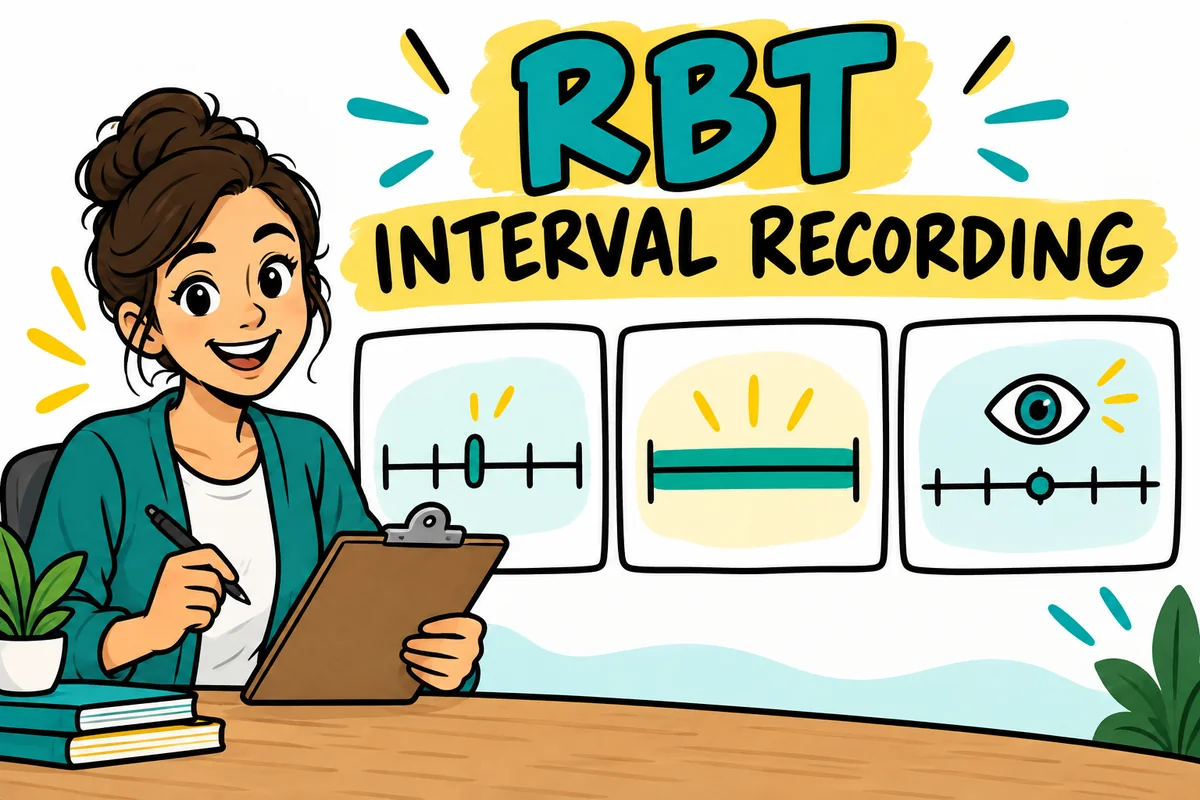
RBT Old Task List vs Current Outline: Study Audit (2027 Prep)
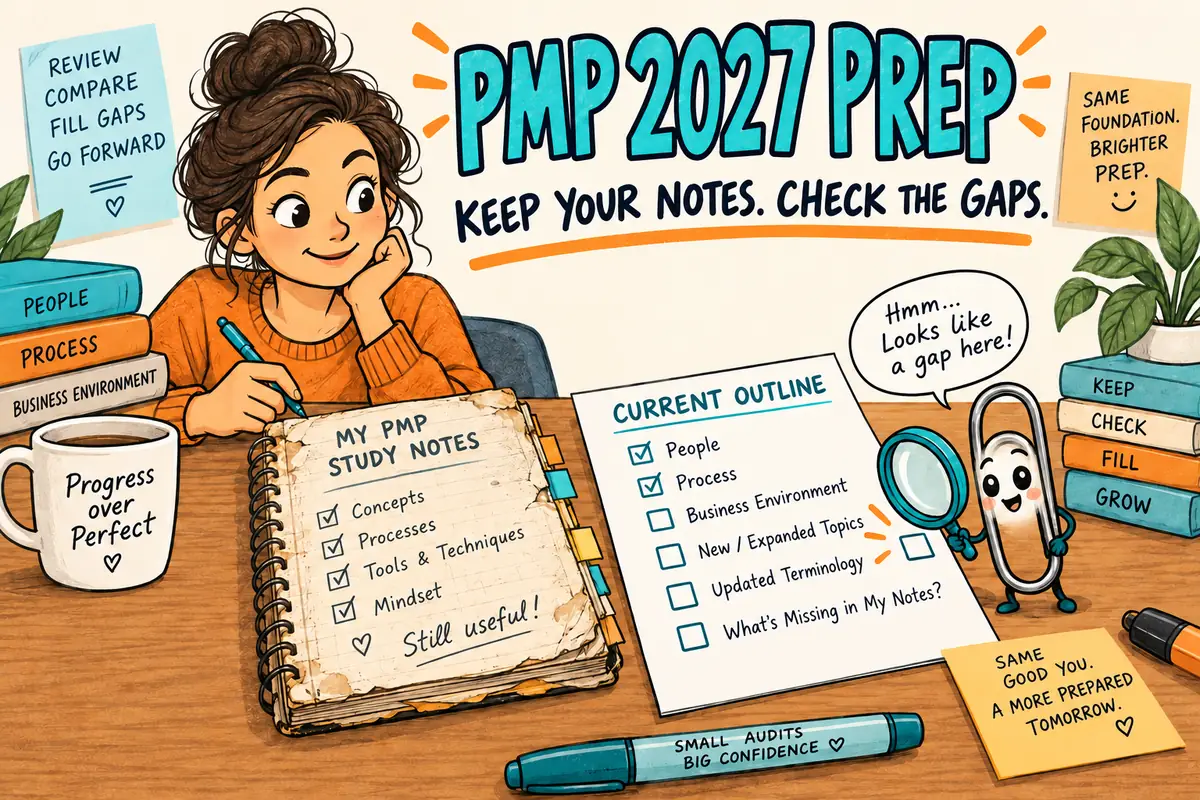
Before replacing your old RBT notes, put them beside the current official outline. Some lessons will still help. The important work is finding where the labels, coverage and study tasks need attention, rather than assuming a new year on the cover proves everything was updated.
For examinations from January 1, 2026, use the RBT Test Content Outline, third edition. The second-edition Task List applied through December 31, 2025. Those dates appear on the BACB outline editions and effective dates page. This tutorial gives you a practical way to audit an older resource without buying another course simply because its title includes 2026.
Choose the exam outline before comparing your notes
Open the BACB third-edition RBT outline directly from the BACB site and save its link beside your study plan. You need the RBT document. A BCBA outline belongs to a different certification, even if a search engine shows it nearby.
Your application approval date does not let you choose an earlier examination outline. The current BACB RBT Handbook says candidates test under the current edition, including when a new edition takes effect during an active authorization period. Check your individual authorization deadline in the BACB portal separately.
Find the edition named in your existing material by checking its introduction, table of contents and resource notes, especially if the listing only says "updated." An older edition is a reason to compare coverage carefully. It does not establish that every explanation in the book is wrong.
Use current domains as your filing system
The third-edition outline contains 43 tasks across six domains. The table below gives the domain names and scored-question counts from the current official outline. The counts add to 75. BACB third-edition RBT outline
Move your study headings into these current folders before assigning lessons to them. Keep the old chapter references handy. You will need to find the material you already own when checking whether a task is covered, because a renamed folder cannot establish that coverage.
| Domain | Scored questions |
|---|---|
| A. Data Collection and Graphing | 13 |
| B. Behavior Assessment | 8 |
| C. Behavior Acquisition | 19 |
| D. Behavior Reduction | 14 |
| E. Documentation and Reporting | 10 |
| F. Ethics | 11 |
Match each lesson to current task wording
The second-edition Measurement area placed continuous measurement under A-2 and discontinuous measurement under A-3, while the third edition places those topics under A.1 and A.2. Compare the descriptions directly. Keep the BACB second-edition RBT Task List and BACB third-edition RBT outline open together so you can check the topic behind each code.
That shift makes a simple number match unreliable. If an old flashcard says A-2 and describes frequency, filing it under current A.2 would put continuous measurement into a discontinuous-measurement folder. The explanation might still be useful, but its index needs correcting.
Choose one chapter to try this with. Write its page number beside the current task it actually teaches, leaving a blank when you cannot locate relevant coverage. Allow imperfect matches. A lesson can contribute to several tasks, and you may need material from different lessons to understand a single task well enough to explain it.
Check what the lesson asks you to do
A vocabulary definition can be accurate and still leave a study gap. Under current A.6, the learner needs to calculate and summarize data, including rate, mean duration and percentage. Current A.7 concerns trends in graphs, and A.8 concerns risks from unreliable data collection and poor procedural fidelity. BACB third-edition RBT outline
Suppose your notes define frequency and show a tally of six occurrences. Keep that explanation if it is accurate. Then check whether your material also makes you relate a count to an observation period and explain the unit of the resulting rate.
For an invented five-minute observation, six occurrences give 6 / 5 = 1.2 occurrences per minute. Writing only "1.2" loses the unit. A useful study note records both the calculation and what that number means, so you can explain it without pointing back to a memorized answer.
This example identifies a possible gap in a particular lesson, not a claim that rate was invented for the 2026 exam. An older resource may already teach it elsewhere. Search the index before marking the task missing.
Build a coverage record you can act on
Use the blank study-coverage organizer as a place to record your own checks. It is a blank study organizer with a row for each current task code, not an official BACB crosswalk or an assessment of your eligibility. Keep client information out of it.
Start with the location. Add a short note about what you can explain or demonstrate in a study setting, then write the next action if coverage is incomplete. Leave unlocated coverage blank. That blank means you still need to find relevant material, rather than proving the topic is absent from the resource.
Be precise about the gap. "Review measurement" leaves too much to decide when you sit down tomorrow. "Find an explanation of mean duration and work through the units" gives you a specific task you can finish and check.
Update the row afterward. A course-completion checkbox tells you that you watched a lesson, while your coverage record should help you see whether the lesson addressed the current task. Keep those two records distinct.
Separate exam preparation from training eligibility
Matching a study guide to the exam outline does not establish that a 40-hour training meets current application requirements. Those are separate checks. The current BACB RBT Handbook directs applicants to confirm that training meets the 2026 requirements, and the BACB 2026 transition guidance explains how timing affects older approvals and training.
For example, that transition guidance distinguishes an application approved before January 1, 2026 from a new application under the 2026 requirements. Someone with an earlier approval still within its authorization period should read that specific guidance rather than assume that every old certificate requires the same action.
If your own application or certificate creates uncertainty, use the BACB's current instructions and contact the appropriate provider or BACB channel. An individual application needs an individual decision, and your coverage spreadsheet cannot replace the competency assessment required for certification.
Set priorities without dropping a domain
Use the official domain weights as one planning input, alongside the gaps you found. They describe the scored examination blueprint, not a promise about which exact topics you will see. Check every domain.
Imagine that your organizer shows several missing graphing explanations but strong coverage of an area you have already reviewed twice. It makes sense to spend your next focused session repairing the graphing gap. You can then revisit another domain rather than rewriting all of your notes from the beginning.
Keep your study practice within the role you are preparing for. The current BACB RBT Handbook describes RBT services as supervised work. Reading an outline or passing a practice exercise does not authorize you to choose treatment procedures or provide services independently.
Return to the official document as you study
Keep the outline link and the date you checked it at the top of your organizer. Recheck the official documents before making application decisions, especially when a saved PDF and the BACB website appear to disagree. A filename can stay familiar while the document behind it changes.
Our RBT study hub brings the broader study resources together. Start with the gap you wrote down, locate a relevant explanation, and return to the current task description after studying it. Leave the row open if you still cannot explain what the task requires.
BACB documents checked October 11, 2026. Independent study audit, not an official crosswalk, training approval or eligibility determination. Numerical example is hypothetical. 2027 preparation edition. Official specifications were checked on October 11, 2026. Confirm current rules with the exam provider before a later appointment.

Related to This Article
More math articles
- Stretching the Line: How to Multiply Fractions by Whole Numbers with Number Lines
- The Best Algebra 1 Book for Colorado Students
- FREE CHSPE Math Practice Test
- How to Solve Problems Using Venn Diagrams
- Waves, Heat, and Temperature
- 9 Best Math Websites for Teachers and Students
- Power Series Integration: Fundamentals, Step-by-Step Methods, and Applications
- The Challenge for The Future of Math Education
- Full-Length AFOQT Math Practice Test-Answers and Explanations
- What are the 12 Algebraic Formulas?








What people say about "RBT Old Task List vs Current Outline: Study Audit (2027 Prep) - Effortless Math"?
No one replied yet.