Free Printable Grade 2 English Worksheets for Delaware
Free Printable Grade 2 English Worksheets for Delaware: a free, printable set you can download and use right away, with answer keys, organized by topic so students can practice one skill at a time and teachers can assign exactly what a lesson needs.
Reading, writing, and grammar practice for Delaware second graders, no login, no paywall.
Watch a second grader read a chapter book for the first time and you’ll see something quietly amazing. They keep going past a hard word. They flip back a page to check something. They gasp at a plot twist. They’re not just decoding letters anymore. They’re living inside a story, the way readers do.
Second grade is the year that shift happens. Kids stop spending all their effort just getting words off the page and start thinking about what those words mean. They read stories and nonfiction, build vocabulary, learn grammar and punctuation, and take their first real swings at writing. It’s the foundation year, the one the later grades are built on top of.
These free Grade 2 English worksheets were gathered for Delaware families and teachers. Each is a printable PDF with a full answer key, and not one of them asks for a signup or an email address. Click the title, the file opens, you print it. Use them at home, in a classroom in Wilmington or Dover, or wherever your second grader does their schoolwork.
The skills here follow the Grade 2 English Language Arts standards Delaware has adopted, so the practice lines up with what your child’s teacher is covering right now.
What’s here, and how it’s organized
The worksheets are sorted into eight strands, a clean way of covering all of second-grade English. There’s reading literature and reading nonfiction. There’s the hands-on work of decoding words. There’s writing, speaking and listening, grammar, the rules of capital letters and punctuation, and growing a vocabulary.
Each worksheet focuses on one skill. That’s deliberate. A second grader who gives full attention to a single idea will remember it. A second grader who hurries through a packet usually won’t. So pick a strand, pick a page, and you’re ready.
Reading: Literature
- Asking and Answering Questions About Stories, answer who, what, where, when, and why
- Central Message, Lesson, or Moral, find the lesson tucked inside a story
- How Characters Respond to Events, see how a character feels and acts when the plot turns
- Rhythm and Meaning in Stories, Poems, and Songs, hear how a beat or rhyme adds to the meaning
- The Structure of a Story, connect the start, the middle, and the end
- Points of View of Characters, notice that characters can see things differently
- Using Illustrations to Understand Stories, pull clues from the pictures
- Comparing Two Versions of the Same Story, spot what changes when a tale is retold
Reading: Nonfiction
- Asking and Answering Questions About Nonfiction, find facts inside an information text
- Main Topic and Focus of Paragraphs, say what a paragraph is mainly about
- Connections Between Events, Ideas, and Steps, follow how ideas and steps link together
- Nonfiction Vocabulary, learn the special words science and history use
- Text Features, use headings, captions, and bold print to navigate
- The Author’s Main Purpose, figure out why the writer wrote the text
- How Images Help a Text, see what a photo or diagram explains
- How Reasons Support the Author’s Points, match reasons to the points they back up
- Comparing Two Texts on the Same Topic, compare two texts about one topic
Foundational Reading Skills
- Long and Short Vowels, hear the difference between rid and ride
- Vowel Teams, read vowel pairs like ee, oa, and ai
- Decoding Two-Syllable Words, break a long word into syllables you can say
- Prefixes and Suffixes, read add-ons like re- and -less
- Words with Tricky Spelling Patterns, handle spellings that bend the rules
- Irregularly Spelled Words (Sight Words), learn the words that won’t sound out
- Reading Fluency: Accuracy, Rate, and Expression, read smoothly, at a good pace, with feeling
- Self-Correcting While You Read, catch a slip and back up to fix it
Writing
- Opinion Writing, say what you think and give a reason
- Informative and Explanatory Writing, explain a topic clearly to a reader
- Narrative Writing, write a story that moves in order
- Revising and Editing, return to a draft and improve it
- Shared Research Projects, explore a topic together
- Gathering Information to Answer a Question, collect facts that answer a question
Speaking and Listening
- Recounting Ideas from a Read-Aloud, retell the ideas from something read aloud
- Asking and Answering Questions About a Speaker, listen carefully and ask a thoughtful question
- Telling a Story or Sharing an Experience, share out loud so others can follow
Grammar
- Collective Nouns, group words, like flock and family
- Irregular Plural Nouns, plurals like mice, geese, and children
- Reflexive Pronouns, using myself, yourself, and itself
- Past Tense of Irregular Verbs, come becomes came, say becomes said
- Adjectives and Adverbs, words that describe things and actions
- Expanding and Rearranging Sentences, stretch a sentence or rearrange it
Capitalization, Punctuation, and Spelling
- Capitalizing Holidays, Products, and Place Names, give capitals to the right names
- Commas in Greetings and Closings of Letters, place the comma in a friendly letter
- Apostrophes: Contractions and Possessives, won’t and the dog’s leash, made clear
- Spelling Patterns, spell new words using patterns you know
- Using Reference Materials to Check Spelling, check a spelling instead of guessing
Vocabulary and Word Study
- Formal and Informal English, knowing when to be casual and when to be careful
- Context Clues, use nearby words to figure out a new one
- Prefixes, how a beginning like un- changes a word
- Root Words and Word Endings, find the base word inside a bigger one
- Compound Words, two words joined into one, like campfire
- Using Glossaries and Dictionaries, look words up and use what you find
- Real-Life Word Connections, connect new words to everyday life
- Shades of Meaning, the difference between small, tiny, and miniature
- Using Describing Words and New Vocabulary, use lively new words when speaking and writing
Getting real use from these worksheets
A free worksheet is only worth as much as the way you use it. Print a whole pile and you get a pile. Use one thoughtfully and you get genuine learning. The plan is short and simple.
Print one worksheet. Just one skill at a time. That’s the right size for a second grader’s attention. A fat packet looks productive but ends up rushed and forgotten.
Read the Quick Review box at the top together first. It’s a small lesson, not decoration. Read it out loud, talk over the example with your child, then hand the pencil to them.
After the page is done, check the answer key side by side. Skip the grading mindset. When an answer is wrong, read the explanation together and find what tripped your child up. That quiet conversation is where the real teaching happens.
When a skill stays shaky, leave it for now and come back in about a week with a different worksheet on the same idea. Spreading practice out over time helps it take hold far better than drilling it twice in one sitting.
A straight word about DeSSA
If you found this page by searching for Grade 2 English practice, DeSSA, the Delaware System of Student Assessments, may be on your mind. Here’s the reassuring part: DeSSA’s English language arts test begins in third grade. Your second grader won’t take it this year.
That makes Grade 2 the foundation year. With no test on the calendar, there’s a full, calm year to build reading and writing skills steadily. Every worksheet your child finishes, every main topic named, every two-syllable word decoded, every apostrophe placed correctly, adds another solid piece to the base. The kids who walk into the Grade 3 DeSSA confident and ready are nearly always the ones who built carefully the year before. No cramming required. Just regular, friendly practice while time is on your side.
Questions Delaware families ask
Are these aligned with what’s taught in Delaware? Yes. Each worksheet targets a skill from the Grade 2 English Language Arts standards Delaware has adopted.
My second grader reads above grade level. What should I give them? Try Comparing Two Texts on the Same Topic and Using Describing Words and New Vocabulary. Both stretch a strong reader while staying right for second grade.
How many worksheets a week is enough? Two or three short sessions is plenty. A steady rhythm beats a heavy week followed by nothing.
Can these support a child who’s behind in reading? Yes. That’s exactly what the foundational strand is for. Start with Long and Short Vowels and Irregularly Spelled Words, keep sessions short, and let small wins build confidence.
One last thought
If your second grader finishes a worksheet today and forgets it by tomorrow, that’s totally normal, seven-year-old memory works that way. The goal was never a finished stack. It was the practice, the conversation, and one small “I get it now.” Print a worksheet whenever your week allows, and come back for the next. They’re free, and they’ll be right here whenever you need them.
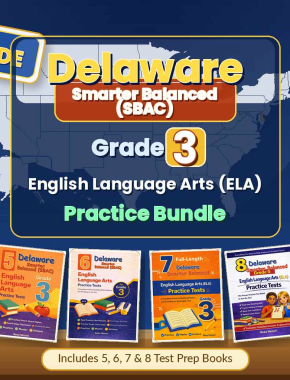
Ready for Grade 3 English? The Delaware DeSSA Grade 3 English Bundle
Second grade is the build-up year, and when your child is ready for what comes next, this bundle makes the jump to Grade 3 English feel easy. It includes four full practice-test books (5 + 6 + 7 + 8 tests) covering the Grade 3 reading, writing, and language skills just ahead, with explained answer keys and an instant PDF download.
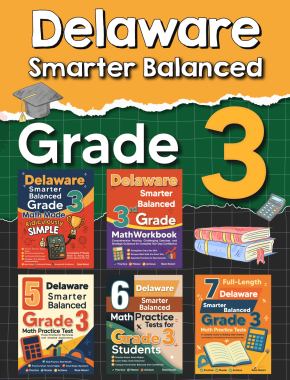
Getting Ready for Grade 3 Math, Too? The Delaware DeSSA Grade 3 Math Bundle
The same jump to Grade 3 happens in math. If your second grader could use a head start there as well, this Delaware DeSSA Grade 3 Math bundle is the shortest path, workbook, study guide, and full practice tests in one instant download, with answer keys throughout.

Related to This Article
More math articles
- How to Understand Convergent and Divergent Series
- Chapter 38: Political Participation
- 7th Grade MAP Math FREE Sample Practice Questions
- Student speech
- The Best Grade 7 ELA Practice Tests for West Virginia Students
- Analysis, Not Summary
- How to Master Polar Coordinates: A Comprehensive Guide to Calculating Rate of Change in Polar Functions
- Controls redistribute and destroy surplus
- How to Solve Perfect Square Trinomial?
- Grade 4 Grammar and Revision Skills: Sentence Variety, Precision, and Editing Habits











What people say about "Delaware Grade 2 English Worksheets: Free PDFs"?
No one replied yet.