CPA TCP Basis and Distributions: Build a Transaction Timeline (2027 Prep)

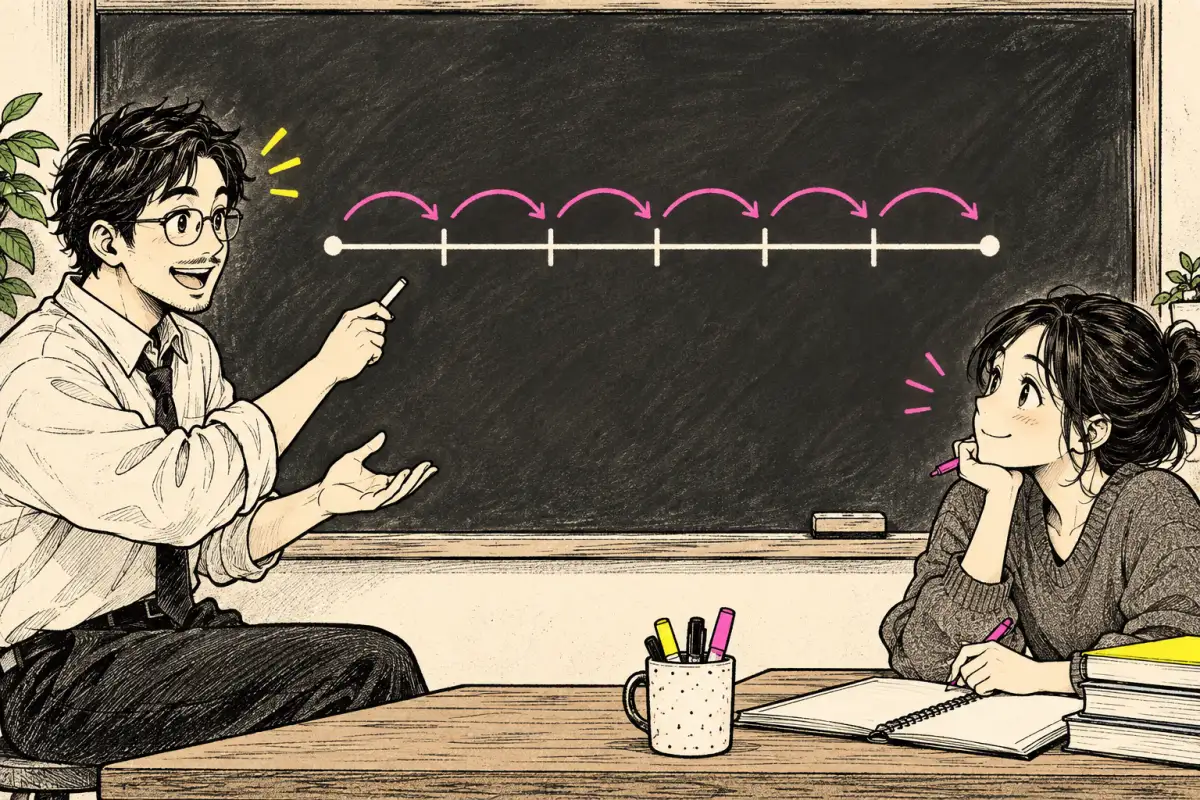
Build the transaction timeline first, then apply the basis rules for the entity and tax year you have identified. A dated cash payment tells you when money moved, but the annual stock-basis calculation may also need income earned later in that same year.
In our original S corporation example, a March distribution exceeds the shareholder's opening stock basis. Stopping there would produce a premature gain calculation. We will keep the payment date while bringing the full year's supplied income into the annual basis analysis.
Give the timeline a defined owner and period
Fictional Larkspur Signworks is a calendar-year S corporation with a valid election throughout 2026, and its sole shareholder, Priya, holds the same stock all year without a sale, redemption or other ownership change. The corporation has no accumulated earnings and profits, and its only distribution is nonliquidating cash.
Opening stock basis is $4,600. Priya also has $2,500 of valid, wholly unreduced basis in a direct loan to the corporation, unchanged during the year. No loan repayment occurs. These are supplied valid educational inputs, not balances reconstructed from an actual taxpayer's records.
There are no additional contributions, losses, nondeductible expenses, tax-exempt income, depletion or other basis adjustments. This deliberately limited fact set lets us examine one distribution without silently importing a separate loss or debt-restoration problem.
Record cash movement without finalizing annual tax treatment
The original transaction timeline (CSV) begins with the opening balances on January 1, followed by a March 20 payment from Larkspur to Priya of $6,200 with respect to her stock. The payment is expressly a distribution, rather than wages, a loan repayment or a purchase of her shares.
Larkspur has $12,000 of cash immediately before paying it. With no other simultaneous cash movement, $12,000 minus $6,200 leaves $5,800 immediately afterward. That is a corporate cash calculation.
Later in 2026, Larkspur earns $2,400 of ordinary income, all properly allocated to Priya for that year. The model assumes any required income inclusion is made. It does not say the income arrives as cash, so adding $2,400 to $5,800 would not establish year-end corporate cash.
Apply annual increases before the distribution reduction
Paragraphs (d) and (f) of 26 CFR 1.1367-1 in the eCFR describe the timing and ordering of stock-basis adjustments. For this unchanged-ownership example, the annual income increase enters before the distribution reduction, even though the cash distribution appears earlier on the calendar.
Start with $4,600. Add the supplied $2,400 income increase to obtain $7,000 of stock basis before the distribution reduction. Subtracting $6,200 leaves $800 of ending stock basis, with no other adjustments in this model.
Under subsection (b) of section 1368 reproduced by Cornell LII, the distribution is excluded from gross income to the extent it does not exceed adjusted stock basis when the S corporation has no accumulated earnings and profits. Here the full $6,200 is within $7,000. There is no excess-distribution gain under these stated assumptions.
Priya's income allocation remains separate. Excluding the distribution from gross income under this rule does not erase the supplied $2,400 ordinary income or turn the entire year's activity into a zero-tax conclusion.
Change one assumption and recompute the result
The annual basis comparison (CSV) includes a separate alternative in which 2026 ordinary income is zero instead of $2,400. Everything else stays fixed, including the $6,200 distribution and the absence of other stock-basis adjustments, so this is an alternative full-year case rather than an incomplete March estimate of the original case.
Now the distribution exceeds $4,600 stock basis by $1,600, and ending stock basis is zero. Section 1368(b)(2) treats the excess as gain from the sale or exchange of property. We have supplied neither the information needed to settle the gain's holding-period treatment nor a tax rate, so $1,600 is gain, not a calculated tax bill.
Keep debt basis out. The IRS stock and debt basis guidance states that debt basis does not enter the taxability test for a non-dividend distribution. Priya's unchanged $2,500 debt basis therefore does not shelter the $1,600 excess in the alternative, and adding it to stock basis would answer a different question.
| Measure | Original / zero-income alternative |
|---|---|
| Opening stock basis | $4,600 / $4,600 |
| Annual income increase | $2,400 / $0 |
| Stock basis before distribution | $7,000 / $4,600 |
| Cash distribution | $6,200 / $6,200 |
| Excess-distribution gain | $0 / $1,600 |
| Ending stock basis | $800 / $0 |
| Unchanged debt basis | $2,500 / $2,500 |
Keep owner measures apart from company accounts
The model now contains several correct numbers with different jobs. $5,800 is Larkspur's cash just after the payment, $800 is Priya's ending stock basis in the original case, and $2,500 is her unchanged debt basis. None is a substitute for another.
We have not supplied the tax basis of Larkspur's individual assets or calculated its accumulated adjustments account. Section 1368 places that account with Larkspur. The no-accumulated-earnings-and-profits assumption defines the distribution rule used here without claiming every S corporation has the same history.
A changed ownership fact needs fresh analysis. A midyear stock disposition or a relevant closing-of-the-year election can affect timing under paragraph (d), so our later-income treatment cannot simply be transferred to a shareholder who sold before that income arose.
Preserve the evidence behind each balance
The blank basis-evidence record (CSV) has room for the owner, entity period, payment date, transaction type, opening basis and annual adjustment. Supporting records remain blank. Attach the reason for each entry before carrying a balance forward.
For this example, explain why March's $6,200 payment is compared with $7,000 of stock basis in the completed annual analysis, and why the separate zero-income alternative produces $1,600 of gain. Then identify which fact would require rebuilding the calculation.
The official CPA content and preparation-edition page supplies public preparation-edition labels, not confirmation that this example matches a detailed future TCP task. Matching hub coverage, current sources and release checks remain outstanding. The timeline is original study material and supplies no recommendation for an actual distribution.
2027 preparation edition, original fictional business year 2026. Public IRS, eCFR and Cornell LII HTML checked October 12, 2026. The eCFR describes its text as authoritative but unofficial, Title 26 current through October 8, 2026. Cornell reproduces statutory text, not verification of later legislative changes. No real taxpayer records, tax amount, holding-period classification, distribution recommendation or detailed future TCP task alignment established. Matching hub, fresh sources and release checks required. No linked form, PDF, worksheet or assessment inspected.

Related to This Article
More math articles
- Grade 2 English Practice for Ohio Second Graders
- Prior restraint
- ISEE Middle-Level Math FREE Sample Practice Questions
- 5th Grade NYSE Math FREE Sample Practice Questions
- Top 10 Tips to Create an AFOQT Math Study Plan
- Statuses and the Status Set
- 8 Useful Tips on Learning Mathematics Effectively
- The Complete Guide to 5 Best GED Math Study Guides
- The Best Grade 7 Math Book for Virginia Students
- Bingo Breakdown: Patterns, Probabilities, and Multi-Card Play


















What people say about "CPA TCP Basis and Distributions: Build a Transaction Timeline (2027 Prep) - Effortless Math"?
No one replied yet.