CPA REG Blueprint and Tax-Law Timing: Check Before You Study (2027 Prep)

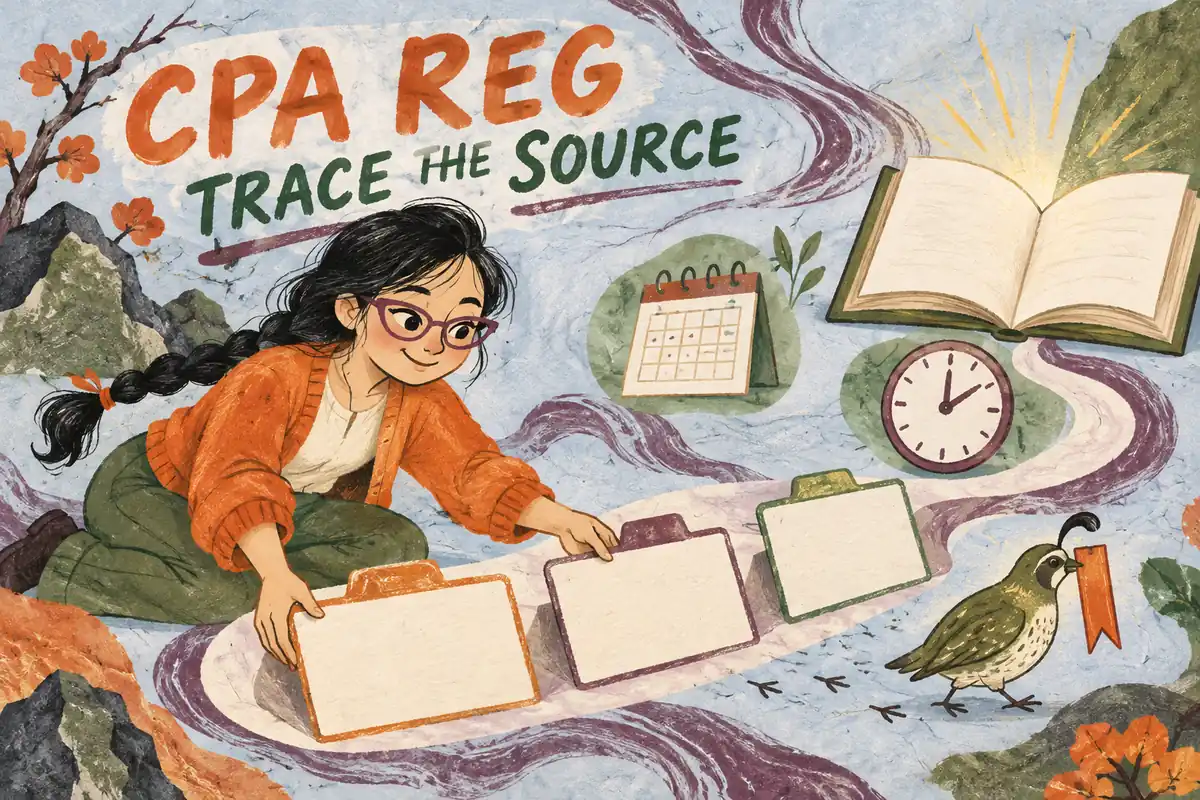
Before studying a REG resource, identify its exact version, the scope of its updates and the official content guidance applicable to your intended exam date. A year on the cover answers only part of that check.
The four-entry original resource inventory (CSV) compares three invented study resources with a real official edition listing, so you can see what each kind of label establishes. None of those labels, by itself, proves that every lesson matches your attempt.
Write down the attempt you are preparing for
Our fictional learner Sam plans to attempt REG on January 12, 2027. That is a study-planning assumption, not a booked appointment, and Sam has not supplied a jurisdiction, authorization or confirmed seat.
Start there. A resource can be useful for one period and need review for another, so the target date belongs beside the section name before comparing versions. If that date changes, revisit the inventory rather than carrying an old approval forward automatically.
Keep registration and content questions separate. The NASBA examination FAQ directs candidates to AICPA for content and explains that appointment availability and scheduling conditions require their own checks. An edition listing cannot confirm that Sam can sit on the invented date.
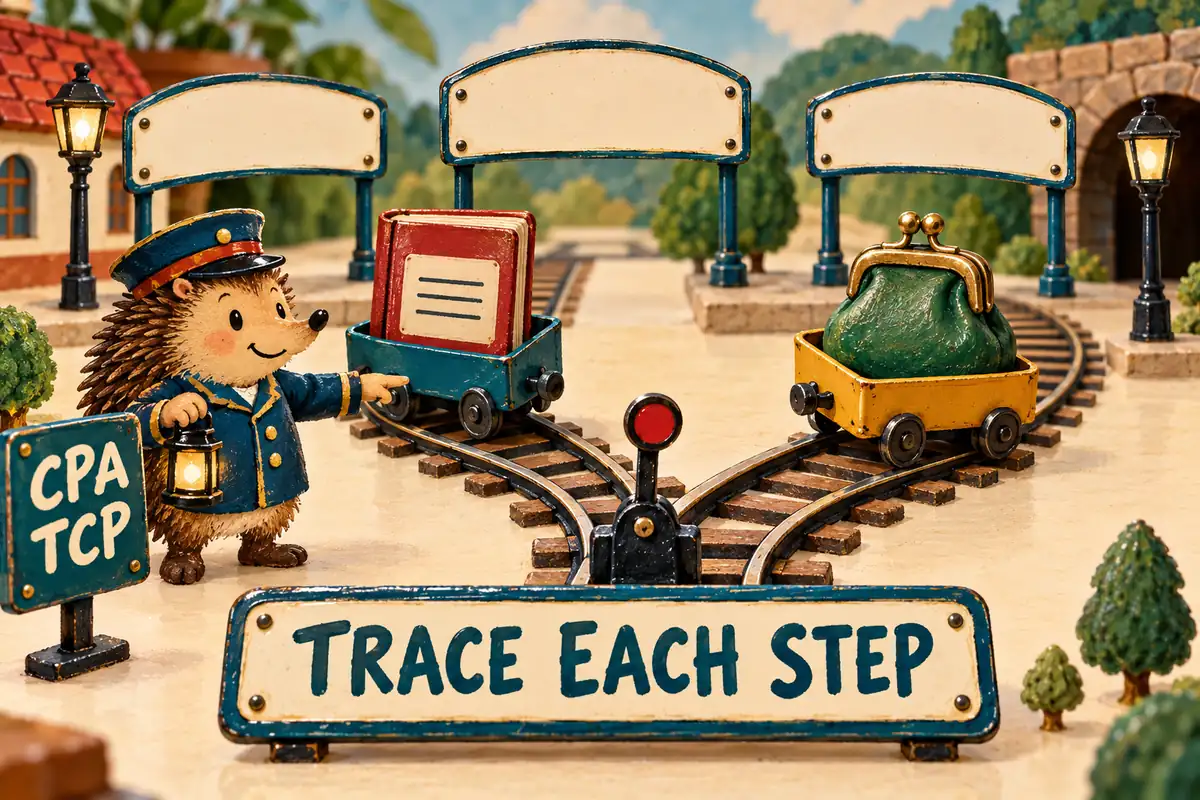
Separate the cover label from the edition inside
Entry A is an invented printed book whose cover says 2027 and whose printing note says September 2026. Its internal revision identifier and update history are missing. We can record the label and printing note faithfully, but cannot infer what changed between editions or whether later corrections are incorporated.
Entry B is an invented digital course marked version 3.2, released October 8, 2026. The section label is REG. That is a more precise identity than a cover year, yet the supplied record gives no target exam period or topic-level alignment evidence.
Do not erase either identity. The cover year may help find the right purchase record, and the version identifier may help locate a change log. Neither is a substitute for reading the scope statement that explains what the release covers.
Match an update notice to the resource it updates
Entry C is an invented notice dated October 10, 2026 that names version 3.2 and says six lessons were updated. It supplies neither lesson identifiers nor a link to Sam's installed copy. The notice is more specific than a general claim that a course is current, but it leaves the actual update scope and installation unresolved.
A patch date locates a release. It does not establish the effective date of every rule in that release. Nor does six lessons mean six official blueprint tasks, six tested tax provisions or complete REG coverage.
For Sam, the next evidence would be the affected lesson list, the version to which the notice applies and confirmation that the relevant changes appear in the study copy. The worked evidence limits (CSV) keep those follow-up needs beside the supplied facts, so an apparent match on version 3.2 does not quietly become a completed coverage check.
Use the official listing within the evidence it supplies
Entry D records the official AICPA content and pronouncement page listing of a blueprint edition effective January 1, 2027, checked October 12, 2026. The same page lists a summary of changes for that date and a separate tested-law announcement for H.R. 1. Those are different resources.
We verified the public listing, not the linked documents. Detailed REG tasks, the changes inside that edition and the scope of the tested-law announcement remain unverified here. A listed document title cannot establish its substantive instructions.
Sam's planned January 12 date falls after the listed January 1 effective date. That comparison makes the edition relevant to a further check. It still does not approve A, B or C, because the inventory contains no completed comparison between their lessons and applicable official requirements.
| Entry | Evidence available | What still needs checking |
|---|---|---|
| A: printed book | 2027 cover, September 2026 printing note | Internal revision and incorporated corrections |
| B: digital course | Version 3.2, release October 8, 2026 | Target attempt and content alignment |
| C: update notice | October 10, 2026, names 3.2 and six lessons | Lesson list and changes in study copy |
| D: official listing | Blueprint edition effective January 1, 2027 | Document contents and detailed REG comparison |
Keep law applicability separate from testing eligibility
A tax provision can have an enactment date, an effective date and transition rules, while examination guidance determines when a change becomes eligible for testing. The AICPA page has separate pronouncement categories. Use its federal-tax category for Code and federal taxation regulation changes, then check any specific official announcement that applies.
Do not import a current tax number into every administration. The IRS caution about Code versions and tax years warns that displayed Code text may include changes effective after the tax year under research or lag a recent enactment, which is why a dated legal source and its applicability still need attention.
Our inventory does not choose a tax bracket, deduction limit or tax year for Sam's actual exam. It identifies the evidence needed before making such a choice.
There is also a separate delivery question. NASBA's FAQ currently describes a technology-platform transition in July 2027. That notice does not move the January blueprint effective date or prove any particular lesson changed, and this article does not verify the future interface or candidate scheduling details.
Resolve the missing field instead of replacing everything
The blank version-check record (CSV) gives each resource a place for identifier, target attempt, update notice, affected content, official source and the remaining question. Leave approval blank until the comparison is done. A useful note might say that a patch names the right version but that the affected lesson list is still missing.
Sam has four entries and four different evidence limits. There is no verified coverage percentage. The inventory supports targeted follow-up, rather than a conclusion that every older resource must be discarded or every newer resource is sufficient.
Ask the provider which exact release supports your intended date, which lessons changed and how to identify the corresponding study copy. Then check that response against applicable official guidance. This is a focused resource check, with detailed future REG alignment and any substantive tested-law conclusion still open.
2027 preparation edition. Public informational HTML checked October 12, 2026. Sam, the January 12 target attempt and resource entries A/B/C are original fiction. Entry D records AICPA public listing metadata, not an inspection of the linked blueprint, changes summary or tested-law PDF. No actual resource, installed update, topic coverage, taxpayer law application, booked appointment or future interface verified. Detailed REG alignment, matching hub and current release checks remain required. No linked PDF, assessment or worksheet inspected.

Related to This Article
More math articles
- Number Properties Puzzle -Critical Thinking 2
- How to Deciphering the Puzzle of Time: A Step-by-Step Guide to Solving Age Problems in Mathematics
- What Is on the Florida Algebra 1 EOC? Topics, Timing, Score, and Study Plan
- Best Laptops for Math Majors in 2026
- Matrix Calculator (2×2 Add, Multiply, Determinant & Inverse)
- Senate majority leader
- Full-Length CLEP College Algebra Practice Test-Answers and Explanations
- Incremental policymaking
- 5th Grade STAAR Math FREE Sample Practice Questions
- How to Use Algebra Tiles to Identify Equivalent Expressions?








What people say about "CPA REG Blueprint and Tax-Law Timing: Check Before You Study (2027 Prep) - Effortless Math"?
No one replied yet.