Schools
Chapter 35 of the CLEP American Government study guide on Effortless Math covers Schools: the key terms, the core ideas, and worked examples showing how this topic is tested on the exam.
CLEP American Government, Chapter 35
Schools
Schools transmit civic knowledge, national symbols, institutional rules, and participation skills. Education also builds resources associated with later engagement.
Practice is the mechanism: discussion, student government, and service activities can convert institutional knowledge into speaking, organizing, and cooperation skills while daily school rules communicate norms about authority and fairness.
Compare students exposed to a civic practice with similar peers while accounting for family background and prior interest.
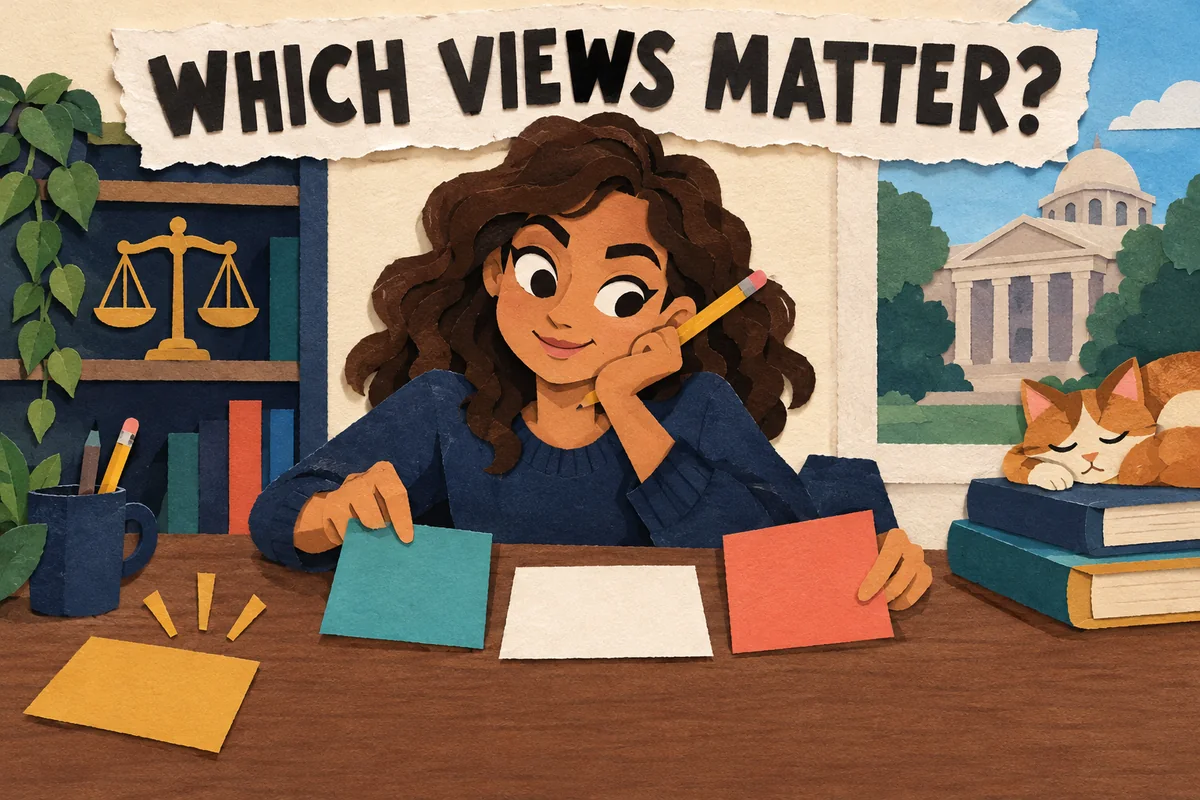
School effects can arise from curriculum, classroom discussion, student government, service activities, or the credentials and networks education provides. Because students and schools differ before instruction begins, a simple education-participation correlation is not decisive. Stronger studies identify the particular school experience and compare students with similar prior interest, family resources, and opportunity.
Video lesson: Political socialization | US government and civics | Khan Academy

Related to This Article
More math articles
- The Ultimate SSAT Upper-Level Math Course (+FREE Worksheets)
- 5th Grade PARCC Math Worksheets: FREE & Printable
- How to Solve Zero and Negative Exponents? (+FREE Worksheet!)
- How to Determine Limits Using the Squeeze Theorem?
- The Best Grade 7 ELA Practice Tests for Ohio Students
- How to Add and Subtract in Scientific Notations? (+FREE Worksheet!)
- CPA AUD: Tests of Controls vs Substantive Procedures (2027 Prep)
- Indiana ILEARN Grade 8 Math Free Worksheets: Free Skill-Targeted Worksheets with Answer Keys
- How to Solve Inequalities: Every Type, Step by Step, for 2026
- Complete Guide to Foundational Vector Operations: Addition, Scaling, and More





















What people say about "Schools and Political Socialization"?
No one replied yet.