AI Learning and the Data Behind Better Math Test Prep
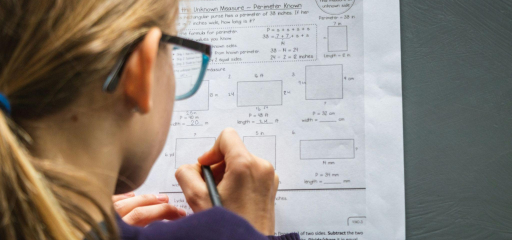
Math prep changes when students can see their mistakes faster. A missed algebra step, a slow geometry problem, or a repeated sign error can now become part of a smarter study path. That is the real promise of AI learning. It can turn practice into feedback before frustration takes over.
The need is clear. NAEP’s 2024 math results showed that fourth-grade math scores were still 3 points below 2019 levels, and eighth-grade scores were 8 points lower than in 2019. Students need sharper practice, clearer feedback, and better ways to spot weak skills early. AI cannot do the studying for them, but it can show where their effort should go first.
Source: https://unsplash.com/photos/woman-in-black-framed-eyeglasses-holding-pen-DJWvzY4pkGU
Why Math Became One of AI’s Biggest Testing Grounds
Math gives AI systems a practical job. Answers can be checked. Steps can be reviewed. Patterns can be tracked over time. An AI checker at the start of a study session can help students review written explanations, clean up unclear reasoning, or compare their solution steps against a stronger model answer.
The best use is feedback. A student may think they are “bad at algebra.” After a few adaptive quizzes, the real issue may look smaller. Maybe they understand equations, but lose points whenever fractions appear. That gives them a better plan than reviewing the whole chapter again.
AI math platforms often track:
- time spent per question;
- repeated error patterns;
- hint usage;
- topic accuracy;
- speed changes across practice sets.
This turns math prep into a map. Students can see what to fix next, instead of guessing.
The Data Behind AI for Personalized Learning
The education market is investing heavily in AI, but students do not feel the market numbers during homework. They feel pressure. They feel confusion. They feel the dull panic of seeing the same mistake again.
Still, the growth shows why schools and families are paying attention. Grand View Research estimated the global AI in education market at $5.88 billion in 2024 and expected it to reach $8.30 billion in 2025. The same report projected a 31.2% compound annual growth rate from 2025 to 2030.
The stronger point is practical. Adaptive practice can help when it gives students the right problem at the right time. RAND’s research on personalized learning found early evidence that personalized approaches can improve achievement, with benefits that may grow as schools gain experience using them.
For math test prep, that means the tool should guide practice, not flood students with random questions.
Source: https://unsplash.com/photos/person-in-white-shirt-and-blue-denim-shorts-standing-on-black-and-white-floor-Vkp9wg-VAsQ
How AI Changes Test Prep Habits
Old test prep often meant long worksheets, thick prep books, and vague advice to “practice more.” AI-based prep can make that advice more specific.
A student preparing for the SAT may learn that geometry is fine, but linear functions fall apart under time pressure. Another student may discover that careless arithmetic causes more damage than hard concepts. That changes the study plan.
This is where AI study tools for students can become useful. They help students decide what to review, how long to practice, and when to retest.
Students often use AI-based prep for:
- adaptive quizzes;
- timed drills;
- instant answer explanations;
- weak-area reports;
- review reminders.
The key is action after feedback. If AI says a student struggles with word problems, the next step should be simple: read the question twice, underline known values, write the equation before solving, then check the setup.
The Motivation Problem AI Learning Can Help Solve
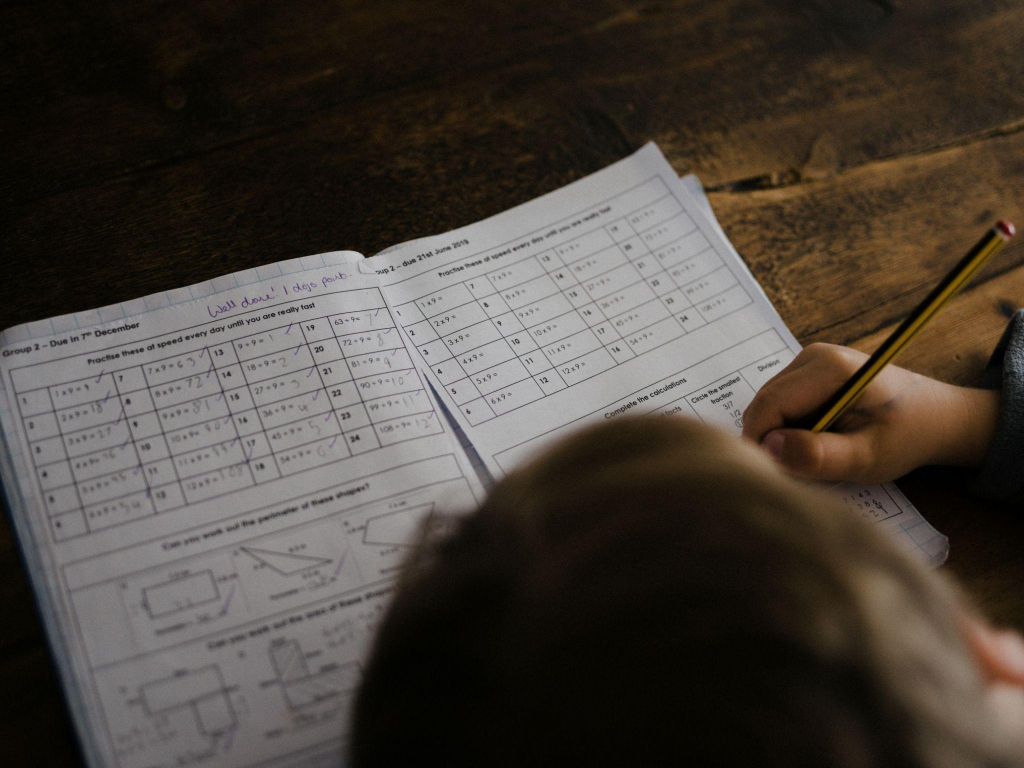
Math anxiety often grows in silence. A student gets a problem wrong, sees the mark, and has no idea what happened. AI feedback can shorten that silence. It can explain the missed step, suggest a similar question, and help the student try again before the mistake feels permanent.
The U.S. Department of Education has noted that AI can support feedback and adaptability in learning, although it also calls for careful guardrails around privacy, bias, and overtrust.
This matters because motivation often comes from visible progress. A student who sees accuracy improve from 50% to 70% on fraction equations may keep going. A student who only sees a bad quiz grade may shut down.
For students using AI for study, the best routine is simple: try first, check the explanation, redo the problem without help, then save one similar question for later review.
Source: https://unsplash.com/photos/boy-writes-on-his-book-on-the-desk-JexAuNCfefs
Where AI Learning Still Struggles in Math Education
AI can make math prep clearer, but it can also create bad habits. Some students learn to follow hints instead of thinking through the problem. Others copy clean solutions and mistake that for learning.
Writing tools show the risk clearly. A student may use an AI essay writer for a draft or structure, then expect the same instant-output pattern in math. Math does not work that way. A final answer means little without the steps that produced it.
Some platforms promise to humanise AI text, but math prep needs a different goal. The answer should show reasoning, not polish. A messy handwritten attempt, followed by correction, often teaches more than a perfect solution copied from a screen.
Good AI math prep should push students back into active work. It should ask them to explain the step, retry the question, and solve a similar one without hints.
A Practical Way to Use AI for Math Prep
The best AI routine is short and repeatable. Students do not need a complicated system. They need a loop that turns mistakes into next steps.
| Student Problem | What AI Learning Can Show | What to Do Next |
| Slow geometry questions | Timing drops on diagrams | Practice 10 timed diagram problems |
| Repeated sign errors | Mistakes appear in multi-step equations | Check each line before solving |
| Weak word problems | Wrong setup before calculation | Underline known values first |
| Too many hints | The student asks for help too early | Try one full attempt before hints |
| Forgotten old topics | Accuracy drops after a week | Add spaced review sessions |
This table is the real value of AI learning. It does not need to make test prep flashy. It needs to make the next study decision clearer. The same idea applies beyond math, since an AI tool to write essays can be useful only when it helps students organize their thinking instead of skipping the thinking. In both cases, the tool should guide the next step, not replace the student’s effort.
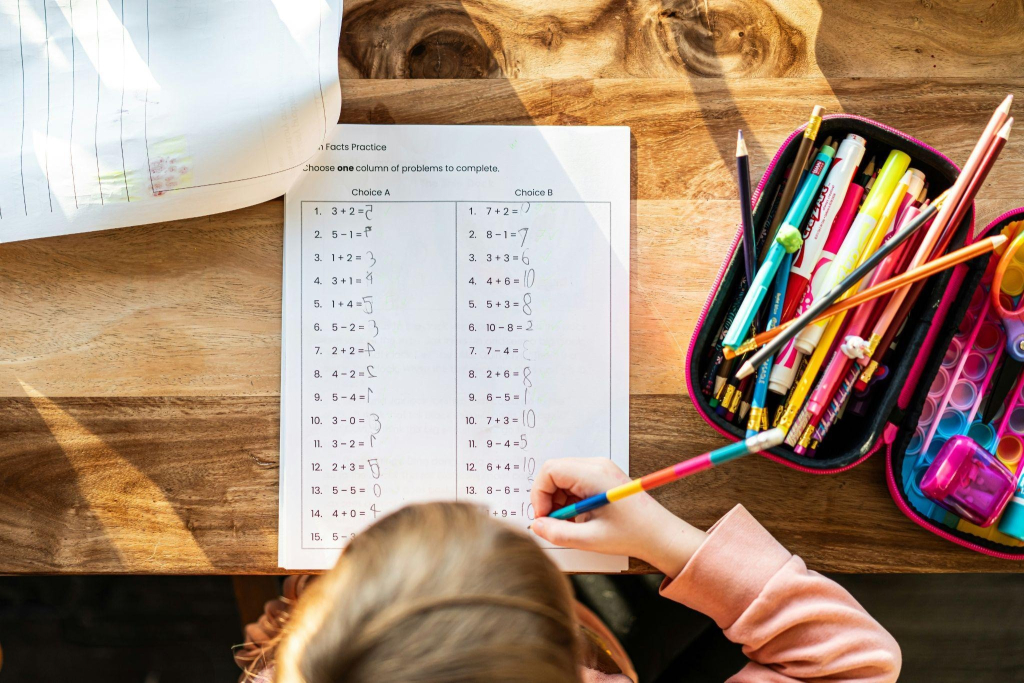
Parents can use the same idea. Instead of asking, “Did you study?” they can ask, “What mistake did the tool find today?” That question is more useful because it points to behavior.
Source: https://unsplash.com/photos/a-little-girl-sitting-at-a-table-with-a-bag-of-pencils-xMOF6CtsMcI
What Better Math Test Prep May Look Like Next
The next phase of AI math prep will likely feel less like a chatbot and more like a quiet coach. A system may notice that a student understands formulas but freezes during timed practice. It may shift the session toward pacing drills. Another student may rush through word problems, so the platform may slow them down before calculation starts.
An AI detector may also become part of the wider academic toolkit near the end of a student’s workflow. Schools may use it to review written explanations, solution notes, or test corrections when they need to check whether the reasoning reflects the student’s own work.
The strongest future for AI math prep is practical. Better feedback. Smarter review. Shorter study sessions with a clearer purpose.
Conclusion
AI learning can improve math test prep because it helps students see what is actually going wrong. That matters more than another stack of random practice problems.
The data suggests real promise, especially for adaptive practice and personalized learning. The practical value is even clearer. AI can help students find weak spots, review mistakes, and build better study habits.
Still, students need to stay active. They should attempt the problem first, read feedback carefully, redo the work, and check whether they can solve a similar question later. AI can guide the path. The learning still happens through effort, memory, and honest correction.

Related to This Article
More math articles
- Numerical Expressions for 5th Grade: Write and Evaluate
- Algebra Puzzle – Critical Thinking 12
- Best Calculators for Business: Graphing vs Financial Options
- FTCE General Knowledge Math Flashcards
- The Best Grade 2 Math Worksheets for New Hampshire Students
- 5th Grade AZMerit Math Worksheets: FREE & Printable
- How to Use Place Value Blocks to Compare Decimals
- Top Math Websites for Online Classes
- Chapter 34: American Political Culture
- First Party System

















What people say about "AI Learning and the Data Behind Math Test Prep"?
No one replied yet.