Make the Number — Reach the Target (24-style Game)

Play this free Make the Number puzzle, a 24-style challenge. Use the numbers you’re given, together with +, −, ×, ÷ and parentheses, to build an expression that equals the target. Every puzzle is solvable — can you find the way?
How to play
- You’re given a few numbers and a target.
- Combine the numbers with operations and parentheses to reach the target.
- Press Check — or ask for a solution if you’re stuck.
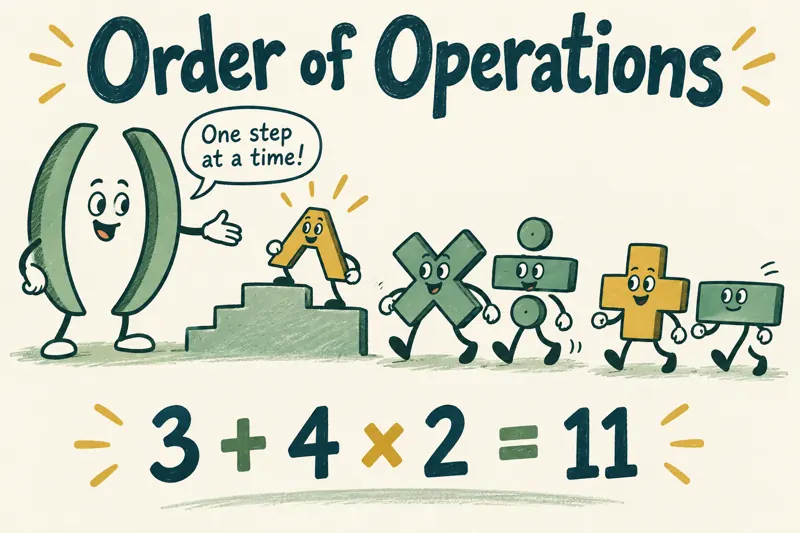
Order of operations in action
Reaching the target means thinking carefully about order of operations and how parentheses change a result — great practice for algebra and arithmetic alike.
Frequently asked questions
Is every puzzle solvable?
Yes, each puzzle is generated from a real solution, so there’s always at least one way to hit the target.
Can I use a number twice?
Each given number is used once. The game checks that your expression uses the numbers correctly.
What if I’m stuck?
Use the New Puzzle button for a fresh one, or reveal a sample solution.
Looking to learn the math behind the game? Read the related lesson.
How to use Make the Number, Reach the Target as real practice
Make the Number, Reach the Target works best when it is used as a short, focused study session rather than a quick click-through activity. The goal is not simply to finish the rounds. The goal is to notice which skills feel automatic, which skills still need review, and which mistakes happen when you rush.
Start with a clean piece of scratch paper. For each item, play one focused round, pause after mistakes, and name the rule or fact that would have helped. If you get something wrong, do not immediately move on. Write the correct step, circle the part that caused the mistake, and try one similar item before continuing. That small correction habit is what turns an online math game into lasting math improvement.
A three-round study routine
| Round | What to do | Goal |
|---|---|---|
| Round 1 | Work slowly and focus on accuracy. Use notes if the topic is still new. | Understand the method. |
| Round 2 | Repeat missed items or similar problems without looking at the previous answer. | Fix the mistake. |
| Round 3 | Try a short timed set after the skill feels familiar. | Build speed and confidence. |
This routine is simple, but it solves a common problem: students often practice only until an answer looks familiar. Real readiness means you can solve a fresh problem without hints, explain the first step, and check whether the final answer is reasonable.
What to write down while you practice
Keep a tiny mistake log next to the activity. You only need three columns: the topic, the mistake, and the correction. For example, a student might write “fractions,” “forgot common denominator,” and “rewrite both fractions before adding.” A log like that is more useful than a long list of scores because it tells you exactly what to review next.
- If the mistake is a fact or formula, review it before the next round.
- If the mistake is a setup error, copy one worked example and label each step.
- If the mistake is from rushing, slow down and require written work for the next five items.
- If the same mistake appears twice, stop and review that topic before continuing.
When you are ready to move on
You are ready for the next topic when you can get several items correct in a row and explain why the method works. A score by itself is helpful, but it is not the whole story. You should also be able to describe the rule, formula, or pattern that the activity is testing.
For test preparation, come back to Make the Number, Reach the Target after a day or two and try a fresh round. If the skill still feels easy after a short break, it is much more likely to stay with you during a quiz, unit test, or standardized test. If it feels shaky, that is useful information too: it tells you exactly where to spend your next study session.
Study tips for parents and teachers
When using this page with a student, ask for the reasoning before the answer. Questions such as “What is the first step?”, “Why did you choose that operation?”, and “How can you check it?” help students build mathematical language. That matters because many test questions measure more than calculation; they also measure whether the student can read the problem, choose a method, and explain a result.
Short sessions are usually best. Ten to fifteen minutes of careful practice can be more productive than a long session full of guessing. End by naming one skill that improved and one skill to review next time. That keeps practice positive, specific, and easy to continue.
Your next practice step
After finishing Make the Number, Reach the Target, choose one next step instead of trying to study everything at once. If the activity felt easy, increase the challenge by working faster, mixing in older topics, or explaining each answer without notes. If it felt difficult, lower the pressure: redo a smaller set, copy one correct example, and focus on accuracy before speed.
A useful rule is to review the same skill three times: once today, once tomorrow, and once later in the week. Spaced review is especially helpful for math because it tells you whether the method truly stuck or only felt familiar right after practice. Use this math game as one stop in that review cycle, then return to it when you want to check retention.

Related to This Article
More math articles
- How to Calculate the Volume of Cubes and Prisms
- Narrative-Driven Slot Seasons Turning New Releases Into Episodic Content Rather Than Isolated Games
- Free Grade 4 English Worksheets for Delaware Students
- The Best Grade 7 ELA Practice Tests for Massachusetts Students
- Iowa Algebra 1 Free Worksheets: Printable Algebra 1 PDF Practice for Every Topic
- How to Detecting Limits from Graphs
- Advanced Vocabulary Words: Impertinence to Keen
- How to Define Product-to-Sum and Sum-to-Product Formulas
- How is the TABE Test Scored?
- Full-Length 7th Grade MCAS Math Practice Test-Answers and Explanations







What people say about "Make the Number: Reach the Target Game"?
No one replied yet.