How to Help Your Child Love Math: 10 Tips That Actually Work

Most kids don’t actually dislike math. They dislike how it feels. The pressure. The red marks. The feeling of being slow. If you can change how math feels at home, you can change everything. Here are 10 small, real-world tips that work.
1. Stop saying “I was bad at math”
Even casually. Kids hear it as permission to give up. Try “Math takes time for everyone” instead.
2. Make math part of normal conversation
“How many minutes until dinner?” “What’s a 20% tip on $23?” “If we cut the recipe in half, how much flour?” These tiny moments build number sense without pressure.
3. Praise effort, not speed
Speed has nothing to do with math ability. Praise persistence: “I noticed you tried three different ways. That’s how mathematicians work.”
4. Play games with numbers
Yahtzee. Monopoly. Set. Prime Climb. Even a deck of cards (game: “draw two, find the product”). Games hide practice inside fun.
5. Cook together
Measuring, doubling, halving, timing. Every recipe is a fraction lesson.
6. Let them struggle (a little)
Don’t rescue too fast. If they get the answer immediately, the problem was too easy. Productive struggle is where learning happens.
7. Use a whiteboard
Standing up at a whiteboard feels less like homework and more like “doing real math.” It’s a small switch with a big psychological effect.
8. Watch one good math video a week
Numberphile, 3Blue1Brown, MindYourDecisions, Khan Academy, let them see math as something curious adults love.
9. Connect math to what they care about
Sports stats. Video-game probability. YouTube channel growth rates. Music theory. Math lives inside every passion.
10. Celebrate mistakes
The biggest predictor of math success is willingness to be wrong out loud. Make your home a place where mistakes get cheered, not corrected.
FAQ
My child hates math. Is there hope?
Yes, almost always. Most “math hate” is actually anxiety from past bad experiences. Lower the stakes, change the setting, and watch what happens.
Should I push or back off?
Back off the pressure. Stay close on practice. Five focused minutes a day beats one tense hour a week.
My child is behind their grade level. What do I do?
Find the specific gap (usually fractions or multiplication facts) and target it. Don’t review everything.
Are math tutors worth it?
For many kids, yes, especially in middle school. The right tutor changes a child’s whole relationship with math.
Extra study tips that move the needle
Most students don’t fail because the math is too hard. They fail because their practice habits are inefficient. Here are the habits that separate the students who improve fast from those who stall.
Practice with a timer. Untimed practice teaches you to eventually get the right answer; timed practice teaches you to get it in test conditions. Set a stopwatch every time you sit down. Aim for 90 seconds per question on most standardized tests.
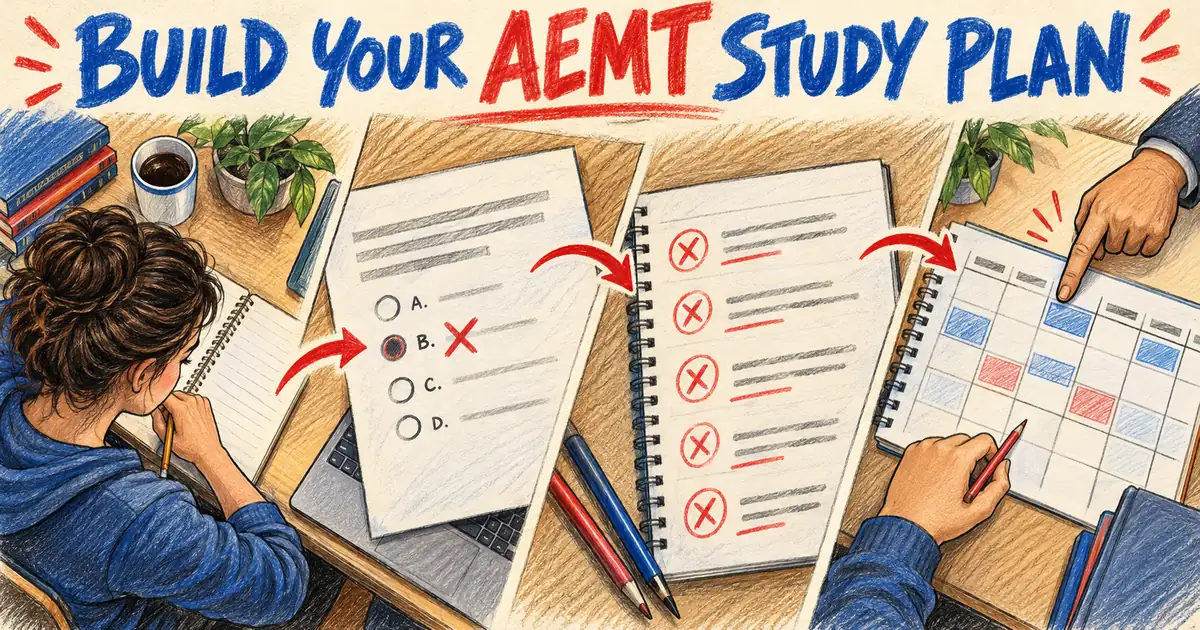
Keep an error log. A simple spreadsheet with three columns, Problem, My answer, Correct answer, Why I missed it, is the single most powerful study tool ever invented. Review your error log weekly. The same mistakes show up again and again until you name them.
Mix topics every session. Doing 20 problems on the same topic feels productive, but spaced and interleaved practice, mixing topics, builds retrieval skills, which is what the test actually measures. Spend 70% of your time on mixed sets and only 30% on isolated drills.
Sleep on it. Memory consolidation happens during sleep. A 30-minute session the night before a quiz, followed by 7+ hours of sleep, beats a 3-hour cram session that ends at midnight. This is settled cognitive science.
Teach the topic out loud. If you can’t explain it, you don’t fully know it. Either record yourself, write a one-paragraph “how I’d teach this” explanation, or grab a friend to listen. Teaching exposes the gaps your problem sets hid.
When to ask for help
Spinning your wheels for more than 15 minutes on a single problem is a signal, not of failure, but of a missing piece of background. Stop, mark the problem, and either ask a teacher, post in our community, or watch a video on the relevant subtopic. Resuming after gaining the missing piece is much more efficient than guessing your way forward.
A quick self-assessment
Before you close this tab, answer these three questions honestly:
- What’s the one topic in this article you understood best?
- What’s the one topic that still feels fuzzy?
- What concrete next step (a worksheet, a practice test, a video) will you take in the next 48 hours?
Writing those answers down, even just in a notes app, has been shown to roughly double the chance you actually follow through. Treat the next 48 hours as a small, doable experiment, not a marathon. Your future test-day self will thank you.
A deeper dive into common questions
The questions students ask after reading an article like this one tend to cluster. Here are the most useful ones, and short, direct answers.
How can I help my child with math at home? Weave math into everyday moments instead of adding extra worksheets. Ask how many minutes are left until dinner, let your child double a recipe, or play card and board games that use numbers. Short, relaxed practice builds number sense without pressure. Keep your own attitude positive too: swapping “I was bad at math” for “math takes time for everyone” shows your child that effort, not talent, is what counts.
How do I help my child with math anxiety? Start by lowering the pressure. Much of what looks like hating math is really anxiety left over from timed tests, red marks or feeling slow. Praise persistence rather than speed, cheer mistakes as part of learning, and give your child time to wrestle with a problem before stepping in. A whiteboard or a math game can also make practice feel less like a test and more like play.
How can I help my child with math homework? Sit nearby, ask questions, and resist the urge to give the answer. Try prompts like “What is the problem asking?” or “What did you try first?” A little productive struggle is where real learning happens. If your child is truly stuck, work a similar example together, then let them try the original problem on their own. Ending on a success keeps the next homework session calmer.
Why is my child so bad at math? Usually it is not a lack of ability. Many children fall behind because of a missing foundation skill, such as multiplication facts or fractions, or because anxiety makes them freeze. Speed is not the same as understanding, so a slower child can still be a strong thinker. Talk with the teacher to find the exact gap, then practice that one skill in short, positive sessions at home.
How do I teach my child to love math? Show that math is curious and useful, not just a school chore. Connect it to what your child already enjoys: sports stats, video-game odds, music rhythms or growing a YouTube channel. Play games like Yahtzee or Set, cook together, and watch a fun math video now and then. When math feels playful and mistakes are celebrated, enjoyment tends to follow.
How can I help my child with math facts? Turn facts into quick games rather than drills. Draw two cards from a deck and find the sum or product, roll dice for addition races, or quiz each other in the car for a few minutes. Short daily practice works better than one long session. Focus on a small group of facts at a time, such as the 6s, and celebrate progress instead of timing every answer.
A short worked example you can copy
Here’s a typical worked example pattern that applies to many problems in this article’s topic:
- Identify the question. What exactly is being asked? Underline it.
- Identify the given information. What numbers and relationships are you handed?
- Pick the relevant formula or rule. From your toolkit, which one connects the given info to the question?
- Plug in carefully. Write each substitution explicitly. Don’t do steps in your head.
- Simplify. Reduce fractions, combine like terms, simplify radicals.
- Verify. Plug your answer back into the original setup. Does it make sense?
This 6-step pattern handles roughly 80% of problems you’ll see in middle-school, high-school, and standardized-test math.
Mini-glossary
A few terms that come up repeatedly in this topic and its neighbors:
- Variable. A letter (often \(x\) or \(y\)) that stands in for an unknown number.
- Coefficient. The number multiplying a variable. In $3x$, the coefficient is 3.
- Expression. A combination of numbers, variables, and operations, without an equals sign. Example: $3x + 5$.
- Equation. Two expressions joined by an equals sign. Example: \(3x + 5 = 14\).
- Inequality. Two expressions joined by $<$, $>$, \(\le\), or \(\ge\).
- Solution. A value (or set of values) of the variable that makes an equation or inequality true.
- Evaluate. Substitute a number for the variable and simplify to a single value.
- Simplify. Rewrite the expression in its cleanest equivalent form.
Internalize this vocabulary. Test questions assume you know it.
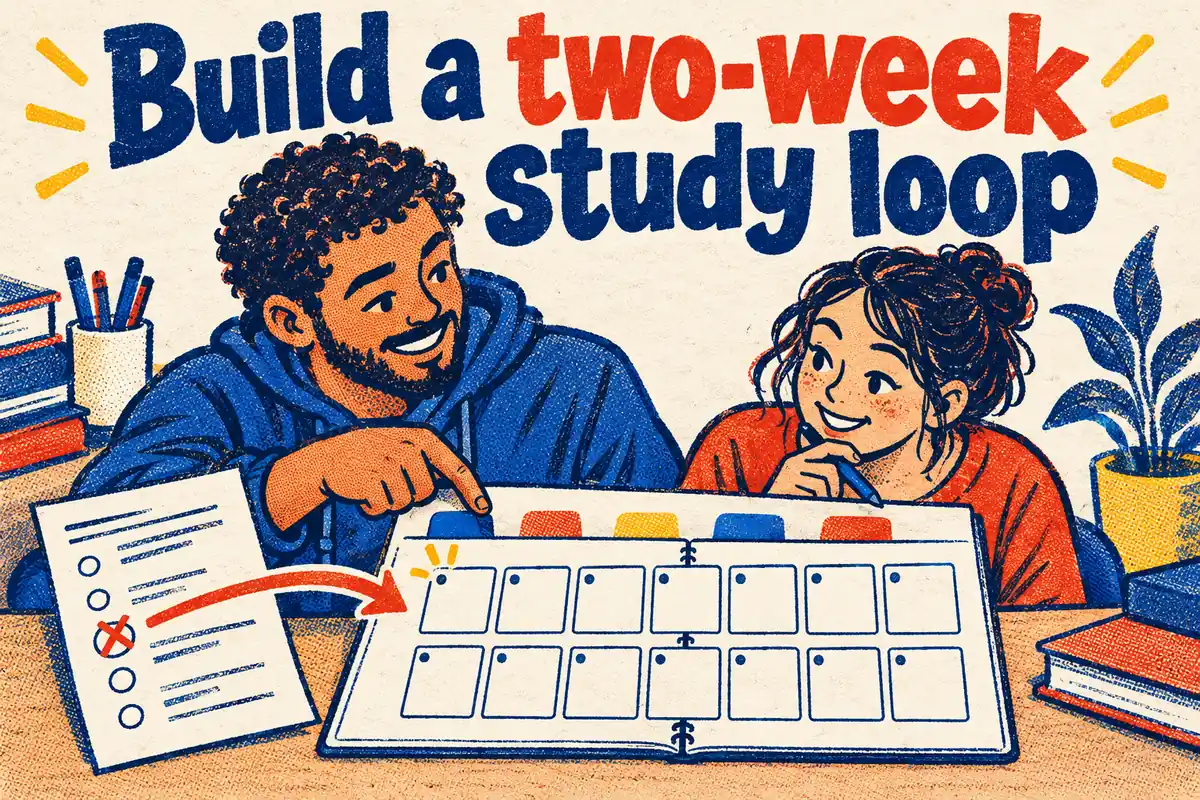
Your next 7 days
If this article inspired you to act, here’s a small, doable 7-day plan:
- Day 1. Re-read the worked examples. Try them with the page covered.
- Day 2. Do a 15-minute warm-up of related practice problems.
- Day 3. Take a short timed quiz. Score yourself.
- Day 4. Review your misses. Write one sentence about each.
- Day 5. Do a mixed practice set blending this topic with two others.
- Day 6. Rest, or do a light review.
- Day 7. Take a longer timed practice set and track your progress.
Seven days is enough to feel a real shift. Two or three of those cycles, and the topic moves from “hard” to “easy.”
One last reminder
Progress in math compounds. A 1% improvement every day for 100 days yields nearly a 3x improvement overall, because each new concept builds on the last. The students who pull ahead aren’t the ones who study the longest. They’re the ones who study consistently, review their mistakes, and refuse to skip the foundations. Show up tomorrow. Then show up the day after. The results take care of themselves.
If you found something useful here, save this article and revisit it after your next practice session. You’ll catch nuances on the second read that you missed on the first, because by then you’ll have the experience to recognize them. Happy practicing.
Where do I start at home?
Pick one tip from this list. Just one. Do it for two weeks. Then add another.

Related to This Article
More math articles
- FREE 3rd Grade STAAR Math Practice Test
- 3rd Grade STAAR Math Practice Test Questions
- The Best Grade 7 ELA Practice Tests for Montana Students
- The Best Grade 3 Math Book for Kansas Students
- Top 10 Free Websites for PSAT / NMSQT Math Preparation
- Freud, Piaget, Erikson, and Moral Reasoning
- 2nd Grade Math Worksheets for Georgia: 34 Free Printable PDFs
- 4th Grade ILEARN Math Worksheets: FREE & Printable
- Commander in chief
- How to Write a Formula for a Recursive Sequence















What people say about "How to Help Your Child Love Math: 10 Tips"?
No one replied yet.