Investigations, Variables, and Controls

A good experiment answers one question at a time. That sounds simple, but it is the single hardest habit to master in science, and it is exactly what test questions about “investigations” are checking. If you can spot what an experiment changes, what it measures, and what it holds steady, you can reason through almost any lab scenario you are handed.
This lesson is about designing and reading a controlled experiment. We will name the parts, then walk through a real example so the words stick.
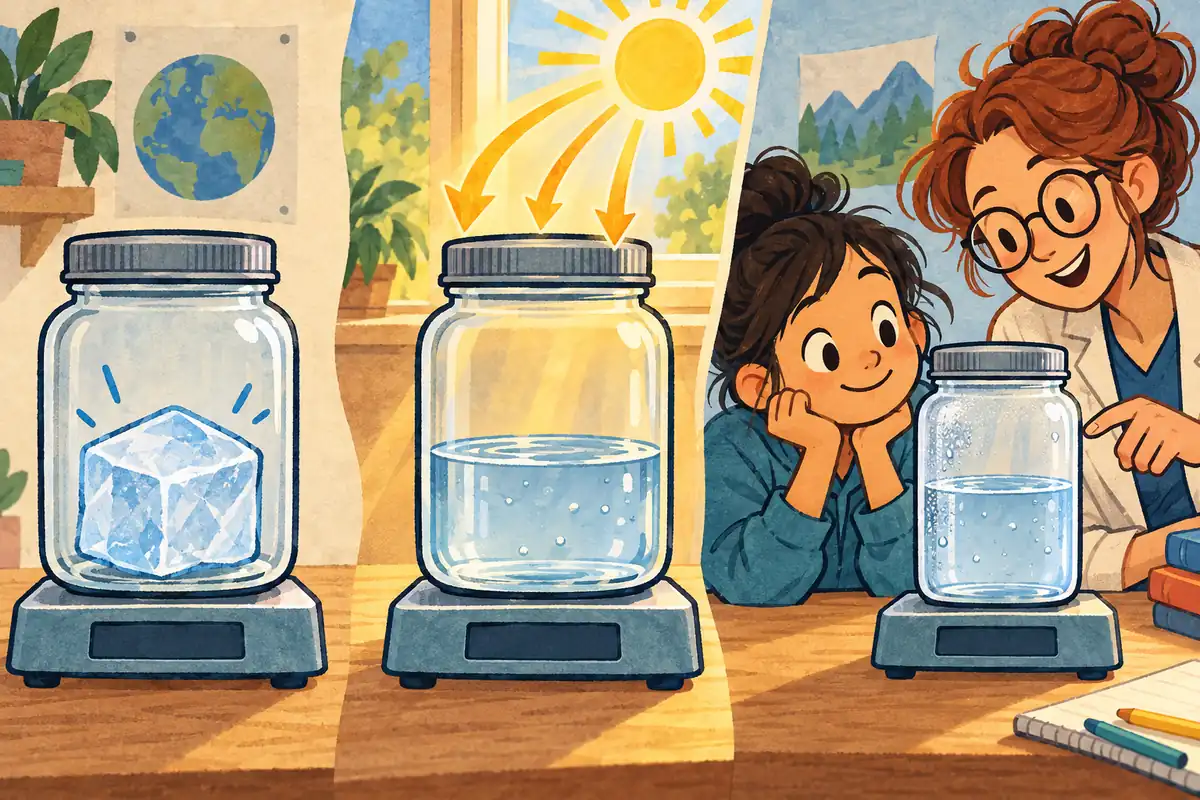
A controlled experiment tests the effect of one factor by changing only that factor while keeping everything else the same. The factor you change is the independent variable, the outcome you measure is the dependent variable, and the factors you keep constant are the controlled variables. This design lets you link cause to effect with confidence.

What are the three kinds of variables?
Every experiment has factors that could change. Sorting them into three roles keeps your thinking clear. The independent variable is the one you deliberately change. The dependent variable is what you measure to see the effect. The controlled variables (sometimes called constants) are everything you keep the same on purpose so they cannot muddy the result.
A quick memory trick: the dependent variable depends on the independent one. If you graph the results, the independent variable goes on the horizontal axis and the dependent variable on the vertical axis.
What is a control group?
A control group is the version of the experiment that does not get the treatment. It is your baseline for comparison. If you test whether a fertilizer helps plants grow, the plants that get no fertilizer are the control group. Without that baseline you would have nothing to compare the treated plants against, and you could not say the fertilizer did anything at all.
Do not confuse a control group with controlled variables. The control group is a set of subjects with no treatment. Controlled variables are the conditions kept identical across every group.
| Part | What it is | Fertilizer example |
|---|---|---|
| Independent variable | What you change | Amount of fertilizer |
| Dependent variable | What you measure | Plant height after 3 weeks |
| Controlled variables | What you keep the same | Water, light, soil, pot size |
| Control group | No-treatment baseline | Plants with no fertilizer |

Why change only one thing at a time?
Imagine you give one group of plants extra fertilizer and also move them to a sunnier window. They grow taller, but now you are stuck. Was it the fertilizer or the sunlight? You changed two things, so you cannot tell. When only one variable differs between groups, any difference in the result points back to that one cause. This is the heart of a fair test.
Good experiments also use a large enough sample and repeat the trials. One plant could grow taller by luck. Twenty plants in each group, tested more than once, make the pattern trustworthy.
Watch: A Short Video Lesson
BioMan Biology walks through this skill clearly in a few minutes. It is a helpful companion to the reading above:
A routine for investigation questions
- Find the one factor being deliberately changed. That is the independent variable.
- Find what is being measured or counted. That is the dependent variable.
- List what is being held the same. Those are the controlled variables.
- Identify the group with no treatment. That is the control group.
- Ask whether only one thing differs between groups. If not, the experiment is not fair.
Practice questions
- A student tests how the amount of salt in water affects how fast an egg floats. What is the independent variable?
- In that same experiment, what is the dependent variable?
- Name two variables that should be controlled in the egg experiment.
- Why is a control group useful?
- A researcher changes both the temperature and the light in one test. What is wrong with the design?
- True or false: the independent variable belongs on the vertical axis of a graph.
Answers:
- The amount of salt added to the water.
- How fast (or whether) the egg floats.
- Any two of: amount of water, water temperature, size of the egg, type of container.
- It gives a no-treatment baseline to compare against, so you can tell whether the treatment caused the change.
- Two variables changed at once, so you cannot tell which one caused the result. It is not a fair test.
- False. The independent variable goes on the horizontal axis; the dependent variable goes on the vertical axis.
Where this fits
Designing fair tests is the practical side of thinking like a scientist, so it builds directly on the nature of science. Once your data is in hand, the next skill is reading it, which you can keep studying with every lesson on the ASVAB General Science Learning Hub. From here, it also helps to connect experiments to the physical quantities you measure, like heat, temperature, and pressure.
Recommended Prep Books
These study guides and practice books help you keep building momentum as you prepare:





Related to This Article
More math articles
- Free Texas Grade 2 Math Worksheets
- Free Grade 8 English Worksheets for Oklahoma Students
- Symbolic speech
- Pennsylvania Keystone Algebra 1 Free Worksheets: Free Printable Keystone-Ready Algebra 1 PDFs
- 4th Grade PSSA Math Worksheets: FREE & Printable
- Congressional control of the budget
- Converting Units of Weight/Mass for 4th Grade
- Capitalization Rules
- Praxis 8003 vs 5003: Check the Code and Reuse the Right Math Topics (2027 Prep)
- Human Ecology and Urban Spatial Models















What people say about "Investigations, Variables, and Controls Explained"?
No one replied yet.